Shearwater Part One: Navy Housing in Wedgwood in the 1940s

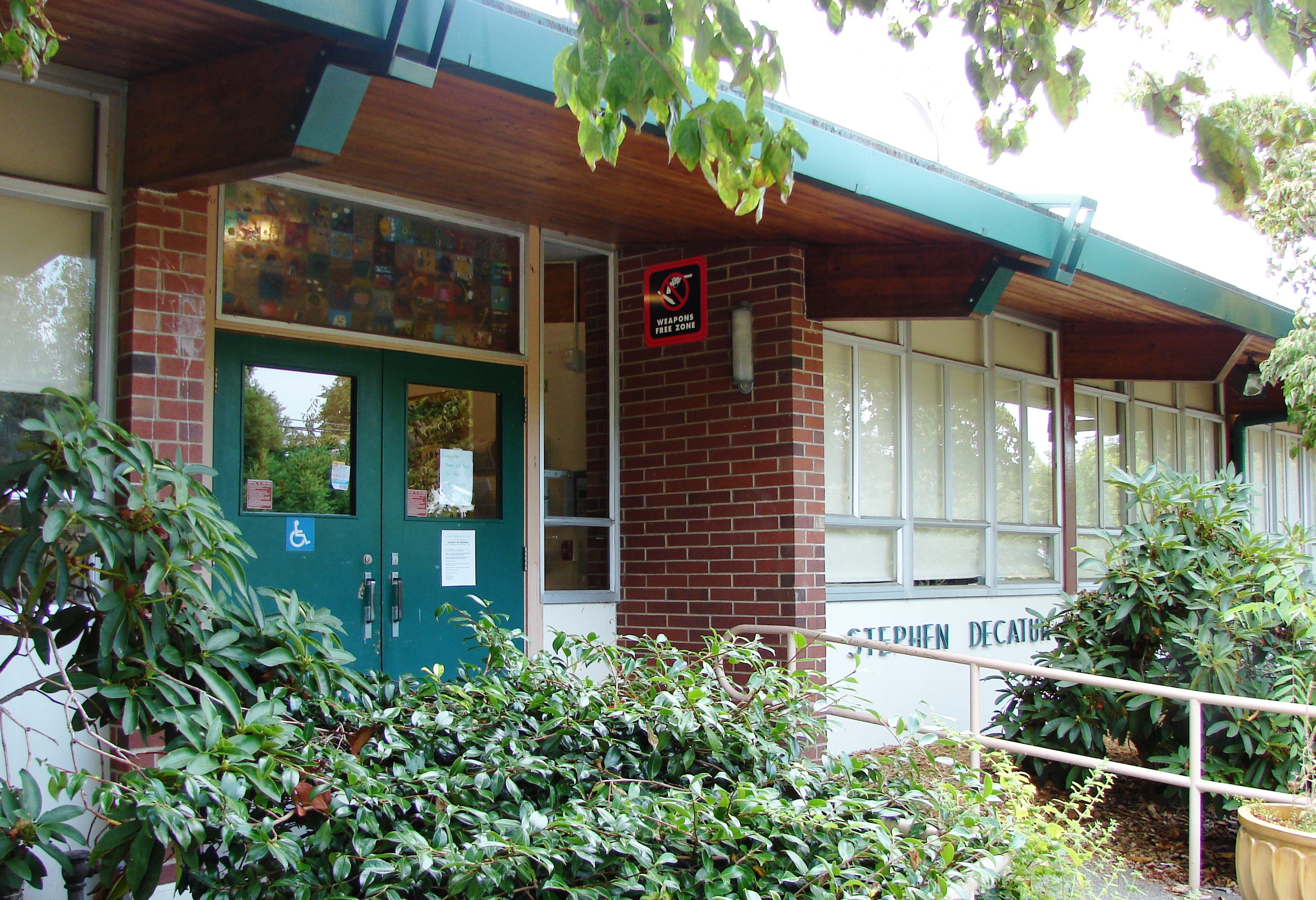
"Stephen Decatur" is written beside the front entrance of Decatur School, but partially obscured by shrubbery.

“Stephen Decatur” is written beside the front entrance of Decatur School, but partially obscured by shrubbery.

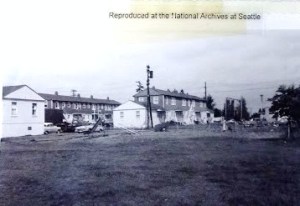
Decatur Elementary School at 7711 43rd Ave NE in Wedgwood is on the site of what was Navy housing from 1945 to 1966.  The first part of the school building was completed in 1961.  With a later addition to the building and expansions of the playground, by 1966 the Decatur School occupied its present entire ten-acre site from 40th to 43rd Avenues NE, NE 77th to 80th Streets.

In addition to the Decatur School site, there was Navy housing on some, but not all, surrounding streets near NE 77th Street and 40th Ave NE.  See the map at the end of this blog article for the location of the Shearwater housing on the present school site and on nearby streets.

Shearwater Hall/the Decatur Annex was on NE 77th Street at the corner of 43rd Ave NE. It was the last Shearwater building and was demolished in 2019.

This is the first in a series of five articles about the Shearwater Navy housing and what happened to it.  Another article on this blog is about the Decatur School and the new building on the same site, the Thornton Creek School.  The two school buildings operate separately.

In July 2019 the last building from Shearwater was demolished.  The former office and community center, called Shearwater Hall, had later been called the Decatur Annex and was used like a portable next to Decatur School. The school district decided that it was no longer needed, and the building was replaced by open space and a gardening area.

Continue reading

Posted in apartments, Balch, community club (old), Controversies, School histories, Shearwater | Tagged , , , | Leave a comment

Walter Haines, founder of the Fiddler’s Inn, Wedgwood

The Fiddler’s Inn at 9219 35th Ave NE in Wedgwood has a history which dates back to the end of Prohibition on December 5, 1933, when beer and wine again could be sold to the public.  The founder and original owner of the Fiddler’s Inn, Walt Haines, grew up on a farm but dreamed of a life in the world of music and entertainment.  He had a successful career as a professional musician in Seattle until the economic depression years of the 1930s.  When Prohibition ended Walt Haines thought of opening a tavern as another source of income.

NOTE:  All rights reserved under Creative Commons Copyright.  Do not copy text or photos from this article.

Continue reading

Posted in businesses, Neighborhood features, taverns | Tagged , , | Leave a comment

The Eastwood and Wedgwood Community Clubs

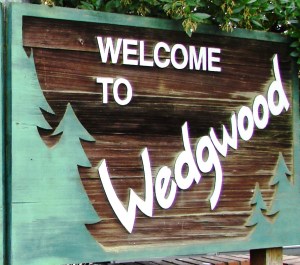
The Welcome to Wedgwood sign on 35th Ave NE at the corner of NE 95th Street

In 1995 the Wedgwood Community Council placed two Welcome to Wedgwood signs using Dept. of Neighborhoods grant funds. In 2007 the matching sign was stolen from the corner of NE 70th Street. A police report was filed, so if you know where the missing sign is, please report it.

During the years of World War Two from 1941 to 1945 all Seattleites had some concerns about the possibility of bombing, since Seattle is a coastal city.  For this reason people took civil defense training and organized their neighborhoods to help one another in case of emergencies.  After the war was over and people began to get established in jobs and homes, they applied their organizing skills to the development of neighborhood groups.

The identity of the Wedgwood neighborhood evolved gradually in the late 1940s and at first, there was more than one community club.  Although they were still young, war veterans were highly respected and they were some of the leaders in the young community of Wedgwood in the 1940s and 1950s.

Continue reading

Posted in boundaries, community club (old), Immigrant heritage, name of the neighborhood, Plat names | Tagged , , , , , , | Leave a comment

Roy Erford and the Euphonious Election District Names

Wedgwoodians of the 1940s may have been puzzled to learn that their voting district was called Sonora, which is a place name in Mexico.  Those living north of NE 85th Street and east of 35th Ave NE were in the Sand Point Precinct, and that made a little more sense – but not too much.  Before the era of precinct numbers, the King County Election Superintendent, Roy Erford, gave each voting area a colorful name.

Continue reading

Posted in boundaries, name of the neighborhood | Tagged , , , , | Leave a comment

How Wedgwood came into the City Limits of Seattle

The neighborhoods of northeast Seattle gradually came into the city limits between 1941 and 1954.  The Seattle City Limits did not advance northward in a straight line, like water rising in a bathtub.  It was up to each voting precinct in northeast Seattle to petition for annexation into the city and then vote in favor at a special election.  Finally as of 1954 the present north City Limits were set at 145th Street.

Continue reading

Posted in boundaries, Controversies | Tagged , , , | 1 Comment

Wedgwood’s Bus Company Lawsuit

One of Wedgwood’s biggest controversies, a lawsuit over the ownership of a bus company, is remembered by few people because the dispute began back in 1937.

Continue reading

Posted in Controversies, name of the neighborhood, School histories | Tagged , , | Leave a comment

Wedgwood’s Gathering Place at the Hunter Tree Farm

Hunter Tree Farm site in Wedgwood at 7744 35th Ave NE. Photo by Valarie.

While best known for its annual Christmas tree sales lot in December, the Hunter Tree Farm property at 7744 35th Ave NE in Wedgwood, is open to the community for year-round use.

In the summer of 2011 Wedgwood neighborhood activists coordinated the creation of The Gathering Place at the Hunter Tree Farm.  The project was guided by the Pomegranate Center in Issaquah and was made possible by a grant from Green Mountain, parent corporation of Tully’s Coffee.

Continue reading

Posted in Hunter's Tree Farm | Tagged , , , | Leave a comment

Wedgwood’s University Unitarian Church

University Unitarian Church was fenced off for renovations as of July 2018. The congregation moved back into their building in November 2019.  Photo by Valarie.

In 2018-2019 the University Unitarian Church congregation vacated their building so that it could be renovated.  The congregation met elsewhere while the work was done on the UUC building located on 35th Ave NE at the southeast corner of NE 68th Street.   UUC resumed use of their building on November 17, 2019.

The following article is a history of how the University Unitarian Church came to its present location in Wedgwood in 1959.

Continue reading

Posted in Architecture, boundaries, churches, name of the neighborhood | Tagged , , , | Leave a comment

What about the “E” in Wedgwood?

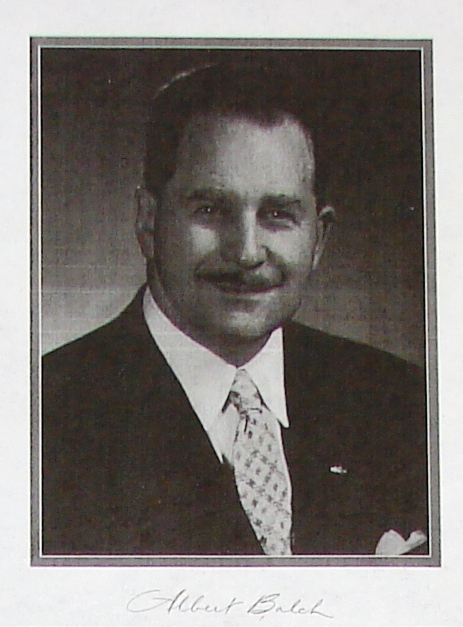
Albert Balch, developer of Wedgwood

Albert Balch, developer of Wedgwood

The Wedgwood neighborhood in Seattle took its name from a real estate development which was started in 1941 by Albert Balch.  The naming happened gradually after Balch’s Wedgwood group of houses became well-known.

In an April 1956 interview for the Wedgwood Echo, the community club newspaper, Balch told the story of how the name “Wedgwood” came to be.  Balch and his business partner, Ralph Jones, had previously named and built houses in View Ridge, a neighborhood centered around NE 70th Street on the slope east of 35th Ave NE, looking toward Lake Washington.  Balch’s wife Edith hadn’t liked the name View Ridge, so Balch told her she could choose the name of the next project.

Continue reading

Posted in Balch, boundaries, businesses, name of the neighborhood | Tagged , , , , | Leave a comment

In the Shadow of Wedgwood Rock: the Berg Family

Wedgwood Rock cartoon by Bob Cram, 1995 community newsletter.

John and Elida Berg were Swedish immigrants who, as newlyweds, were able to find a home and a new life in Seattle.  In 1910 John and Elida built a house on 29th Ave NE at NE 68th Street, just south of Wedgwood Rock which is on 28th Ave NE at NE 72nd Street.

In those days in the early 1900s it was called Big Rock, because the name “Wedgwood” for the neighborhood did not yet exist.  The area around Big Rock from NE 70th to 75th Streets was untouched and undeveloped; there were no streets put through around the Rock.

The content of this article is protected under a Creative Commons Copyright.  Do not copy text or photos without permission.

Continue reading

Posted in Houses, Immigrant heritage, Wedgwood Rock | Tagged , , , | Leave a comment