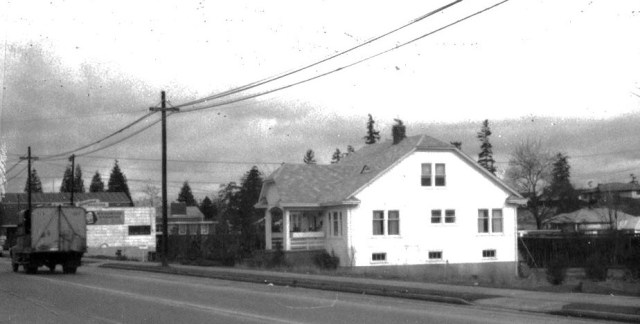
Country Club Heights in Wedgwood

In the 1950s Albert Balch, the developer of the Wedgwood neighborhood, was still building houses.  He did not keep with the same styles as when he started out, as housing trends and architectural styles evolved in the 1950s.  This article will tell about the group of houses called Country Club Heights which was built by a younger real estate agent who had started out working for Balch.  He followed Balch’s pattern of finding a prominent architect to design a group of houses in a particular style.

Albert Balch, the developer of Wedgwood, was a “networker.”  As a real estate salesman he knew that he must get his name known in the community.  He wanted to build relationships and establish himself as a trusted name in Seattle real estate.  He used several means to do this, including news articles about his projects, and he put shoe leather into getting out there to talk in-person with business owners.

8044 35th Ave NE, with its C-shaped sign, was Balch’s Crawford & Conover office. This building was demolished in 2018. Photo by Valarie.

Balch was interested in Washington State history.  One of the groups he belonged to was the Pioneer Association of Washington, which was for people whose families had come to Washington before statehood in 1889.

By the 1960s Balch realized that many of the people in that early generation were gone, and so he worked with some oldtimers like Joshua Green and C.T. Conover, to track down the descendants of early Washington settlers.   Balch served as president of the Pioneer Association from 1964-1967 and was credited with obtaining more than 3,500 new members for the Association. (Source: “Albert Balch Honored,” Seattle Times,  July 23, 1967, page 99.)
Continue reading

Posted in Architecture, Balch, Houses, Plat names | Tagged , , | Leave a comment

The Wedgwood Neighborhood in Seattle: Looking Back, Looking Ahead in 2025-2026

The Wedgwood neighborhood in northeast Seattle has a linear business district along the arterial 35th Ave NE. Its major cross-streets are NE 95th, 85th and 75th.

In the year 2025 the business environment at the major NE 85th Street shopping district was changed by the closure of the Rite-Aid store.

With the now-closed Rite-Aid on the northeast corner and the previously-closed QFC grocery store (2021) on the southeast corner, the intersection of NE 85th Street seemed quieter in 2025, with less foot traffic.

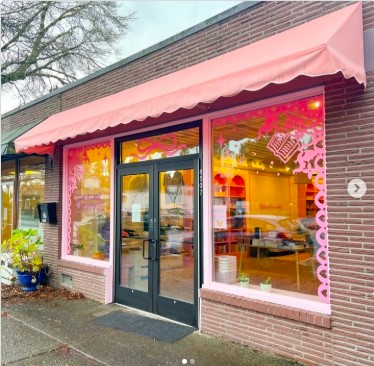
On the brighter side, well-beloved stores and coffee shops are still present around the NE 85th Street shopping district and a new bookstore, Lovestruck in Seattle, opened at 8507 35th Ave NE in October 2025.

Lovestruck in Seattle, 8507 35th Ave NE, new bookstore in October 2025.

Continue reading

Posted in businesses | Tagged , , | Leave a comment

Who Named the Wedgwood Neighborhood in Seattle?

Who gave the name of “Wedgwood” to this northeast Seattle neighborhood?

Henry R. Hansen lived in Wedgwood for only a few years, but he left a legacy: the naming of the neighborhood.  He didn’t do this on purpose, though.  Circa 1945 he changed the name of Hansen’s Tavern to the Wedgwood Tavern in a new building he had built on the same site, at 8517 35th Ave NE.

Continue reading

Posted in name of the neighborhood, Neighborhood features, taverns | Tagged , | Leave a comment

Lumbermen of Lake City in Seattle

The plan for the new Victory Way — today’s Lake City Way NE. The dotted line is the old Gerhard Erickson Road.

Northeast Seattle, including Lake City, really began to grow in the 1920s because of the rise of the automobile and the creation of more roads.  A highway called Erickson Road had opened in 1913 but its winding, narrow passage from Seattle to Bothell soon became inadequate.

One section of the Erickson Road went along the west side of today’s Nathan Hale High School (including the present Ravenna and 30th Avenues NE) to a stop sign at NE 110th Street.  Drivers then had to take a right-turn going eastward along NE 110th Street, turn left onto 35th Ave NE, then continue northward to Kenmore and Bothell.

In 1922 a new highway was completed, northbound out of Seattle, called Victory Way: today’s Lake City Way NE.  This new highway literally created Lake City by shifting its main intersection westward, over to where Victory Way crossed NE 125th Street.

Continue reading

Posted in businesses, Neighborhood features, Seattle History | Tagged , , | Leave a comment

Lake City’s Landmarked Buildings

Lake City in northeast Seattle has two historic buildings landmarked for preservation, which represent the neighborhood’s long record of community activism.

Lake City began forming as a community in the early 1900s and one of its first organizing efforts was to provide a school for its children.   In 1912 residents collected signatures on a petition to the King County Superintendent of Schools to form their own Lake City School District.

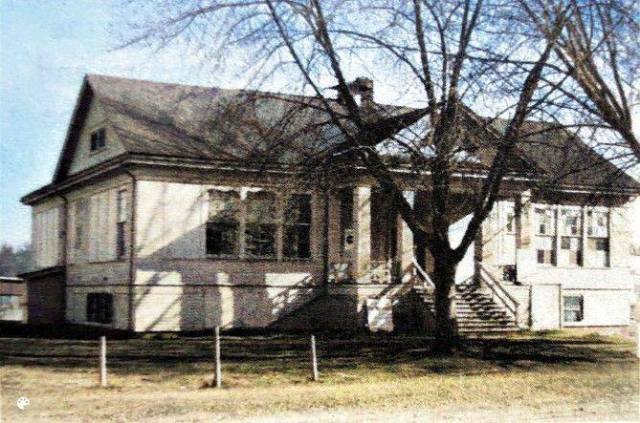
Classes met in temporary locations until the new wood-frame school building opened in January 1914, on the north side of NE 125th Street between 27th to 28th Avenues NE, present site of the Lake City Branch Library.

In 1919 two more classrooms were added but by 1926 the Lake City School building was again too small.  Lake City was growing, and with it, there were lots of children.

Lake City started its own school in 1912 on the present site of the library, NE 125th Street between 27th and 28th Avenues NE.

Continue reading

Posted in Architecture, Neighborhood features, parks, School histories, Seattle History | Tagged , , , | Leave a comment

The Roosevelt Heights Additions in Seattle

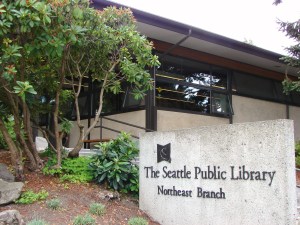
By the time that the new Northeast Branch Library, 6801 35th Ave NE, opened in 1954, the previous land owners had been gone for quite a few years and it was a different landowner who had sold the site to the library.  But even in the 1950s the blocks around the library still bore the stamp of the activities of Marvin & Isabella Jones of early in the 1900s.

Marvin F. Jones was born in 1838 in New York.  As a young man he began a westward journey which would finally bring him to Seattle in the 1890s.

In the 1860s Marvin Jones joined a wagon train out to Oregon where he worked as a teacher and attorney.  In the 1870s Jones moved to Walla Walla, Washington, where he practiced law and also became very successful in land developments.  Although he retained some of his investments in Walla Walla, Jones suddenly moved to Seattle in 1893.  Perhaps he had decided that the City of Seattle had brighter prospects for business.  The economic depression of the year 1893 had hit Seattle very, very hard and perhaps Jones thought that it was a good time to acquire properties at reduced prices.

Continue reading

Posted in Houses, Plat names, Seattle History | Tagged , | Leave a comment

The Northeast Branch Library in Seattle

The Northeast Branch Library has a historical scrapbook telling the story of the library.

In the early 1900s the land area around the Northeast Branch Library at 6801 35th Ave NE was owned by Marvin & Isabella Jones, who wanted to share their wealth by giving portions of their land for use of charities and community organizations.

Although Mr. & Mrs. Jones were no longer living by the time that the library opened in 1954, if they had been living, they would have been glad to see the establishment of such a wonderful neighborhood resource as a library.

This blog post will tell about the creation of the Northeast Branch Library which opened in 1954.

Continue reading

Posted in Neighborhood features | Tagged , | 3 Comments

How Did Lake City in North Seattle Get Its Name?

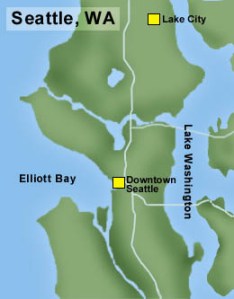
Lake City in northeast Seattle, map courtesy of HistoryLink.

Lake City is the northeasternmost neighborhood of Seattle and did not come completely into the City of Seattle boundaries until 1954.

Though it was platted as a suburban area of single-family homes, Lake City also developed its own commercial district around the intersection of NE 125th Street, and Lake City had a strong community identity from early years.  Today Lake City has active neighborhood associations and a busy business district.

The Shoreline Historical Museum, located at 18501 Linden Ave N., has a lot of information about north Seattle areas which were once outside the City of Seattle.  Former museum director Vicki Stiles has written this wonderful essay about how Lake City got its name, which I (Valarie) am re-posting here.

Continue reading

Posted in name of the neighborhood, Plat names | Tagged , , | 3 Comments

Hunter Tree Farm at Christmas 2025

In the early 1950s the growing Wedgwood neighborhood attracted businesses like groceries, gas stations, home improvement stores and services such as medical & dental offices.  One other new business in Wedgwood, Christmas tree sales, was very successful.

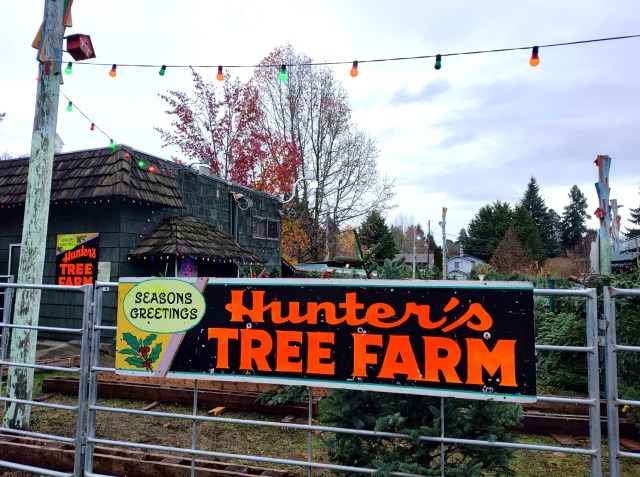
William O. & Carol Hunter of Shelton, Washington, brought Christmas trees to the Wedgwood neighborhood in Seattle, beginning in the 1950s.  Their Hunter’s Tree Farm sales site still exists today at 7744 35th Ave NE.  This year it is open for seasonal sales from November 24 to December 24, 2025.

Continue reading

Posted in Events and holidays, Hunter's Tree Farm, Neighborhood features | Tagged , , , | Leave a comment

Candy Cane Lane in December 2025

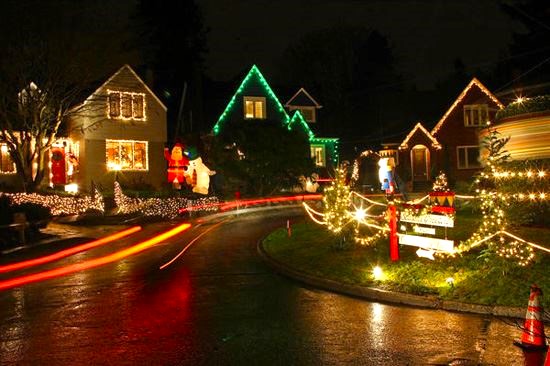
A fun favorite event in December 2025 is the annual Candy Cane Lane, a street in Ravenna which is decked out with lights and holiday decorations.  Candy Cane Lane is located on Park Road NE, just off of NE Ravenna Blvd, aligned with 21st Ave NE.

Candy Cane Lane location map, Park Road NE off of NE Ravenna Blvd.

The first night of lights is Saturday, December 6, 2025, at 4 PM, and it is pedestrian-only; no cars driving though.

Candy Cane Lane will be open every night through Thursday, January 1, 2026.  Go to the Facebook page of Candy Cane Lane for more info including the list of other pedestrian-exclusive nights.

You are encouraged to bring canned goods to contribute for University Food Bank.  Donation bins are at the end of the street.

Read more here for the history of Candy Cane Lane.

Carousel display at Candy Cane Lane on Park Road NE

Posted in Events and holidays | Tagged , , , | Leave a comment

The Trees of Autumn 2025 in Wedgwood

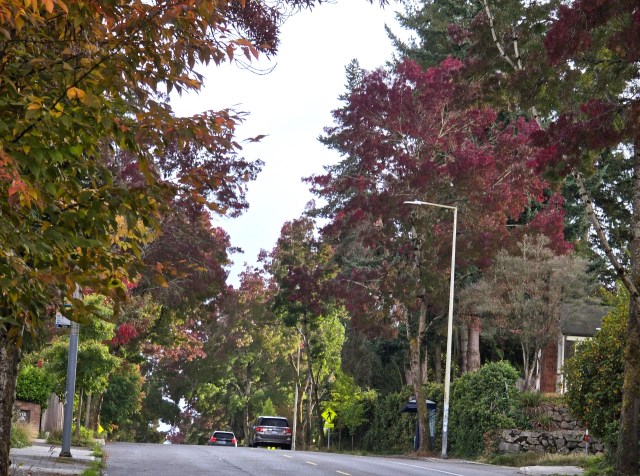
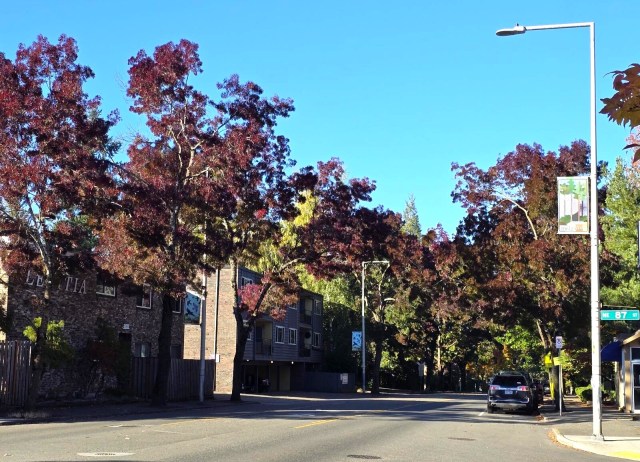
In the autumn season Wedgwood’s flame ash street trees enliven the arterial 35th Ave NE with brilliant color.

Flame ash street trees in the 9800 block of 35th Ave NE in October 2025. Photo courtesy of JRV.

Flame ash street trees in Wedgwood, as viewed from the corner of NE 87th Street in October 2025. Photo courtesy of JRV.

Continue reading

Posted in Neighborhood features, trees | Tagged , , | Leave a comment

The 2025 Pumpkin Season in Wedgwood

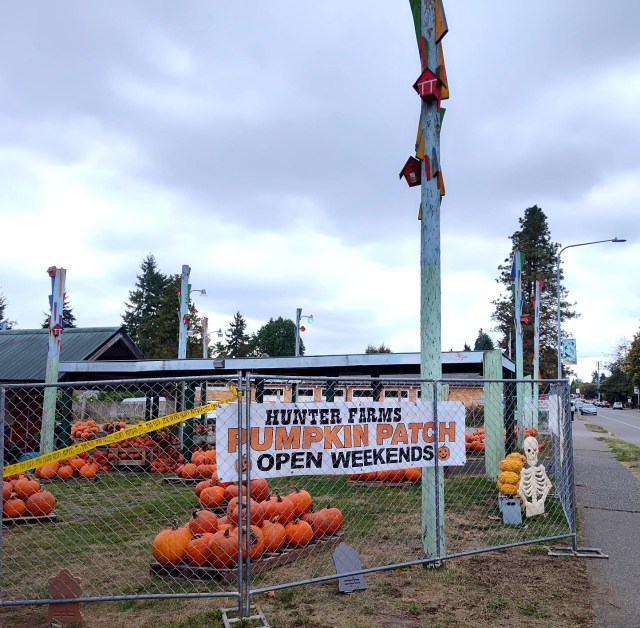
Wedgwood’s annual Pumpkin Party begins on Saturday, October 4, 2025.  This month the Hunter Tree Farm site, 7744 35th Ave NE, next door to the Wedgwood Post Office, is transformed into a Pumpkin Patch.  Local scout troops host pumpkin sales to raise funds for their programs.  The pumpkin sales will be open on Saturdays and Sundays through the last weekend of the month, October 25-26.

The Hunter Tree Farm site, 7744 35th Ave NE, is transformed into a Pumpkin Patch in October 2025. Photo by Valarie.

Continue reading

Posted in Events and holidays, Hunter's Tree Farm, Neighborhood features | Tagged , | Leave a comment

Who were Burke & Gilman?

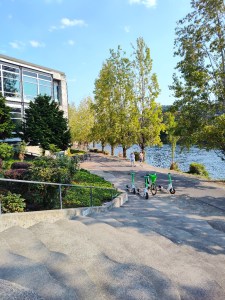
The Evanston Steps in the Fremont neighborhood, leading to the Burke-Gilman Trail and providing a good view of boat traffic on the ship canal. Photo by Valarie, August 2025.

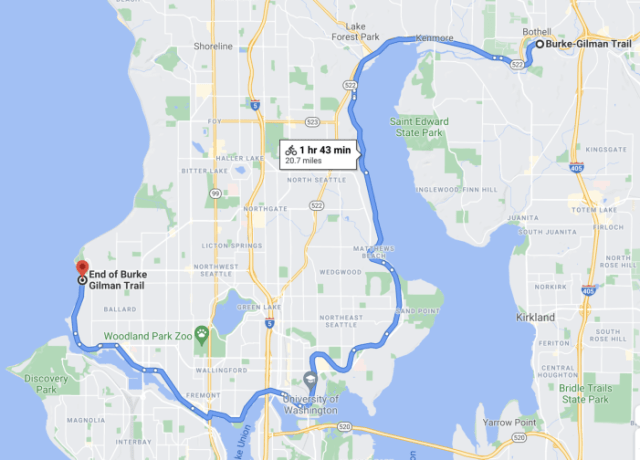
One of Seattle’s amenities is a trail which traverses the city and extends to the east side of Lake Washington.  Sometimes called “Seattle’s longest park,” the trail is overseen by the Parks Department and serves those who walk, run, or travel by bicycle for exercise or to commute to work.

In the 1970s the name “Burke-Gilman Trail” was given to this former rail line when a group of Wedgwood neighbors advocated for its conversion to a trail.  In another article on this blog I have told the story of how the committee came up with the Burke-Gilman Trail idea.

The members of that 1970s citizen-activist group suggested that the names of Thomas Burke & Daniel Gilman be given to the trail, because in the 1880s these men were the key movers-and-shakers in the creation of Seattle’s own railroad, called the Seattle, Lake Shore & Eastern.  In this blog article I will explore some of the reasons why these men, Burke & Gilman, came to Seattle, what their lives in Seattle were like, and the legacy they left.

The Burke-Gilman Trail proceeds along the north shore of Lake Union and over to Lake Washington to the east.

Continue reading

Posted in Neighborhood features, Seattle History | Tagged , , | 2 Comments

The Wedgwood Post Office

In 1946 McVicar Hardware became the first business to occupy a new storefront building owned by Henry R. Hansen of the adjacent tavern.  Business owner Grant McVicar became a leader in the growing Wedgwood community, and one of his initiatives was to seek to establish a post office in the neighborhood.

The Wedgwood Post Office in the center of the neighborhood at 7724 35th Ave NE.  On its north side is the Hunter Tree Farm.   Photo by Valarie, August 2025.

Continue reading

Posted in businesses, Neighborhood features | Tagged , | Leave a comment

The Wedgwood Gardens Plant Nursery Business

In the 1930s the (future) Wedgwood neighborhood was an unnamed area outside of the Seattle City Limits.  Along 35th Ave NE, the three intersections of NE 75th, 85th and 95th Streets each had only one building: a tavern.

German immigrant John Herkenrath & his wife Freda built a house at 7724 35th Ave NE, present site of the Wedgwood Post Office.  John was semi-retired and did some carpentry work.  The Herkenraths owned the property from their house up to NE 80th Street, where today there is the Wedgwood Post Office, the Hunter Tree Farm lot at 7744 35th Ave NE, and the Grassy Lot on the corner owned by Wedgwood Presbyterian Church.

The Herkenrath house in 1958, present site of the Wedgwood Post Office at 7724 35th Ave NE. Seattle Municipal Archives photo #75875.

Continue reading

Posted in businesses, Controversies, Hunter's Tree Farm | Tagged , , | 1 Comment

The Hudson Building in the 1920s

On the evening of July 4, 2025, a speeding car plowed into the Mioposto restaurant at 3426 NE 55th Street.  Diners were showered with broken glass, but fortunately no one was killed.  Immediately work began to reinforce the building’s storefront, as the main supporting post had been sheared away.

Above the storefronts, the parapet of the building has a letter H outlined in brick & tile, which set me on a quest to know what the “H” stood for.  I think it is likely the initial of John Stauffer Hudson who constructed the building in 1925.

This blog article will trace the background of John Hudson, his career as a builder in Seattle, and the story of the building at 3426 NE 55th Street.

Continue reading

Posted in Architecture, businesses, Seattle History | Tagged , , , | 1 Comment