The Eastwood and Wedgwood Community Clubs

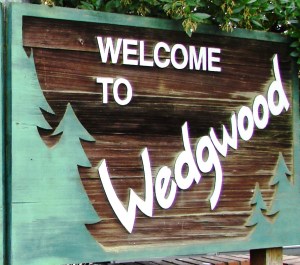
The Welcome to Wedgwood sign on 35th Ave NE at the corner of NE 95th Street

In 1995 the Wedgwood Community Council placed two Welcome to Wedgwood signs using Dept. of Neighborhoods grant funds. In 2007 the matching sign was stolen from the corner of NE 70th Street. A police report was filed, so if you know where the missing sign is, please report it.

During the years of World War Two from 1941 to 1945 all Seattleites had some concerns about the possibility of bombing, since Seattle is a coastal city.  For this reason people took civil defense training and organized their neighborhoods to help one another in case of emergencies.  After the war was over and people began to get established in jobs and homes, they applied their organizing skills to the development of neighborhood groups.

The identity of the Wedgwood neighborhood evolved gradually in the late 1940s and at first, there was more than one community club.  Although they were still young, war veterans were highly respected and they were some of the leaders in the young community of Wedgwood in the 1940s and 1950s.
Continue reading

Posted in boundaries, community club (old), Immigrant heritage, name of the neighborhood, Plat names | Tagged , , , , , , | Leave a comment

Roy Erford and the Euphonious Election District Names

Wedgwoodians of the 1940s may have been puzzled to learn that their voting district was called Sonora, which is a place name in Mexico.  Those living north of NE 85th Street and east of 35th Ave NE were in the Sand Point Precinct, and that made a little more sense – but not too much.  Before the era of precinct numbers, the King County Election Superintendent, Roy Erford, gave each voting area a colorful name.

Continue reading

Posted in boundaries, name of the neighborhood | Tagged , , , , | Leave a comment

How Wedgwood came into the City Limits of Seattle

The neighborhoods of northeast Seattle gradually came into the city limits between 1941 and 1954.  The Seattle City Limits did not advance northward in a straight line, like water rising in a bathtub.  It was up to each voting precinct in northeast Seattle to petition for annexation into the city and then vote in favor at a special election.  Finally as of 1954 the present north City Limits were set at 145th Street.

Continue reading

Posted in boundaries, Controversies | Tagged , , , | 1 Comment

Wedgwood’s Bus Company Lawsuit

One of Wedgwood’s biggest controversies, a lawsuit over the ownership of a bus company, is remembered by few people because the dispute began back in 1937.

Continue reading

Posted in Controversies, name of the neighborhood, School histories | Tagged , , | Leave a comment

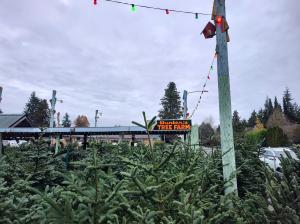
Wedgwood’s Gathering Place at the Hunter Tree Farm

Hunter Tree Farm site in Wedgwood at 7744 35th Ave NE. Photo by Valarie.

While best known for its annual Christmas tree sales lot in December, the Hunter Tree Farm property at 7744 35th Ave NE in Wedgwood, is open to the community for year-round use.

In the summer of 2011 Wedgwood neighborhood activists coordinated the creation of The Gathering Place at the Hunter Tree Farm.  The project was guided by the Pomegranate Center in Issaquah and was made possible by a grant from Green Mountain, parent corporation of Tully’s Coffee.

Continue reading

Posted in Hunter's Tree Farm | Tagged , , , | Leave a comment

Wedgwood’s University Unitarian Church

University Unitarian Church was fenced off for renovations as of July 2018. The congregation moved back into their building in November 2019.  Photo by Valarie.

In 2018-2019 the University Unitarian Church congregation vacated their building so that it could be renovated.  The congregation met elsewhere while the work was done on the UUC building located on 35th Ave NE at the southeast corner of NE 68th Street.   UUC resumed use of their building on November 17, 2019.

The following article is a history of how the University Unitarian Church came to its present location in Wedgwood in 1959.

Continue reading

Posted in Architecture, boundaries, churches, name of the neighborhood | Tagged , , , | Leave a comment

What about the “E” in Wedgwood?

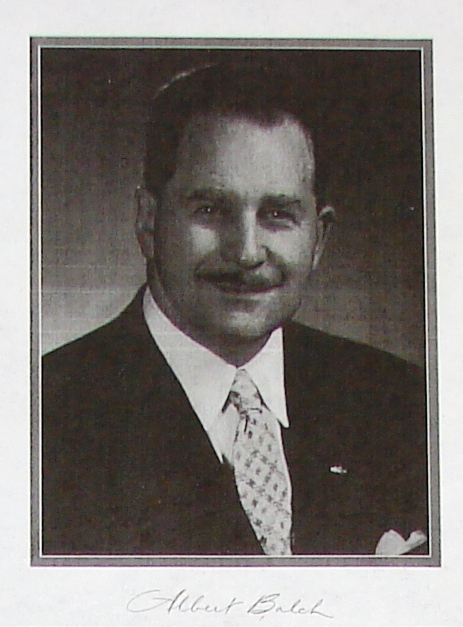
Albert Balch, developer of Wedgwood

Albert Balch, developer of Wedgwood

The Wedgwood neighborhood in Seattle took its name from a real estate development which was started in 1941 by Albert Balch.  The naming happened gradually after Balch’s Wedgwood group of houses became well-known.

In an April 1956 interview for the Wedgwood Echo, the community club newspaper, Balch told the story of how the name “Wedgwood” came to be.  Balch and his business partner, Ralph Jones, had previously named and built houses in View Ridge, a neighborhood centered around NE 70th Street on the slope east of 35th Ave NE, looking toward Lake Washington.  Balch’s wife Edith hadn’t liked the name View Ridge, so Balch told her she could choose the name of the next project.

Continue reading

Posted in Balch, boundaries, businesses, name of the neighborhood | Tagged , , , , | Leave a comment

In the Shadow of Wedgwood Rock: the Berg Family

Wedgwood Rock cartoon by Bob Cram, 1995 community newsletter.

John and Elida Berg were Swedish immigrants who, as newlyweds, were able to find a home and a new life in Seattle.  In 1910 John and Elida built a house on 29th Ave NE at NE 68th Street, just south of Wedgwood Rock which is on 28th Ave NE at NE 72nd Street.

In those days in the early 1900s it was called Big Rock, because the name “Wedgwood” for the neighborhood did not yet exist.  The area around Big Rock from NE 70th to 75th Streets was untouched and undeveloped; there were no streets put through around the Rock.

The content of this article is protected under a Creative Commons Copyright.  Do not copy text or photos without permission.

Continue reading

Posted in Houses, Immigrant heritage, Wedgwood Rock | Tagged , , , | Leave a comment

Mr. Cook, early neighborhood activist in Wedgwood

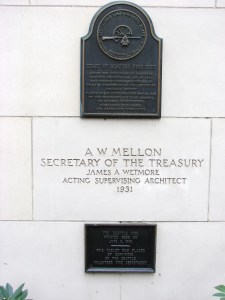
Old Federal Building historic plaques

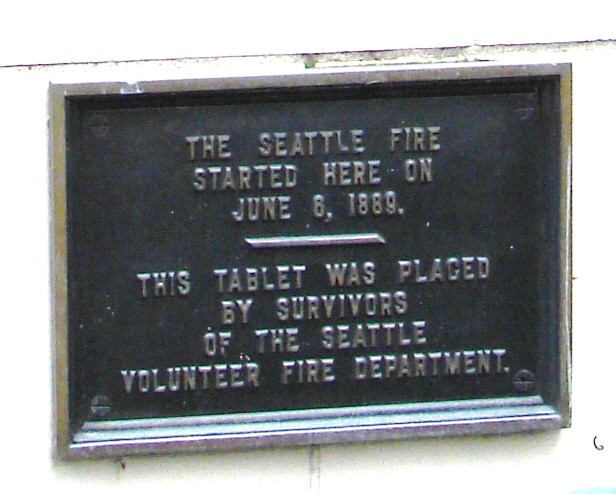
Historic markers on the Old Federal Building on First Avenue in Seattle.  The Great Seattle Fire started here at the corner of Madison Street.

Like other American cities which had major fires in the 1800s, Seattle received a publicity boost from its Great Fire of June 6, 1889.  Telegrams went out to other cities’ newspapers telling of the heroic efforts to save property and that no lives were lost in Seattle’s fire.

After Seattle’s big fire, city leaders quickly organized to rebuild Seattle’s downtown core on a better street grid and with improved utilities.   The city population jumped, swelled by people from all over the USA who came hoping to get jobs in Seattle’s rebuilding program.

Out in Barnes County, North Dakota, a young man named Frank Vickers Cook heard about the Great Seattle Fire and thought of the opportunities that might be available to him.  He had just one more thing to do before going to Seattle:  complete his North Dakota homestead claim and then arrange to sell the land.

There is a memorial marker for the Seattle Fire of June 6, 1889, placed on the old Federal Building at 1st & Madison Streets.

Continue reading

Posted in boundaries, businesses, Houses | Tagged , , , , , , | Leave a comment

Homesteading in Wedgwood after the Civil War

Wedgwood courtesy of HistoryLink

Wedgwood neighborhood in northeast Seattle. Map courtesy of HistoryLink.

In Seattle in the 1870s it was still possible to obtain land in a homestead claim.  Some who came to Seattle were young adventure-seekers, but many who came seeking land were older men who were trying to make a fresh start; some were veterans of the Civil War.

Veterans of the Union Army who fought in the Civil War, 1861-1865, received credit for time served in the war so that they did not have to take a full five years to “prove up a claim” and be awarded ownership of land, according to the Homestead Act of 1862.  They would deduct the number of years served in the war and then only had to live on the homestead claim until the remainder of the time, plus build a house.

Washington Territory did not send troops to the Civil War but after the war, veterans from all over the USA were attracted to the Pacific Northwest by the availability of land.  In the 1870s the first white settlers in the Wedgwood area were Civil War veterans who had come from other states of the USA.

Continue reading

Posted in Civil War, Plat names, School histories, Wedgwood Rock | Tagged , , , , , | Leave a comment