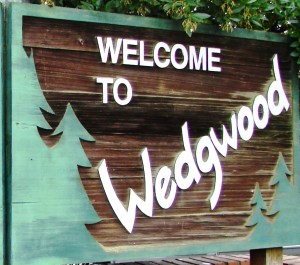
The Welcome to Wedgwood sign on 35th Ave NE at the corner of NE 95th Street.
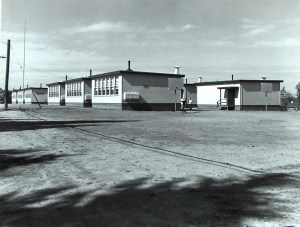
In the 1940s and 1950s the Wedgwood neighborhood in northeast Seattle began to take on its identity. The Wedgwood name gradually came into popular use when local businesses began using it, and it was solidified by the choosing of the name Wedgwood School in 1954.
The neighborhood community club, asked to define itself in 1956, chose the attendance boundaries of Wedgwood School as the official boundaries of the Wedgwood neighborhood, from NE 75th to 95th Streets, and from 25th to 45th Avenues NE.
Wedgwood’s growth in the post-World War Two era
The Wedgwood neighborhood grew rapidly during the post-World-War-Two housing boom in the 1940s and 1950s, because in those years northeast Seattle still had many vacant lots available for house construction. In addition to new construction, in the 1940s and 1950s it was much more common than it is now, for houses to be moved from one lot to another. Most were moved only a couple of blocks or within a mile, to an available vacant lot.
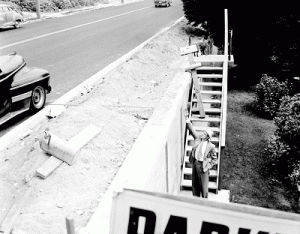
Seattle Engineering Dept. photo of June 1951 shows the retaining wall in front of the VanderWel’s house at 7512 35th Ave NE. The McGillivray’s Store (Chase Bank building) had not yet been built. The parking sign in the foreground is for the other stores at the corner of NE 75th Street. The VanderWel’s house was moved to 7308 38th Ave NE. Seattle Municipal Archives photo #42951.
In the busy years of development of the neighborhood infrastructure, sometimes houses were moved because of regrading or widening the streets. On at least one occasion in Wedgwood, a house was found to be “in the road” and had to be demolished or moved. Some houses, like that of the VanderWel’s at 7512 35th Ave NE, pictured at right, ended up far above or below the street level due to regrading.
In the 1950s the McGillivray family were building a store next to the VanderWel’s house (the present Chase Bank building at 7512 35th Ave NE.) They purchased the house and had it moved, so that they could use the space for a parking lot for their store.
Schools and parks are built in Wedgwood
Another example of upheaval in the development of the Wedgwood neighborhood in the 1950s was that when the Seattle School District chose the location of Wedgwood School, houses which had already been built there had to be moved off of the site. The school property had been part of Albert Balch’s Wedgwood #4, and he continued to build houses near the school after that portion of the plat was taken.
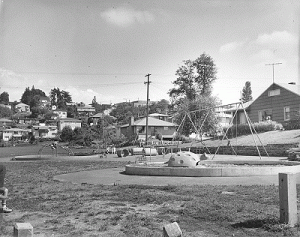
Dahl Field in 1970
Similar house-moving occurred during the creation of Dahl Playfield at 7700 25th Ave NE. In this case, the City of Seattle seized the property by eminent domain, and existing houses had to either be torn down or moved off of the property. Most of the families moved away at that time. One family which was displaced by the Dahl Field work, the Akahoshis, got another house close by and continued some of their farm-like activities such as flower-growing.
I have been able to find some of the houses which were moved off of the site of Dahl Field, and this article will tell where the houses are now located.
Continue reading →

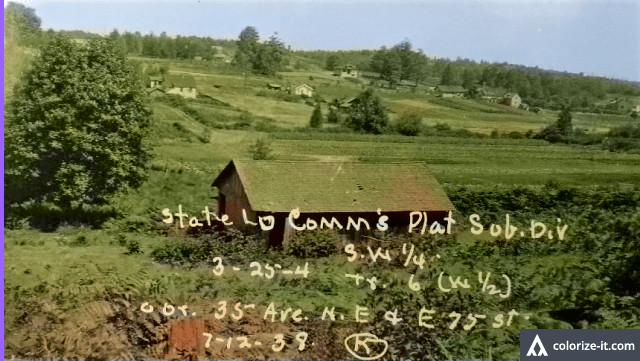





 Wedgwood in Seattle History