The Stairways of Wedgwood

The City of Seattle’s geological formation looks as though a glacial hand pressed into the land like cookie dough.  There are valleys across Seattle and north-south-running ridges as though the dough oozed up between the fingers of the hand.  For this reason, Seattle is a city of hills and sharp drop-offs where in some places, streets could not be put through because of the steep grade.

To get through where there are no streets, Seattle has hillside stairways for pedestrians.  Seattle has more than 660 outdoor stairways which are built and maintained by the City of Seattle’s Department of Transportation.

Blaine Street Steps with Streissguth Gardens at the top. Photo by Cary Simmons.

Some of Seattle’s most well-known stairways are on its steepest hills, Capitol Hill and Queen Anne.

The Howe Street Stairs on Capitol Hill start at the intersection of 10th Ave East & East Howe Street and contain 388 steps down to Lakeview Blvd East.  This stairway was built in 1911 and it is believed to have been done so that people could reach a streetcar line on the arterial street.

The Blaine Street Stairs, which are parallel with Howe Street, contain 293 steps.  The Blaine Street Stairs pass through Streissguth Gardens on the hillside.  Hilltop vantage points from both sets of steps, Howe Street and Blaine Street, reward the climber with spectacular views.

Like Capitol Hill, Queen Anne Hill was one of Seattle’s earliest residential neighborhoods.  It acquired its name in the 1880s-1890s because of its many Victorian/Queen Anne style houses.  This hill has had many beautification projects such as creation of boulevards and outlooks for the view southward to downtown Seattle and westward out over Elliott Bay.

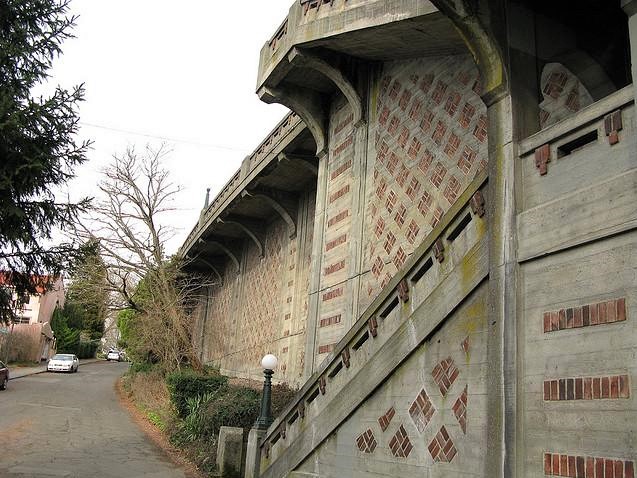
Queen Anne’s Willcox Wall, built 1913-1915, is actually a retaining wall with stairs built into it.  It extends between 7th and 8th Avenues West and includes the Marshall Park Viewpoint.

Willcox Wall on Queen Anne Hill was built in 1913-1915.


Continue reading

Posted in Neighborhood features | Tagged , | 6 Comments

Along the Road: the Evolution of 35th Ave NE

From early years Wedgwood in northeast Seattle was a car-centric neighborhood because of the lack of other transportation options.  Streetcar lines never reached Wedgwood, and there was no city bus service because the neighborhood was outside of the Seattle City Limits.  Some people in northeast Seattle had cars from as early as 1910 so that they could drive to work.

In current times some people are commuting by bicycle on streets which were originally built only for car traffic.

The population of the (future) Wedgwood really began to grow after construction of Seattle’s ship canal and bridges to cross it, especially the University Bridge.

The University and Montlake bridges made it possible to live in northeast Seattle and drive downtown to work, which caused northeast Seattle to have an increasing number of residents with cars in the 1920s.

Thirty-fifth Ave NE started out as a dirt path, was paved and arterialized in 1934, and has evolved into a busy street with multiple lanes.  The last major widening of the arterial was done in 1968.

Until recent years 35th Ave NE was completely car-oriented although it did have sidewalks for pedestrians.  As of 2019 bike lanes were created on 35th Ave NE and cars and bicyclists were asked to share the roadway.

Today, neighborhood activists are still advocating for a vibrant commercial district along the arterial heart of Wedgwood.

Copyright notice:  The text and photos on this article are protected under a Creative Commons Copyright.  Do not copy without permission.

Continue reading

Posted in Controversies, streets | Tagged , , | Leave a comment

Annexed Cities

Wedgwood banner cartoon by Bob Cram, Wedgwood Community Council Newsletter of March 1996.

One of the most common questions I receive on my blog is about the Seattle City Limits and on what date different areas came into the city.

Some neighborhoods of Seattle such as Ballard and Ravenna started out as separate cities but they found, over time, that they were not able to keep up with the need to have utilities such as water and electricity, and the need of improvements such as roads.

I have written a blog article about how the Wedgwood neighborhood came into the city limits.  Annexation of the northeastern areas including Wedgwood, occurred gradually over the 1940s to 1950s with separate sections voting themselves in at different times.  It was a controversial process with some people resisting because they thought that coming into the Seattle City Limits would not benefit them.

The northern portion of Wedgwood (north of NE 85th Street) and areas up to 145th Street, including Lake City, were among the last to be included with the final annexation taking effect in 1954.

In 1961 the “directional designations” were changed so that East 75th Street in Wedgwood, for example, became NE 75th Street.

The Seattle Municipal Archives has a map of annexations and a list of the dates of annexations.  Here is a link to the annexation info.   I am posting the SMA’s essay and info here:

Continue reading

Posted in boundaries, research resources, Seattle History | Tagged , | 1 Comment

Life and Legacy in Wedgwood in the 1930s: the Hentschell Family

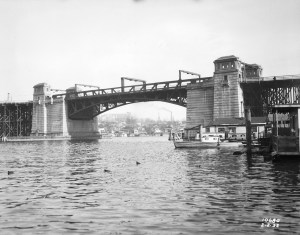
The University Bridge as it looked in February 1932. Photo 5441, Seattle Municipal Archives.

The Wedgwood neighborhood in northeast Seattle was never reached by a streetcar system, and the area remained outside of the City Limits until the 1940s-1950s.

Up until after the end of World War Two in 1945, the (future) Wedgwood area was semi-rural with scattered houses and no commercial district.

Northeast Seattle was hard to reach until after the ship canal was completed in 1917.  After bridges were built across the ship canal, roads extended out northward from there.  It might seem surprising that so many people in northeast Seattle owned cars in the early days of the 1920s-1930s, but they did, and they drove to work.

The University Bridge (built 1919) and the Montlake Bridge (1925) led to population growth in northeast Seattle because people were now able to live farther out in the less expensive northern areas of the city and drive across the bridges to work in downtown Seattle.

Wedgwood neighborhood in northeast Seattle. Map courtesy of HistoryLink.

The Hentschell family were among those who moved out to the (future) Wedgwood neighborhood in northeast Seattle in the 1930s, leaving behind the conveniences of the city in order to find an affordable place to live.

The Hentschells became active contributors to the life of the neighborhood in the 1930s and 1940s.  The neighborhood had not yet acquired an identity as “Wedgwood” but among other neighborhood activities, a Catholic parish was in formation.

Continue reading

Posted in churches, Houses, Immigrant heritage | Tagged , | Leave a comment

Binek’s Electric Bakery, a Beloved Business in Wedgwood in the 1950s

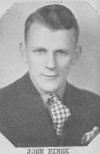
High school graduation portrait of John Binek of Minnesota

During the World War Two years of the 1940s the population of Seattle swelled with military and with civilian workers. People left other states in the USA to come to Seattle and get jobs in wartime industries such as Boeing Aircraft. People used to joke that some states such as Minnesota and the Dakotas had emptied out because it seemed that the entire population had relocated to Seattle.

So it was that the Binek family of Minnesota made a migration to Seattle in the 1940s.  Eldest son John Binek, a restaurant owner, joined the Army and was stationed out of a Seattle-area military base.  John’s widowed father thought it would be advantageous to start a new life in Seattle, and he brought some of his other young adult children to Seattle, as well.

John Binek’s father settled on Seattle’s Queen Anne Hill and opened a bakery at 3207 West McGraw Street in a newly-built block of storefronts.  Binek’s Bakery prospered in this commercial district.

Continue reading

Posted in businesses | Tagged , | 2 Comments

A House of Creativity in Wedgwood

Many artists, writers, and others in creative pursuits have made their home in the Wedgwood neighborhood in northeast Seattle.

The house at 7756 30th Ave NE was designed and built in 1941 by an artist who drew cartoons and portraits for the Seattle Times newspaper.

The next owner of the house was a man who resolved to discover the secret of success in the game of golf, spending many years analyzing the mechanics of the golf swing and writing a book about it.

Continue reading

Posted in Houses | Tagged , | 8 Comments

Immigrants in the Earl J. McLaughlin Plat in Wedgwood

A “plat” is a section of land, any size, for which a plan of streets and lots is laid out. Plats are given a name by the real estate company or developer.  Many neighborhood names are derived from plat names, such as Hawthorne Hills, Inverness, View Ridge, and Wedgwood.

Out in the (future) Wedgwood neighborhood in northeast Seattle, there was no neighborhood name in the early 1900s and areas were often known by their plat name.  The census of early years listed some residents as living on or near McLaughlin Road.

Continue reading

Posted in Houses, Immigrant heritage, Plat names | Tagged , | 2 Comments

Immigrants in the Oneida Gardens Plat in Wedgwood

In the 1920s and 1930s the (future) Wedgwood neighborhood in northeast Seattle became the home of numbers of immigrants, most especially from Germany, Holland and Sweden.

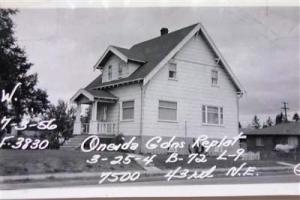
The house at 7500 43rd Ave NE in Wedgwood was built in 1910 by German immigrant Gustav Morris.  Photo courtesy of the Puget Sound Regional Archives, Bellevue, WA.

East of 35th Ave NE in what was called the Oneida Gardens blocks, many immigrant settlers worked in building trades such as carpentry and plumbing.  One of the earliest was Gustav Morris, an ethnic German from Latvia, who built a house at 7500 43rd Ave NE in 1910.  Morris worked as a bridge carpenter from 1910 to 1920, during the era when the ship canal and its bridges were under construction.

In the year 1926 Oneida Gardens received an influx of new residents due to the increasing availability of roads, electric & water utilities, and schools in northeast Seattle.  Near Gustav Morris’ house, the block between 41st to 42nd Avenues NE was settled by four Swedish families in 1926.

Continue reading

Posted in Houses, Immigrant heritage | Tagged , | 5 Comments

Before There Was a Wedgwood Safeway: From Rural to Urban

The area around the NE 75th Street intersection in Wedgwood never had an organized scheme of development.  As a result, people who came to live there in the 1920s saw startling changes over the years in everything from road grading to commercial growth.

Northeast Seattle residents near NE 75th Street started out in the 1920s with chickens and cows. By the 1960s their houses were surrounded by stores and businesses.

A 1938 photo by the King County Tax Assessor’s office, looking eastward and showing the corner which would later become Safeway. As of this year, there were no stores at the intersection and not all of the streets were put through.

Continue reading

Posted in businesses, grocery stores, Immigrant heritage | Tagged , , | 7 Comments

Before There Was a Wedgwood Safeway: the Plat of Public Lands

The Wedgwood neighborhood in northeast Seattle is defined as from NE 75th to 95th Streets. Wedgwood has a linear commercial district along 35th Avenue NE.

Today’s Wedgwood neighborhood is defined as extending from NE 75th to 95th Streets along the central arterial of 35th Ave NE. These “boundaries” are arbitrary but were suggested by the City of Seattle Department of Neighborhoods in the 1980s to help give neighborhoods a sense of identity and pride of place.

Before Wedgwood began to coalesce and gain an identity as a neighborhood in the 1940s-1950s, the area was made up of disparate sections of land under different plat names.  This blog post will tell how some plats (sections of land) were developed in an organized way, such as the first Wedgwood plat by Albert Balch.  In contrast to what Balch had done, the nearby plat of land owned by the Washington State Office of the Commissioner of Public Lands did not have an overall scheme of development.  It remained rural with not all streets put through, into the 1950s.

Continue reading

Posted in businesses, grocery stores, Neighborhood features, Plat names | Tagged , , , | 1 Comment