The Picardo Farm in Wedgwood

The P-Patch community garden is on the site of the former Picardo Farm. Photo courtesy of Joe Mabel.

The Wedgwood neighborhood did not come completely into the Seattle city limits until 1954.  The area retained some of its semi-rural character into the 1960s, such as the Picardo Farm which operated at 8040 25th Ave NE.

The Picardo family’s long legacy of farming would, in the 1970s, be shared with others to create a P-Patch program all over the City of Seattle, and the p-patch idea spread nation-wide.

Continue reading

Posted in farms, Immigrant heritage, Neighborhood features, Picardo Farm | Tagged , , | Leave a comment

A Farm Life in Wedgwood

Wedgwood didn’t acquire its identity until the 1940s when developer Albert Balch’s name for his housing development caught on as the name for the whole neighborhood.   In the early 1900s when the future Wedgwood area was still outside the Seattle city limits, the area was quite rural and it attracted young couples seeking inexpensive homes on large lots.   Many people thought that a rural lifestyle away from the city would be more healthful for their children, and they also hoped to live as inexpensively as possible by growing some of their own food.

Continue reading

Posted in 7545 45th Ave NE, Houses | Tagged , , , , | Leave a comment

The Ginseng Farm in Wedgwood

On the census of the year 1900 in Seattle Mr. Charles E. Thorpe was listed as a lodger in a private home on Denny Way near present-day Seattle Center.   By 1905 Mr. Thorpe had become one of the earliest residents of the future Wedgwood neighborhood, where he lived on forty acres of land from NE 80th to 85th Streets, 30th to 35th Avenues NE.

Continue reading

Posted in churches, ginseng farm, Land records and surveys | Tagged , , , | Leave a comment

Groceries and Growth in Wedgwood

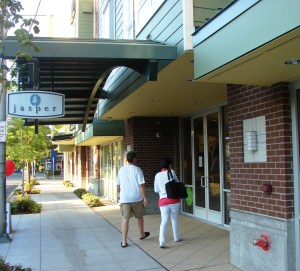
The Jasper is the first new apartment building to be built in Wedgwood in more than sixty years.

The Jasper which opened in 2012 was the first new apartment building in Wedgwood in more than sixty years.

Grocery stores in Wedgwood expanded with the growth of the neighborhood in the post-World-War-Two period of the 1940s and 1950s.

Beginning with the economic downturn called the Boeing Bust in the 1970s, grocery stores and some other kinds of stores declined along with the economy, and there were fewer locally-owned small businesses in Wedgwood.

The year 2012 brought in a new era with a new apartment building in Wedgwood’s 35th Avenue NE commercial core, and its live-work units at the sidewalk level, some which have businesses operating out of them.

The story of grocery stores keeps changing, and in 2021 it was announced that Wedgwood’s QFC at 8400 35th Ave NE would close on April 24th.  This store building had been originally built by Tradewell in 1959 and was the first store at that corner (before the Wedgwood Broiler restaurant was built.) The store was Matthew’s Red Apple 1989-1999 and was QFC from 2000 to 2021.
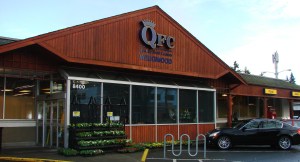
In 2022 a developer, Security Properties, announced interest in buying the entire shopping complex, tearing down all of the buildings and re-doing it.  As of 2024 the process began, to see if this developer will obtain City of Seattle approval for a design plan to include a new grocery store on the present QFC site.

Continue reading

Posted in apartments, businesses, Controversies, grocery stores, Neighborhood features | Tagged , , | 1 Comment

The Big White House on the Hill in Wedgwood

In the 1930s in Wedgwood there were mostly small houses and very few big houses, due to the difficulty of heating and that smaller houses were less expensive to build.   One big house which was very visible was perched on the crest of a high hill, west-facing and overlooking the valley of the Picardo Farm.  The house at 8234 28th Ave NE is in today’s Wedgwood neighborhood, but in those days the area was outside the city limits and had no name.

Continue reading

Posted in 8234 28th Ave NE, Architecture, Houses, Plat names | Tagged | Leave a comment

McGillivray’s: the Biggest Little Store in Wedgwood

In the 1940s Arthur & Dorothy McGillivray decided to move from Minnesota to Seattle along with their daughter, Bette, while Bette attended the University of Washington.   With past experience in merchandising, the McGillivrays were ready to try their hand at opening their own store, which they named the McGillivray’s Variety and Gift Store.

Continue reading

Posted in businesses | Tagged , , | 6 Comments

The Mary J. Chandler plat in Wedgwood

Mary J. Chandler’s Addition to Seattle is the name of a plat in Wedgwood.    The plat was filed in 1890 for land from 25th to 45th Avenues NE, NE 80th to 85th Streets.  To file a plat means to have a land area surveyed with streets and lots marked out on a map, and to give the plat a name.   Who was Mary J. Chandler, and what did she have to do with land in Wedgwood?

Note:  this article is based upon research that I did in property records and other original documents, and in historic background reading.  See the source list at the end of this article.  This blog is protected under a Creative Commons Copyright; all rights reserved.

Continue reading

Posted in Land records and surveys, Picardo Farm, Plat names, Seattle History | Tagged , , , , | Leave a comment

The Gateposts of Wedgwood

When Albert Balch, the developer of the Wedgwood neighborhood, put up stone gateposts at the entrance to his new housing area, he tapped into the gateposts’ symbolism of permanence and protection, qualities desired by young couples in search of homes.

Continue reading

Posted in Balch, businesses, gateposts, Neighborhood features | Tagged , | Leave a comment

Apartments in Wedgwood: Oneida to Jasper

In the early 1900s in Seattle, apartments were built along trolley routes to close-in neighborhoods such as Capitol Hill.   Wedgwood was a remote neighborhood which didn’t begin to form an identity until the 1940s and was never served by a streetcar system.  Up until 1948, Wedgwood had no apartment buildings and was still known as a semi-rural area of single-family homes where most people drove cars to work.

Balch photo

Albert Balch 1903-1976

Albert Balch started building his original plat of Wedgwood houses in the early 1940s but the development grew slowly due to wartime restrictions on materials.   Once World War Two ended in 1945, there still was a struggle to get sufficient building supplies for new houses, but the post-war construction boom had begun.

After the war, floods of returning servicemen wanted to get married, have their own homes and start families.   The Wedgwood neighborhood became synonymous with family living as the small but well-built Wedgwood houses beckoned to young married couples. Continue reading

Posted in apartments, community club (old), Controversies, Neighborhood features, Plat names | Tagged , , , , , , | 1 Comment

Parks in Wedgwood

Albert Balch, the developer of Wedgwood, intended to have some park space in the neighborhood but not all of his plans were realized, as he got busy with house-building.  In 1941 Balch platted a forty-acre tract of land from 30th to 35th Avenues NE, NE 80th to 85th Streets which became the first section of Wedgwood housing.   Balch won awards for the way he sculpted streets along the curving lines of the terrain, conserving as many trees as possible in his new Wedgwood plat.

Continue reading

Posted in Balch, Neighborhood features, parks | Tagged , , | Leave a comment