From Wedgwood to Meadowbrook

Lake City map

Lake City is the northeasternmost neighborhood of Seattle and did not come into the city limits until 1954.  Map courtesy of Historylink.

In the 1920s and 1930s the (future) Wedgwood area lacked a strong name association in part because it lacked a school to give the neighborhood an identity.  But just to the north, on NE 100th Street at the corner of 32nd Ave NE, was a school, Maple Leaf, which had a very strong history and for a long time it gave its name to the neighborhood.

The name of the Maple Leaf School had a different origin from today’s Maple Leaf neighborhood which is located in north/central Seattle with Northgate as a marker of its north boundary.

Today the old Maple Leaf School site at 3212 NE 100th Street is in the Meadowbrook neighborhood.  Meadowbrook is one of the five contiguous neighborhoods of northeast Seattle which are included as part of the greater Lake City area, including Victory Heights, Olympic Hills, Cedar Park, and the business district of Lake City.

Text and photos in this article are protected under a Creative Commons Copyright.  If you want to quote text or use photos please ask permission.

Continue reading

Posted in boundaries, Immigrant heritage, Meadowbrook neighborhood, name of the neighborhood, School histories | Tagged , , , , | Leave a comment

Avian Friday: Ruby-Crowned Kinglet

Valarie says: The Meadowbrook Pond is directly across from Meadowbrook Community Center (10517 35th Ave NE.) The Pond is an urban oasis and a refuge for birds.

Joe Sweeney's avatarShort & Tweet Bird Reports

IMG_8512

This week’s photo, taken January 15, 2013 at Meadowbrook Pond in Seattle, WA, features a RUBY-CROWNED KINGLET flashing a slice of its bright red crown at the photographer.

You don’t have to travel far to huge tracts of land to find cool birds. Rewards can be big when you survey a pocket of nature just down the road. On Tuesday and Wednesday, I drive 4 minutes to Meadowbrook Pond, a quaint little sanctuary tucked into a northeast Seattle neighborhood. The pond hosts some attractive water fowl, including GREEN-WINGED TEAL, WOOD DUCK, BUFFLEHEAD and HOODED MERGANSER, but during my 2 brief afternoon visits, it’s mostly about the small stuff. 3 tiny RUBY-CROWNED KINGLETS and a YELLOW-RUMPED WARBLER repeatedly leap out of the bushes bordering the pond, as they take wing above the water in search of flying insects. The kinglets are oblivious to my presence as they boldly fly surprisingly close…

View original post 64 more words

Posted in Nature and wildlife | Tagged , | Leave a comment

From Yesler to Wedgwood

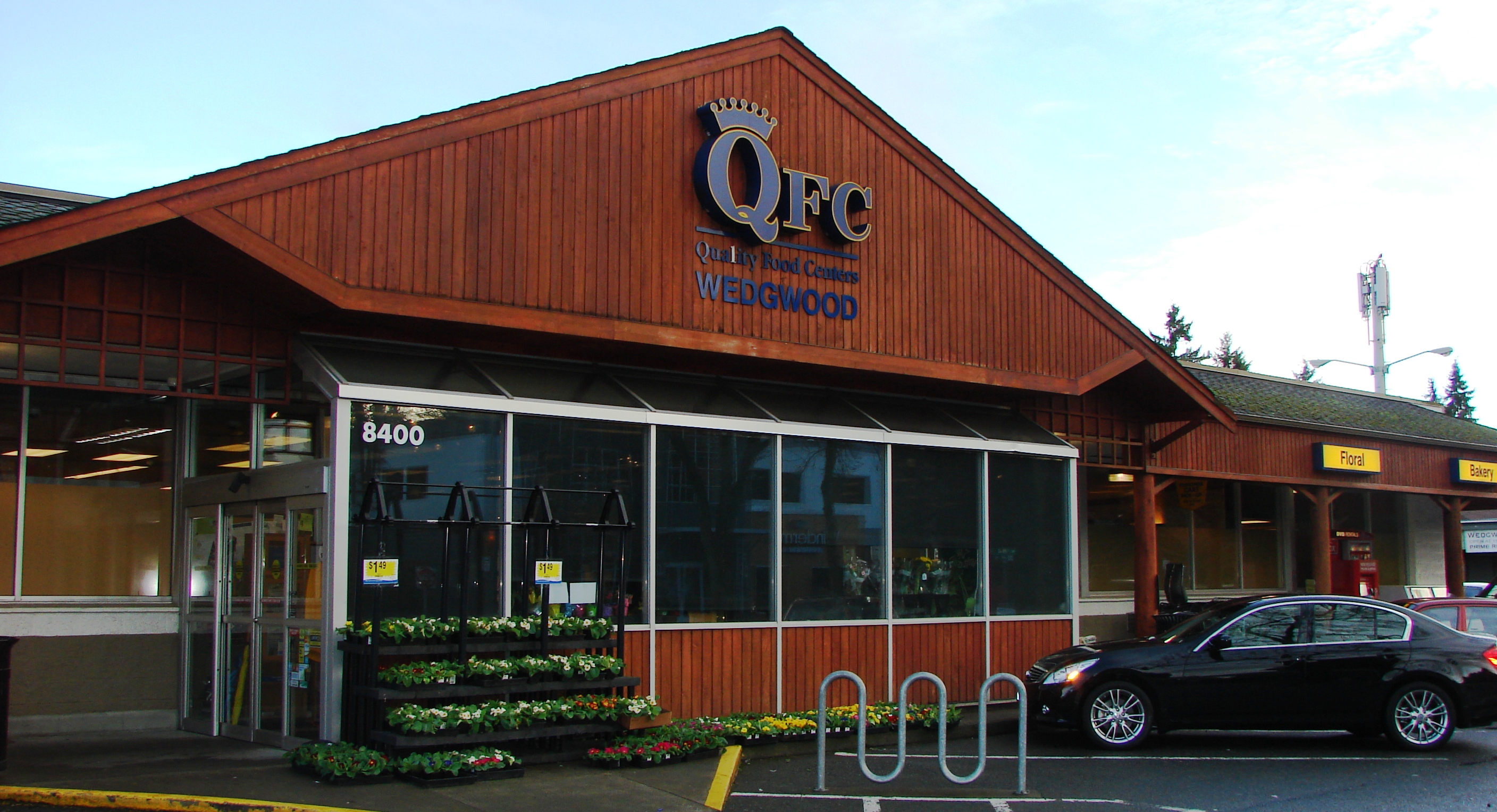
There has been a grocery store at the corner of NE 85th Street in Wedgwood since 1959, first Tradewell, then Matthew's Red Apple, then QFC.

There has been a grocery store at the corner of NE 85th Street in Wedgwood since 1959, first Tradewell, then Matthew’s Red Apple, then QFC.  The QFC closed in April 2021 and redevelopment of the site is pending.

The intersection of NE 85th Street on 35th Avenue NE is the heart of the Wedgwood neighborhood and is its main commercial center.

Today it is difficult to imagine that any corner of this intersection would be vacant, and yet the site had no buildings on it until 1959.

Up until 1959 when the Tradewell grocery was built, the vacant corner property had a long ownership by people who seemed to be just holding it as an investment and did not come to live in Wedgwood themselves.

Copyright notice:  text and photos on this article are protected under a Creative Commons Copyright.  Do not copy without permission.

Continue reading

Posted in Balch, boundaries, businesses, Land records and surveys, name of the neighborhood, Neighborhood features | Tagged , , , , , | 5 Comments

Birds in Winter

Valarie says: Even in winter in Seattle there are birds to be seen, which is evidence of God’s grace in His creation.

Sirfishalot's avatarSirfishalot's Blog

Living in the Pacific Northwest, you have to take advantage of the few days during then winter months when we have light. Last week I only had an hour or so to spare during one of those days and questioned if it would be worth the effort for such a short outing. Fortunately, I managed to spot several species in such a short time period including this Downy Woodpecker.

Downy Woodpecker (Picoides pubescens)

Photo & Video Sharing by SmugMug

Seattle Washington 
500mm | 1/640th Sec. @f/4.0 | ISO 640

Canon 1D Mark III+ Canon EF 500/4L IS USM

Processed with Lightroom 4, Photoshop CS5.

To see a larger version please click on the image.

Feel free to comment below if you like what you see or have any other observations.

Thanks for stopping by,

JayT

View original post

Posted in Nature and wildlife | Tagged | 2 Comments

Neighborhoods of Seattle: comparing the origins of Fremont and Wedgwood

How does the history and development of Wedgwood compare to that of other neighborhoods in Seattle?

B-G Trail along N 34th Street in Fremont.Autumn 2017

The Burke-Gilman Trail is the line of a former railroad and is parallel to the ship canal in Fremont.

Fremont was the site of some of the earliest land claims in Seattle in the 1850s, but it was not populated until developers bought the land in 1888.  Fremont had this date as a definite start-point as a community with streets laid out.  Its early development was planned by its land investors.

Many aspects of Fremont today, such as its street system and its hub for transportation, can be attributed to the strong period of development in the 1880s.  Fremont’s early developers were also invested in the streetcar system and they brought this convenience to Fremont, as well.

Active Seattleite Henry Yesler was a member of the Lake Washington Improvement Company and in 1883 he bought some of William Strickler’s former homestead claim in Fremont for a place to create a canal at the northwest corner of Lake Union. That same year, Judge Thomas Burke bought some of the (future) Fremont land for the right-of-way of the Seattle, Lake Shore & Eastern Railroad. The railroad route has come down to us today as the Burke-Gilman Trail.

Wedgwood Ale House at 8515 35th Ave NE

The Wedgwood Ale House at 8515 35th Ave NE is in Wedgwood’s earliest business block of the 1920s.

In contrast to Fremont, Wedgwood is a neighborhood which slept quietly until well after the year 1900, with no roads, railroads or other through-routes such as canals.  Property records show ownership of land in what is now Wedgwood, but with no one in residence except for a period of homestead claims in the 1870s.

The Wedgwood neighborhood really began to grow in 1923-1926 when water and electric utilities became available.  The biggest growth period in Wedgwood and the formation of the neighborhood identity finally came in 1945-1960 with the post-World-War-Two housing boom in north Seattle.

Continue reading

Posted in boundaries, Fremont neighborhood in Seattle, Land records and surveys, Neighborhood features | Tagged , , , , , | 1 Comment

Wedgwood’s Trailmakers: the Burke-Gilman Trail

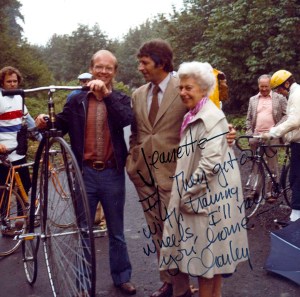
Burke-Gilman Trail approval celebration on March 15 1974.SMA 170708

Approval celebration, part of the property acquisition process, on March 17, 1974.  Mayor Charles Royer at center, City Councilwoman Jeanette Williams at right.  Photo courtesy of the Seattle Municipal Archives #170708.

One of Wedgwood’s proudest claims-to-fame is as the birthplace of the Burke-Gilman Trail which officially opened on August 19, 1978.

This wonderful urban amenity links northeast Seattle neighborhoods with nature.  As a transportation resource the Trail helps to reduce car traffic by making it possible for people to walk or bike to work.  On the level of health and enjoyment of the outdoors, the availability of a walking trail in a beautiful natural setting is one of the treasures of northeast Seattle.

The creation of the Burke-Gilman Trail was spearheaded by a group of Wedgwood neighbors in the 1970s, who worked together and got through the process of steps for the City to acquire the old railroad route.  The Trail, which is now for walking and biking, began as a railroad route back in the 1880s when Seattle was desperate for rail transportation of merchandise and raw materials.

Continue reading

Posted in Neighborhood features, Seattle History | Tagged , , | 8 Comments

The Wedgwood That Never Was: Charles H. Baker’s Land Investment

Charles H. Baker is a little-known early Seattleite though his legacy affects every person living in Seattle today.  Baker conceived of and built the electrical generating plant at Snoqualmie Falls which began producing electricity on July 31, 1899, and which continues to operate today.

Charles Baker never lived in Wedgwood but he owned land and filed two plats in 1889 and 1890, along with a group of land speculators and investors. It is ironic that although Baker was one of the earliest land owners in Wedgwood, Wedgwood was one of the last neighborhoods of Seattle to get electricity (about 1923.)

Wedgwood might have been developed earlier if it had not been for the unfavorable economic conditions of the 1890s in Seattle.

Continue reading

Posted in name of the neighborhood, Plat names | Tagged , , , , | 1 Comment

Houses in Wedgwood: from Craftsman to Balch

All of Wedgwood didn’t come within the Seattle City limits until 1954, and up until that time the neighborhood retained its rural character. Wedgwood was thinly populated and there were many vacant lots whose owners were holding land as an investment.  Many of the pre-1940 houses in Wedgwood had a lot of space around them with large yards, and undeveloped areas nearby.

Unlike densely populated neighborhoods such as Capitol Hill, there were no apartment buildings in Wedgwood prior to 1948 and no commercial intersections with a lot of stores.

In the 1920s and 1930s in Wedgwood there were only a few isolated mom-and-pop stores along 35th Ave NE, such as the Jacklin’s near the corner of NE 75th Street, Shauer’s at NE 85th, the Morningside Market at 9118 35th Ave NE and Faulds Corner at the intersection of NE 95th Street.  From early days Wedgwood was not a “walking” neighborhood, and even in the 1920s it was common for people to drive to market areas in Ravenna, Roosevelt or Green Lake.

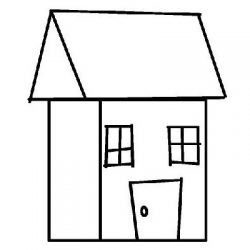
house stylized drawing

What is a house supposed to look like?

There were not any developers who built whole sections of houses in Wedgwood in a particular style until Balch’s first Wedgwood plat in 1941.  What came to be known as a “Balch house” set the precedent for decades to come of what type of houses were usual and expected in Wedgwood.

The concepts of traditional house styles (such as a pitched roof) and having a lot of space around houses (a big yard) is embedded in Wedgwood thought, so that today Wedgwoodians struggle to accept styles which don’t fit in with their ideas about compatible neighborhood house forms.

Continue reading

Posted in Architecture, Balch, Houses, name of the neighborhood, trees | Tagged , , , , , | 3 Comments

Brick and Stucco in Wedgwood

Some neighborhoods of Seattle are characterized by a certain style of house, because the majority of their houses were built during that style’s period of popularity.  Wallingford, for example, is known for its blocks of Craftsman houses built in a relatively short period of time, from 1905 to 1925 when the neighborhood was growing rapidly.

3233 NE 92nd Street in Wedgwood, built 1925.

Wedgwood does have some Craftsman houses as the style was very popular throughout Seattle in the 1920s.  The northwest quadrant of Wedgwood from NE 90th to 95th Streets was the first section of the (future) Wedgwood to be promoted by a real estate company, and for that reason it still has many houses built in the 1920s.

The Wedgwood neighborhood developed slowly in the period from 1900 to 1940 and has fewer houses in Craftsman style, representative of early years.

By the 1930s “revival” styles such as Spanish Colonial and English Tudor became popular in Seattle, and these houses used the building materials of brick and stucco.  There are just a few examples of these in Wedgwood.

Continue reading

Posted in Architecture, Houses | Tagged , , | 3 Comments

The Beginnings of Wedgwood School

The story of Wedgwood School at 2720 NE 85th Street shows how dramatically the population of the neighborhood increased after World War Two ended in 1945.  Wedgwood teemed with young families and children during the post-war “Baby Boom” years, and the school district scrambled to build more schools for them.

The brick gatepost on NE 86th Street at the corner of 30th Ave NE marks the entrance to Balch's Wedgwood #4 section of housing.

The brick gatepost on NE 86th Street at the corner of 30th Ave NE marks the entrance to Balch’s Wedgwood #4 section of housing.

During the 1940s real estate developer Albert Balch completed his original group of Wedgwood houses from NE 80th to 85th Streets, 30th to 35th Avenues NE.  The charming development set in curving streets, screened with tall trees, attracted young couples starting out with their first homes.  The name “Wedgwood” caught on in popularity and spread to become the name for the whole neighborhood.

By 1950 Balch was looking for more land to meet the demand for more houses.  He bought a former country estate on NE 85th Street at 30th Ave NE and platted it as Albert Balch’s Wedgwood #4.   He had already started building houses in the plat when the school district decided it would be better-used as the site of the new Wedgwood School.

Continue reading

Posted in Houses, School histories | Tagged , , , | 2 Comments