Don’t forget to count me for GBBC!
Are you in love with birds? February 12 to 15, 2016, including Valentines Day, is a weekend for those in love — with birds, that is. You can share your love of birds by spending just fifteen minutes per day (or more) counting them as part of the Great Backyard Bird Count citizen science initiative. Not only is it fun, but results are used to help study and ultimately protect birds.
The Great Backyard Bird Count is easy — no need to go out in the cold and rain, just count the birds in your backyard! Or on your lunch hour at work, you can take fifteen minutes to look out the window and count the birds you see. On the website of the Great Backyard Bird Count 2016 you can register to participate, explore data, learn about birds and get tips on identification of species.
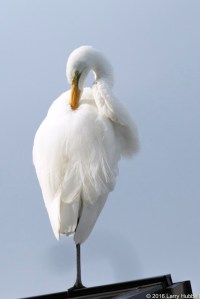
Great Egret photographed by Larry Hubbell at Portage Bay in northeast Seattle.
Information gathered by citizen scientists and reported online will help scientists track changes in bird distribution, some of which may be traced to El Niño storms and unusual weather patterns in 2015-2016.
A Great Egret seen by photographer Larry Hubbell of Union Bay Watch is a tall bird that looks like a heron, but it is white. The Great Egret usually winters in the southern USA and we don’t know why it is hanging around Seattle this winter!
It is normal for bald eagles to hang around Seattle during the winter but you need to keep a sharp eye out to see them. Seattle bicycle blogger Tony wrote about his eaglepalooza along the Burke-Gilman and Sammamish River Trails at Lake Washington.
UPDATE: This year’s Great Backyard Bird Count was the biggest effort ever! More than 160,000 participants from all corners of the earth, counted 5,689 species. That is over half the world’s birds and is 599 species more than last year’s count! See the detailed summary of GBBC 2016 at birdcount.org




 middle of the camp. It looked as a sign of hope in a place through which thousands of the world homeless journey, day and night, on their way to a hopefully better place and better future.
 Wedgwood in Seattle History