During the American Civil War of 1861-1865 the struggling outpost of Seattle in Washington Territory anxiously watched and waited as to how the war’s outcome would affect not only national issues but how it would affect federal influence in the Pacific Northwest. In the years just prior to outbreak of the war, Seattle had tried to get the federal government to help with expansion of roads and railroads, but the start of the war put everything on hold.
 The first territorial governor of Washington, Isaac I. Stevens, was appointed in 1853. On the way out to Washington Territory one of Stevens’ duties was to lead a survey crew, scouting a route for a transcontinental railroad. Stevens continued to promote this effort during his four years as governor and four more years as territorial representative in Congress. As a career army officer, Stevens joined the Union at the outbreak of the Civil War in 1861. He was killed at the Battle of Chantilly, September 1862 in Virginia.
Washington Territory did not send troops to the Civil War but in addition to Governor Stevens, residents had known some other men who became participants in the war. Captain George Pickett had been at Fort Bellingham until he decided to resign from the U.S. Army and serve with the Confederacy. Others who had been with him, such as Lt. Robert Hugh Davis, nephew of Confederate president Jefferson Davis, also left the Pacific Northwest and joined the Confederacy.
Lieutenant Samuel Wragg Ferguson, age 26, at the U.S. Army post of Fort Walla Walla, Washington Territory, resigned when he received news of the December 20, 1860, secession of South Carolina from the Union. He traveled home to Charleston, South Carolina and in March 1861 he was named a staff officer with Confederate Brigadier General P.G.T. Beauregard.
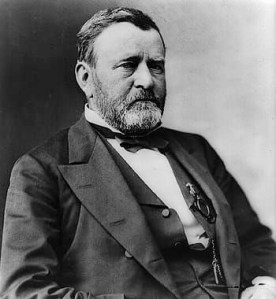
Ulysses S. Grant (1822-1885)
Ulysses S. Grant who had been posted at Fort Vancouver, Washington Territory, became one of the most famous generals of the Union during the Civil War. He received the surrender of General Robert E. Lee of the Confederacy on April 9, 1865 in Virginia.
Grant served as President of the United States 1869-1877. The promotion of railroads was a major issue during his administration. Prior to his service as president, the first complete transcontinental railroad went through to California in 1869. In the 1870s residents of the Pacific Northwest continued to advocate for a route to their area.
This blog article will tell of Seattle’s continual desire for a railroad route to the city, and how Civil War veterans were influential in railroad development in Seattle.
Continue reading →







 Wedgwood in Seattle History