Willa’s Wedgwood Wilderness

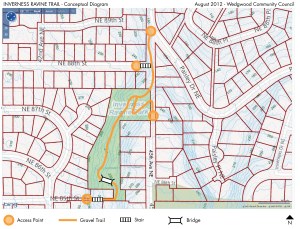
The Maple Creek section of the Wedgwood neighborhood extends from 40th to 45th Avenues NE, NE 88th to 92nd Streets.  A narrow, winding road meanders downhill from NE 88th Street to 45th Ave NE, following the curve of a Y-shaped ravine where two creeks join and where houses peek out from dense foliage.

In the 1920s the area was so remote that a Scout troop was brought to the ravine for a wilderness camp.  The Scout camp at the Maple Creek Ravine was led by Clark Schurman, who later became known for building a climbing structure at Camp Long in West Seattle.

In the 1930s a few houses began to be built in the area and one long-time owner, the Rogers family, served for decades as guardians of the natural environment.  Then from the 1960s to the 1990s, residents of the Maple Creek Ravine had to fight for preservation.

Continue reading

Posted in Maple Creek ravine | Tagged , , | Leave a comment

Wedgwood’s Apron Ladies

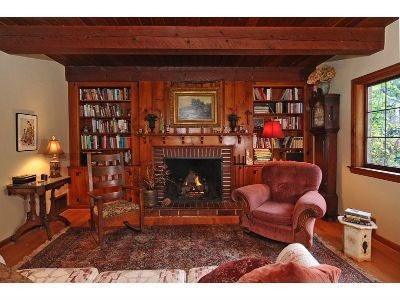
The Rogers home, built 1937 in the Maple Creek ravine, emphasized the beauty of wood in its paneling, fireplace surround and shelves.

Up until 1960 a woodsy corner of Wedgwood called the Maple Creek ravine was still protected from development or pollution, due to long-time landowners who were conservation-minded.  The Rogers  family who began living there in the 1930s kept some of their land as a nature preserve and then slowly began selling parcels only to people who would agree to conservation principles.

But then, in the busy years of growth in the Wedgwood neighborhood in the 1950s and 1960s, the pressures of development would begin to threaten the preservation of the Maple Creek ravine.

Continue reading

Posted in Controversies, Maple Creek ravine | Tagged , , , | 1 Comment

A Tree in Wedgwood History

If only trees could talk!   If they could, Wedgwood’s trees might tell tales of life in the neighborhood in the past one hundred years or more.

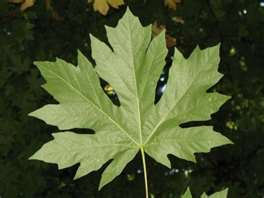
leaf photo courtesy of tree-species.blogspot.com

The bigleaf maple at 3158 NE 81st Street is a tree which might have a story to tell, of early days in the Wedgwood area.

According to Arthur Lee Jacobson’s Trees of Seattle, maples “might well be called our unofficial City Tree” because they are abundant in Seattle.  Various varieties of maples were widely planted as street trees throughout Seattle in the early 1900s.

Continue reading

Posted in ginseng farm, name of the neighborhood, trees | Tagged , | Leave a comment

Wedgwood’s Mystery Tree-Planters

The 95-foot-tall scarlet oak tree on the northeast corner of NE 77th Street and 38th Avenue NE in Wedgwood is mentioned in Arthur Lee Jacobson’s book, Trees of Seattle, as one of the most outstanding of its type in the city.   A variety of oak native to the East Coast, 38th Avenue’s enormous scarlet oak tree must surely have been planted there by someone — but by whom?

Continue reading

Posted in Immigrant heritage, trees | Tagged , , | Leave a comment

From Laurelhurst to Wedgwood: the McLaughlin Realty Company

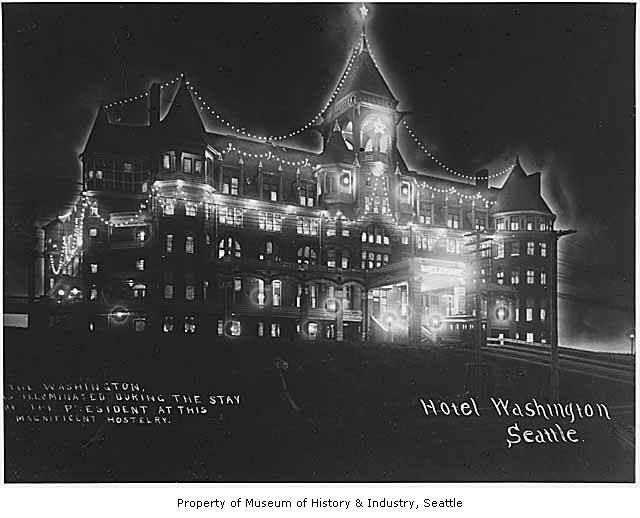
Hotel Washington decorated for visit of President Theodore Roosevelt, Seattle, 1903. Museum of History & Industry Photograph Collection Image Number SHS 7921.

If you live between NE 85th to 90th Streets, 30th to 35th Avenues NE in Wedgwood, the legal description of your home is in the Earl J. McLaughlin plat. Who was Earl J. McLaughlin?

Continue reading

Posted in Neighborhood features, Plat names | Tagged , , , | Leave a comment

Wedgwood’s Big Green Hundred-Year-Old House

The Big Green House at 7321 35th Ave NE is boarded up and awaiting demolition.

The Big Green House at 7321 35th Ave NE awaited demolition in 2015.

A house which is one hundred years old can hold a lot of history – and some mystery.  Although we have traced the ownership history of the Big Green House at 7321 35th Ave NE, researchers have not been able to answer the question of why the original owner built it.  Built in about 1910, the house would have been the biggest structure in the Wedgwood area at that time.

Continue reading

Posted in 7321 35th Ave NE, Big Green House, Houses, Land records and surveys | Tagged , , , | Leave a comment

Growing Up with Balch

In the summer of 1953 sixteen-year-old Jon Jarvis, newly possessed of a driver’s license, enjoyed chugging around Wedgwood in a Model T Ford he had acquired.   Lack of a driver’s license did not stop Jon’s thirteen-year-old brother Terry from driving the Model T as well.  To their surprise the brothers soon spotted another Model T in the neighborhood, with another thirteen-year-old at the wheel:  Bert Balch of View Ridge.

Continue reading

Posted in Balch | Tagged , , | Leave a comment

The House that Flew to Wedgwood

In the summer of 1959 I (Valarie) was among a group of Wedgwood neighborhood children who clustered on the sidewalk to watch a house being moved, maneuvered and set into place.  The house went onto a sloping lot at the corner of NE 90th Street with the front of the house facing 25th Pl NE.  The back was positioned for access to the basement garage from 25th Ave NE.  The house was given the address 8921 – 25th Place NE.  Like Dorothy’s house which flew from Kansas to Oz, the 8921 house seemed to have flown in from another world.  The house’s age, composition and design were completely different from the 1940s and 1950s houses around it in Wedgwood.

Continue reading

Posted in 8921 25th Pl NE, Architecture, Houses | Tagged , , , | 2 Comments

Wedgwood Rock

It is a startling experience to come upon Wedgwood Rock for the first time.  More than 19 feet high, the Rock looms up out of a parking strip on 28th Ave NE at the intersection of NE 72nd Street.

Wedgwood Rock is located at 7200 28th Ave NE in Seattle.  Photo by Valarie.

How did the Rock get there? Certainly, it was not put in place by Albert Balch, the developer who platted the surrounding streets and built the houses!

Research on Wedgwood Rock has been done by Dr. Terry W. Swanson, Department of Geological Sciences and Quaternary Research Center at the University of Washington in Seattle.  The term “quaternary” refers to the time period of the most recent Ice Age, when glacial ice extended down into Washington State as far south as Olympia and Spokane.

This glacial movement is called the Cordilleran Ice Sheet, from a Spanish word meaning cord or string of parallel mountains.  The geography of the Puget Sound region has a north-south orientation as though long fingers reached out and pressed down into the earth.  The “dough” of the land oozed up between the glacial “fingers” to form mountain ranges, and the depressed areas became Puget Sound, lakes and lowlands.

As the Ice Sheet moved down from the north into the Puget Sound area, rocks, sediments and boulders were carried along by the glacier, then were left behind when the ice retreated.  Testing done by Dr. Swanson has shown that the mineral composition of Wedgwood Rock matches a site on Mt. Erie, Fidalgo Island, near Anacortes in Skagit County, about 75 miles north of Seattle. Wedgwood Rock is classified as a “glacial erratic,” meaning that its composition does not match its present surroundings and that it was deposited by glacial action (not by Albert Balch!)

For more Wedgwood Rock articles on this blog, go to the Category List.

Sources:

“Determination of Cl-36 Production Rates Derived from the Well-Dated Deglaciation Surfaces of Whidbey and Fidalgo Islands, Washington.” Swanson, T.W., and Caffee, Marc L. (1999)  Quaternary Research 56, pages 366-382 (2001.)

Washington’s Glacial Geology,” Washington State Department of Natural Resources.

This property card from the tax assessors office is meant to show the house at 7200 28th Ave NE, but of course we are more impressed with the view of the Rock in 1948. Photo courtesy of the Puget Sound Regional Archives, repository of the property records of King County.

Posted in Wedgwood Rock | Tagged , , , | Leave a comment

Snow in Wedgwood

Wedgwood’s Wartime Snow

Ted & Gerry Valaas were married on December 6, 1941 — the day before the Pearl Harbor attack which plunged the United States into World War Two.  As a pharmacist Ted was exempted from military service, and Gerry went to work as a dental assistant at Ft. Lawton, taking the place of men who had gone to war.

The young couple had a difficult time finding a place to live.  Seattle was flooded with war workers and all new housing construction was allocated to them.

3164 NE 82nd Street

On a drive one day through the new Wedgwood area, longing to find a place in this charming new development, the Valaases came across a house for sale at 3164 NE 82nd Street.  The house was only three months old.

The owner of the house at 3164 NE 82nd Street had fled from the terror that gripped the entire West Coast following the Pearl Harbor attack:  the fear of bombing.  The owner had moved to a place of perceived safety in eastern Washington, and Wedgwood builder Albert Balch was handling the resale.  Since the house was technically not “new” anymore and therefore not reserved for war workers, Ted & Gerry Valaas were delighted to be able to buy the house.

At first, Wedgwood neighbors were slow to get to know one another. Neighborhood activities were almost non-existent because Gerry and many other women were working full-time during the busy war years.  It took the heavy snowfall of January 18, 1943, to bring neighbors together and begin the Wedgwood tradition of community cooperation.

The temperature dropped to six degrees above zero and Wedgwood’s tall Douglas fir trees, top-heavy with snow, began breaking off.  The snapping of tree limbs could be heard all night long as huge snowflakes continued to pile on.  Falling branches broke the electrical wires, and Wedgwood was without heat or lights.

In the spirit of the wartime ethic of making do without complaint, for the next three days Wedgwood neighbors gathered around fireplaces and shared their food and blankets.  Rather than just waiting for utility workers to come, Wedgwood neighbors cut the fallen trees and cleared the streets themselves.

This can-do spirit was the foundation of the Wedgwood Community Club which formed in 1946, a few months after World War Two ended.

Sources:

Gerry Valaas 1920-2016

“Once Upon a Time,” by Doug Clyde, March 25, 1960 edition of the Wedgwood Echo community club newsletter.

Interview with Gerry Valaas in 1992.

Posted in community club (old), snow | Tagged , , | Leave a comment