Sorting Out Seattle Street Names

In Seattle’s early years, 1851  to 1889, owners of property could lay out a plan for streets and give them any names they chose.  But as the city grew, segments of a street would often have several different names as the street passed through these individually-laid-out plats of property.

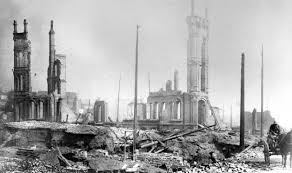
Seattle rebuilt its downtown area after the Great Fire of June 6, 1889.

The Great Seattle Fire of June 6, 1889 burned a large section of the downtown core but instead of destroying the city, the Fire led to a rebirth of Seattle with explosive population growth.   The population jumped tenfold to about 43,000 people in Seattle as of 1890, and doubled again by the year 1900 to more than 80,000 people.  (Source:  Seattle Municipal Archives Quick Information population statistics).

Within three years of the Fire, four hundred new subdivisions were filed with King County, mainly in or near the Seattle City Limits.  Each subdivision had a layout of streets with lots for houses or commercial buildings, and property owners continued to give the streets in their plats, any name that they chose.  This resulted in a tangle of street names which were often repeated in different areas of the city.  Finally in 1895 City Engineer R.H. Thomson began renaming Seattle streets via City ordinances.  The street-renaming project also decreed that streets would be east-west and those that were north-south would be called avenues.

Continue reading

Posted in Plat names, Seattle History, streets | Tagged , | Leave a comment

South of the Bridge in Fremont

From the earliest years of white settlers’ arrival in Seattle in the 1850s, land speculators and businessmen were attracted to what is now the Fremont neighborhood at the northwest corner of Lake Union.  A big advantage of the site was a stream which early settlers called The Outlet, flowing westward toward Puget Sound.  Men such as homestead claimant William Strickler hoped to use water-power to float logs on the stream, out to the Sound and toward Yesler’s Mill on the downtown Seattle waterfront.

The Fremont neighborhood in Seattle is located at the northwest corner of Lake Union. Map courtesy of HistoryLink.

Thomas Mercer suggested the name “Lake Union” at the Seattle settlers’ Fourth of July picnic on the southern shore of the lake in 1854, at where Lake Union Park is now.  The “union” name was proposed because Seattle’s ambitious settlers saw that it would be possible to unite three bodies of water via a canal system.

A canal could connect from Lake Washington (on Seattle’s eastern border) through Lake Union and on westward to Puget Sound.  For this reason The Outlet at Lake Union’s northwest corner was already identified at this early date as part of the ideal route of the envisioned ship canal.

Little did Seattle’s settlers know that the ship canal idea would not come to fruition for more than sixty years, completed in 1917.  In the meantime, in 1887 businessman Thomas Burke and his associate Daniel Gilman set up a railroad which travelled east-west across Seattle’s midpoint.  That route is today the Burke-Gilman Trail which is on the north side of the ship canal and passes through Fremont.

In 1894 Ross and Fremont were shown as place names with railroad stops. The ship canal had not yet been built but there was a creek called The Outlet from Lake Union, flowing westward.  Dots on the map represent population.

Continue reading

Posted in Fremont neighborhood in Seattle | Tagged , , , | 3 Comments

The Great Backyard Bird Count 2021

Watching birds is a safe and enjoyable activity we can do even during the coronavirus pandemic.

The 2021 Great Backyard Bird Count will be held February 12 to 15, 2021.

Black-capped chickadee in Redmond, WA, photo by Jacob McGinnis.

The GBBC is an opportunity to enjoy nature while contributing to the scientific tracking of birds and their environment.

For the GBBC you can watch birds anywhere, even by looking out your window.  Watch birds for at least fifteen minutes or more over the four days of the count, February 12 to 15, 2021.

Visit the website of the Great Backyard Bird Count 2021 to learn more about how to participate, how to get help with identification of birds, and how to submit your bird counts.

How is the information from the GBBC used?

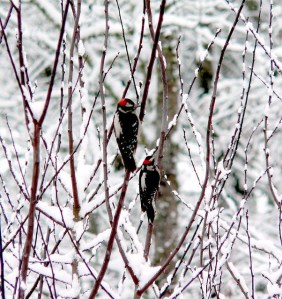
Downy woodpeckers in winter, Washington State.

The information from GBBC participants, combined with other surveys, helps scientists track the patterns of movement of species, how a species’ range may be expanding or shrinking, and learn how birds are affected by environmental changes.

Why is the count in February?

The Great Backyard Bird Count is held in the USA and Canada each February to create a snapshot of the distribution of birds just before spring migrations begin in March.  Scientists at the Cornell Lab of Ornithology, National Audubon Society, Birds Canada and others will combine the GBBC information with data from surveys conducted at different times of the year.

Watching birds is an activity you can do from your window.

Posted in Nature and wildlife | Tagged , | Leave a comment

Art on 34th in the Fremont Neighborhood of Seattle

The highly walkable Fremont neighborhood of Seattle has many artworks in easily observable outdoor settings.

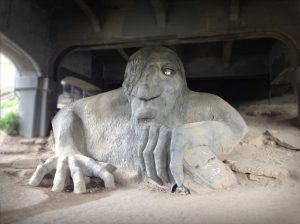
Some of the best-known artworks are the statue of Lenin located just west of Fremont Avenue, and the Fremont Troll on North 36th Street underneath the Aurora Bridge.

The Fremont Troll, created in 1990, is such a popular attraction that the City of Seattle re-named the two-block segment of street underneath the Aurora bridge, between North 34th to 36th Streets, “Troll Avenue” to make it easier to find.

Walking along North 34th Street which parallels the ship canal, we can see three-dimensional art pieces, sculpture, mosaics, planters and landscaping which tell the stories of history and events in Seattle.

This article will highlight only the artworks along North 34th Street from the intersection of Fremont Avenue, eastward two blocks to the corner of North 34th Street & Stone Way.

Continue reading

Posted in art, Fremont neighborhood in Seattle, Neighborhood features | Tagged , | Leave a comment

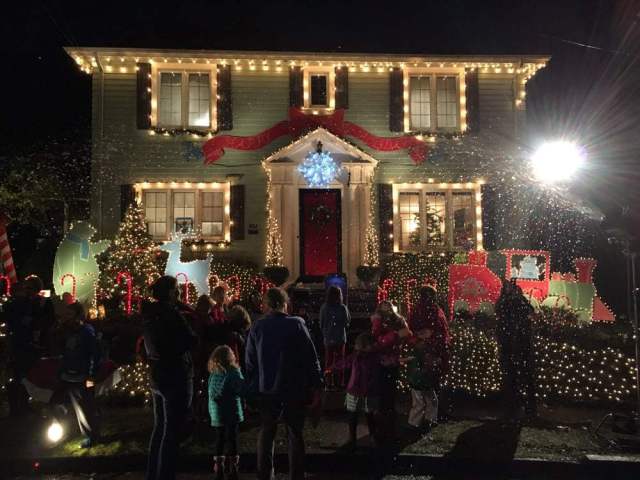
Candy Cane Lane in December 2020

Candy Cane Lane is a holiday tradition in northeast Seattle, a celebration of lights, decorations and color.  Candy Cane Lane is a cluster of houses on Park Road NE just off of Ravenna Blvd NE, where residents coordinate this event every December.

Candy Cane Lane

The event begins on Saturday night, December 5, 2020 at 4 PM and is open every night through January 1, 2021.  For more info check the Facebook page of Candy Cane Lane.

Drive-through is one-way, starting at the west entrance.  Pedestrians are welcome to follow the same one-way route as cars.  All Washington State Covid mandates are to be followed; masks and social distancing required.

At Candy Cane Lane, donations are being accepted to a food drive to University Food Bank and Warm Accessory Drive.  The donation bins are located towards the end of the street.

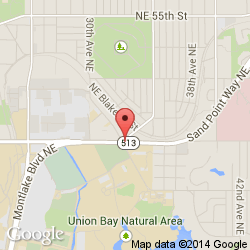
To find Candy Cane Lane:  From the intersection of 25th Ave NE & NE 55th Street, go west on NE 55th.  Keep to the right and follow the curve of the road around the edge of Ravenna Park.  Follow Ravenna Blvd one more block and turn right into Park Road NE which is the entrance to Candy Cane Lane.

Candy Cane Lane in northeast Seattle

Posted in Events and holidays | Tagged , | 1 Comment

Street Clocks in Seattle

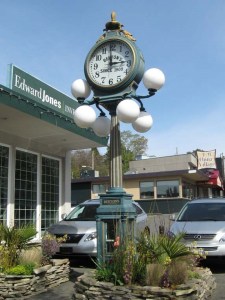
Benton’s Jewelers street clock was located at 3216 NE 45th Street just east of the Union Bay Place intersection.

In May 2020 a street clock called Benton’s Jewelers was removed from its location, packed and sent for restoration.

The clock at 3216 NE 45th Street was located east of the University Village shopping center and east of the five-way Union Bay Place NE intersection.  The clock had originally been on the sidewalk in front of Benton’s Jewelers on University Way NE, and moved with the company to the Union Bay Place location in 1986.  This was the only remaining street clock originally associated with a jewelry store in northeast Seattle.

The Benton’s Jewelers street clock was removed by a professional clock restoration service.  The clock-servicing company gave the Benton’s Jewelers clock a needed rehabilitation and brought the clock back into to working order again.

Benton’s Jewelers street clock. The buildings in the background are gone now.

The Benton’s Jewelers clock was removed for safety reasons because the clock was in a construction zone.  The new owners of the clock, Aegis Laurelhurst, received approval from the Seattle Landmarks Board to send the clock for restoration and storage, and then bring it back to its location.

In December 2023 the Benton’s street clock was set up at the corner of the Union Bay Place intersection where the Baskin-Robbins used to be.  Construction of a new building on the site, Aegis Laurelhurst at 3200 NE 45th Street, is to be completed in early 2024.

Aegis Laurelhurst is a senior living building.  This new construction has consumed the entire corner at Union Bay Place NE at the corner where there had been a Baskin-Robbins ice cream shop and other buildings.

Benton’s street clock is in place of the former Baskin-Robbins site, now Aegis Laurelhurst. Photo by Valarie, December 2023.

Continue reading

Posted in Seattle History | Tagged , | 6 Comments

Autumn Season 2020 in Wedgwood

Autumn 2020 in Wedgwood in northeast Seattle is bright with colorful trees. The arterial 35th Ave NE is lined with flame ash trees from the center of the neighborhood at NE 85th Street, northward to where 35th Ave NE merges with Lake City Way NE at NE 137th Street.

Wedgwoodians love their street trees and yard trees with varieties of Japanese maples among the most popular. Japanese maple trees have delicate leaves with glowing reds, oranges and yellows in autumn.

Japanese maples are glowing with color in autumn. Photo by Valarie.
Japanese maple trees are among the most popular in the Wedgwood neighborhood. Photo by Valarie.

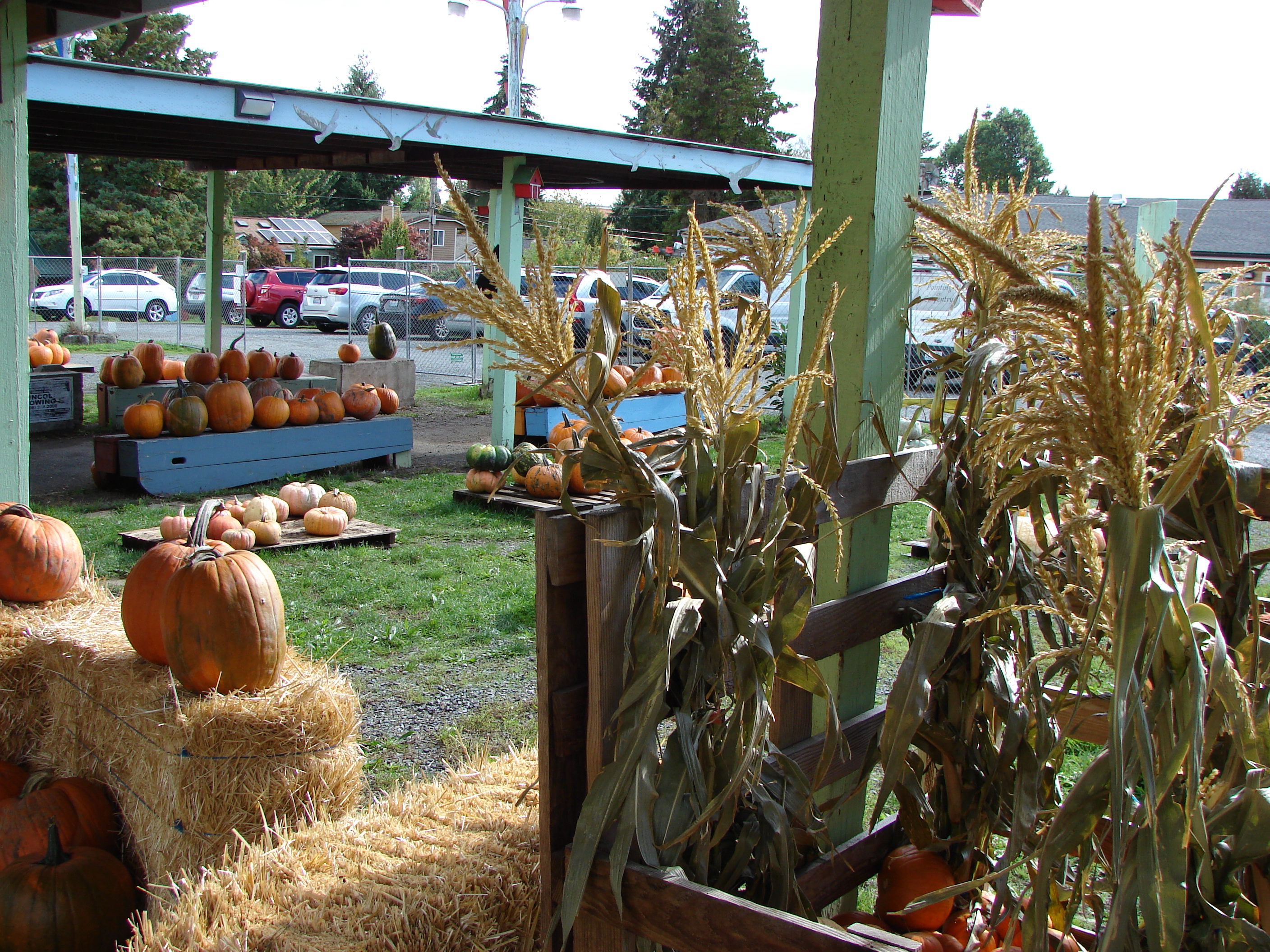
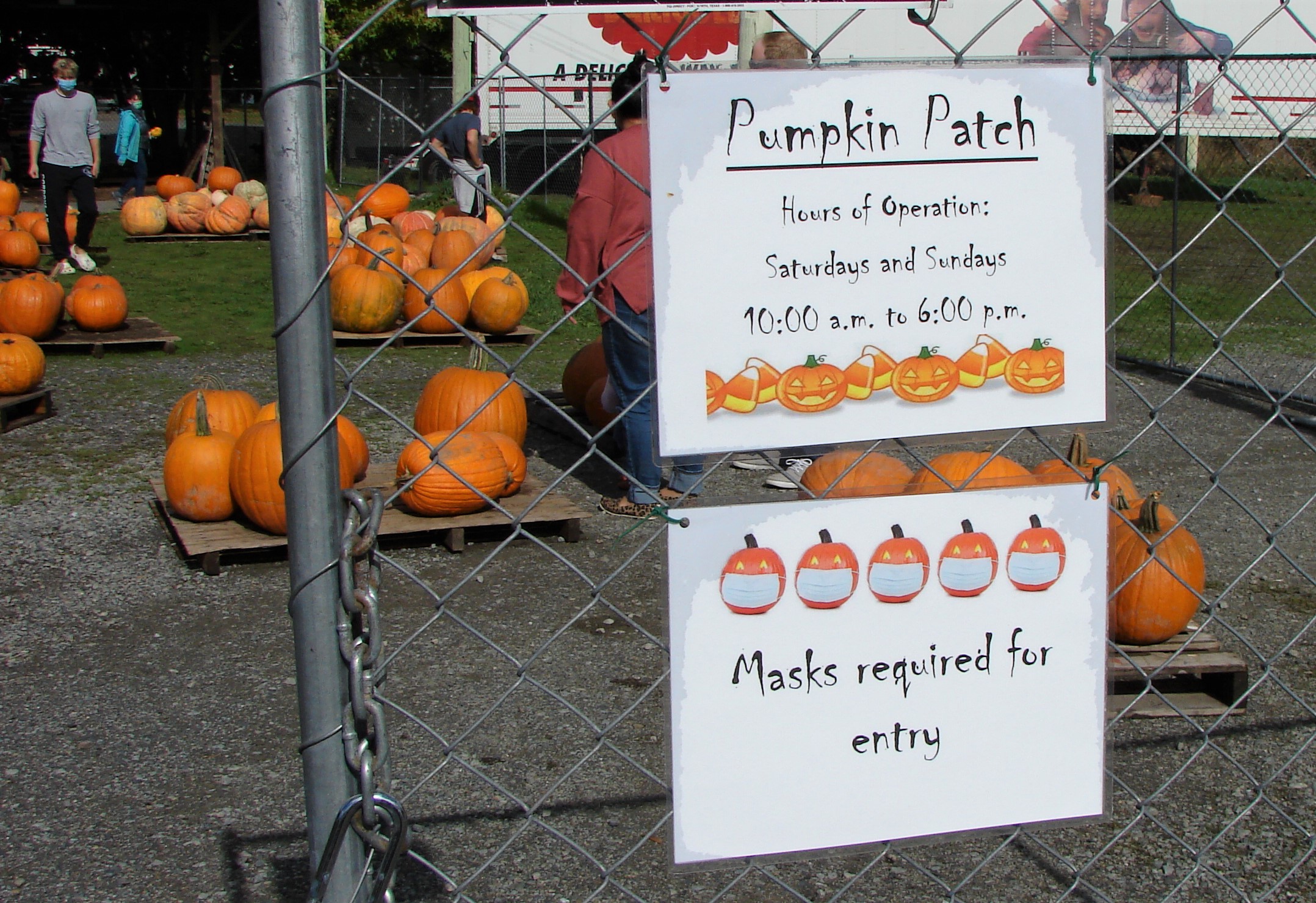
The traditional trick-or-treat in the Wedgwood business district will not be held this year due to the coronavirus pandemic, but families will still have fun with seasonal decorations such as pumpkins. The annual Pumpkin Patch, a fundraiser for a Scout troop, is open on Saturdays & Sundays through the end of October.

The Pumpkin Patch is located at the Hunter Tree Farm site, 7744 35th Ave NE, next to the Wedgwood post office. This gathering space is used all year round for produce stands, community activities and of course for the annual Christmas Tree sales in December.

Wedgwood’s Pumpkin Patch is at 7744 35th Ave NE next to the post office. Also featured this year is a produce stand at the sidewalk. Photo by Valarie.
The annual Pumpkin Patch is at the Hunter Tree Farm site, 7744 35th Ave NE. Photo by Valarie.
The annual Pumpkin Patch is a fundraiser for a Scout Troop and is open on Saturdays and Sundays in October. Photo by Valarie.
Posted in Events and holidays, Neighborhood features, trees | Tagged , | 2 Comments

The Rosaia Family in Wedgwood

Immigrants are the lifeblood of America, bringing energy, enthusiasm and enterprise to their adopted land.  On this blog I have highlighted some stories of immigrants who settled in Wedgwood in northeast Seattle and who became active participants in the neighborhood.  This blog post will tell about the Italian-American family who founded Rosaia Brothers Florists in Seattle.

Ray Giusti & his wife Laura Rosaia were first-generation Italian-Americans and in the 1920s they were the first Rosaia family members to move to Wedgwood.  They joined the neighborhood’s log cabin Catholic chapel.  By the 1950s Ray & Laura had seen their parish grow into the present Our Lady of the Lake Catholic Church.  By the 1950s Laura’s siblings had also become residents of Wedgwood.

Continue reading
Posted in Immigrant heritage, Seattle History | Tagged , , | 1 Comment

Van Doren in Washington Territory

When we think of the pioneer white settlers of Washington Territory, we are referring to those who came before statehood in 1889.  We assume that these adventurers were young single men out to make their fortune or young families seeking land claims and the opportunity to grow with the Territory.

Van Doren’s Landing at a bend in the Green River at Kent, Washington.

There are some notable exceptions to the typical “young pioneers” storyline.  Some men and women age 50+ were bold and energetic enough to start new lives on the frontier of the Pacific Northwest.  One of these exceptional older adventurers was Cornelius Marshall Van Doren who was 56 years old when he arrived in the Territory in 1871, along with his wife Delia, age 54.

The Van Dorens traveled with two adult children, son G.M. and his wife Amanda, and the Van Doren’s daughter Louisa and Louisa’s husband George W. Ward, age 33.  The three couples left what appeared to be prosperous and settled lives in Illinois, and they traded this in for the adventure of new lands and unknown challenges.

This blog article will outline the activities of C.M. Van Doren when he became an active community member in Kent, Washington, about sixteen miles southeast of Seattle.  At the end of this article we will briefly note his land claims which included part of what is now the Lake City neighborhood in northeast Seattle.  We don’t know why Van Doren bought this northeast Seattle property in 1871; perhaps he simply held it as an investment like a savings account, which he hoped would grow in value.

The origins of Lake City in Seattle go back to this 1871 land claim of Van Doren’s, but it would be many more years before a community grew up in remote northeast Seattle.

Continue reading

Posted in Land records and surveys, Seattle History | Tagged , , | Leave a comment

The Minnie Kraus Plat in Northeast Seattle

Minnie Kraus was a young woman who made a real estate investment in northeast Seattle in 1918, filing a plat which she named after herself.  A “plat” is a section of land, any size, for which a map of streets and house lots is laid out.

Minnie Kraus portrait in the Broadway High School yearbook of 1911.

Minnie was 24 years old in that year of 1918 and she was in the first generation of young women in Washington State who could vote in elections, as of 1910.  “Universal womens suffrage” finally came throughout the USA on August 18, 1920, when the 19th Amendment to the US Constitution was ratified.  This changed the Constitution to guarantee all women across the USA the right to vote.  Most American women voted for the first time in the presidential election of 1920.

During her lifetime Minnie experienced extremes in society’s expectations and demands of women.  During war years it was thought to be OK for women to take up jobs in the absence of men who had gone into the military.  During times of economic depression such as the 1930s, some women were laid off because Washington State employment policy favored male heads of households; it was thought that married women should keep house and let men be wage earners.

As of 1918 when she filed a plat of land for income from real estate, Minnie was part of a movement to show that women were not weak or fragile, arguments which had been used by people opposed to granting voting rights for women.  Minnie fit the profile of the “new American woman” who was well-educated and independent.  Minnie worked at a job outside the home and she even drove a car.

Minnie’s two sisters never married and they became teachers, a traditional job for women, but Minnie followed a nontraditional path of continuing to work at an office job and real estate sales even after she got married.  Perhaps Minnie named her land investment after herself to show that she stood behind her sales, that the opportunity to buy house lots in her plat was a good investment.

Continue reading

Posted in Land records and surveys, Plat names | Tagged , , , | 4 Comments