Candy Cane Lane 2023

A fun family holiday event in northeast Seattle is the annual Candy Cane Lane. Candy Cane Lane is a cluster of houses all decked out in lights and themed decorations, located on NE Ravenna Blvd/Park Road NE at 21st Ave NE (see map below).

Beginning on Saturday night December 2, 2023, through New Years Day 2024, you can drive through or walk through Candy Cane Lane nightly.

Hours on Sunday through Thursday nights are from 4 PM to 9:30 PM.  Friday and Saturday night hours are 4 PM to 11 PM.

Pedestrians are welcome at all times, and you are encouraged to walk through for a closer look at the lights and decorations.   There are three nights when Candy Cane Lane will be closed to cars and will host pedestrians only:  December 7, 14 and 21.

You are encouraged to bring food donations (canned food like soup or dry food like spaghetti boxes) for the University District Food Bank barrel at the end of the lane.

See the Candy Cane Lane Facebook page for more details.

Directions:  from the intersection of 25th Ave NE, go west on NE 55th Street.  Keep to the right and follow the curve of the road, keeping Ravenna Park on your right.  Look for the signs at NE Park Road aligned with 21st Ave NE.

The history of the houses on this street called NE Park Road (Park Home Circle) is that it was developed in the 1920s with a site plan and architectural plan for the houses as a group.  The site was owned by W.W. & Louise Beck who developed the Ravenna community beginning in 1889.  In the 1920s their son Broussais Beck engaged architect Carl Gould to plan the site and design the Park Home Circle houses.
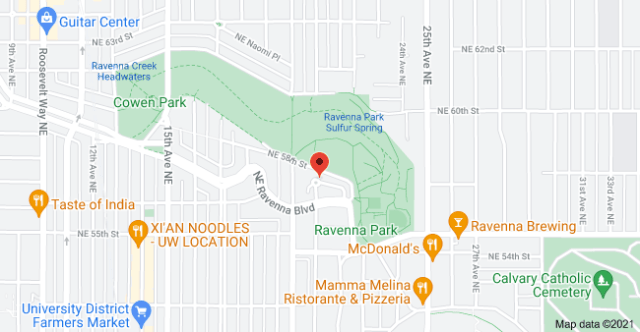
Candy Cane Lane location map, Park Road NE off of NE Ravenna Blvd.

Posted in Events and holidays | Tagged , , | Leave a comment

Enjoying the Trees of Wedgwood

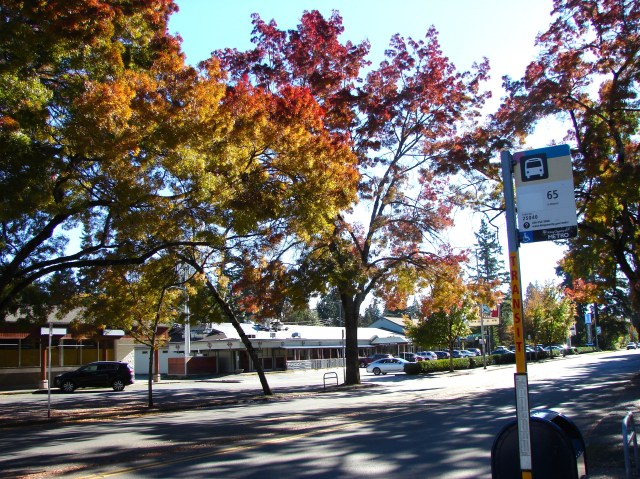
In the autumn season Wedgwood in northeast Seattle is bright with red, yellow and orange leaves.   Street trees called Flame Ash turn a deep red along 35th Ave NE from NE 84th Street northward to NE 137th where 35th Ave NE merges with Lake City Way NE.

Trees of related Flame Ash varieties such as Raywood, Marshall Seedless and Golden Ash line other nearby arterials such as NE 125th Street from Lake City westward to Roosevelt Way NE.  A guide to street trees is on the City of Seattle Tree Inventory Map.

Flame Ash street trees at the Wedgwood Shopping Center, 8400 35th Ave NE. Photo by Valarie, October 2023.

Continue reading

Posted in Controversies, trees | Tagged , , | 1 Comment

The Pumpkins of Wedgwood in 2023

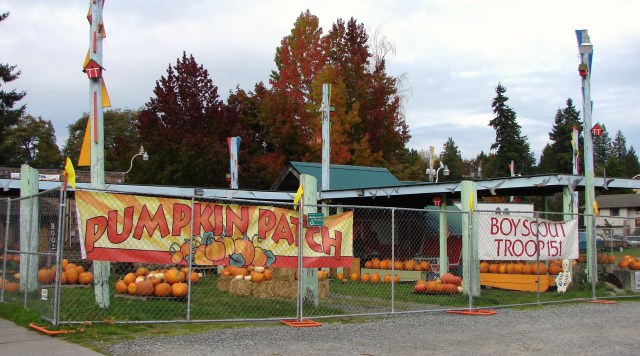
One of the delights of the autumn season in Wedgwood in northeast Seattle is the colorful display of pumpkins for sale by Scout Troop 151.  The pumpkin sales support the Scouts programs throughout the year.

Continue reading

Posted in Events and holidays, Hunter's Tree Farm, Neighborhood features | Tagged , | Leave a comment

Illuminating Bryant

In the early 1900s Seattle neighborhoods were growing farther to the northeast, on the edges of communities such as Ravenna and the Town of Yesler.

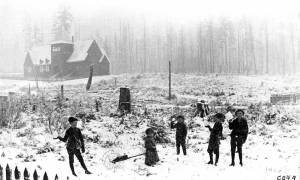
Seattle Female College building as pictured in the 1890s, at 5702 26th Ave NE. Photo courtesy of University of Washington Special Collections.

Ravenna was a railroad stop at the intersection of Blakeley Street & 25th Ave NE.  The Town of Yesler grew at the present site of Laurelhurst where, in the 1880s, another Yesler sawmill had operated in addition to the Yesler Mill of 1853 on the downtown Seattle waterfront.

One of northeast Seattle’s earliest church groups began in 1901, calling itself the Yesler Sunday School.  Later it was called Ravenna Methodist Church when it met at the former Seattle Female College building at 5702 26th Ave NE.  Then finally the group built a church building which still stands today on NE 60th Street in what is called the Bryant neighborhood.

Continue reading

Posted in churches, name of the neighborhood | Tagged , , , , | 3 Comments

From Pasture to Playfield: View Ridge

View Ridge map courtesy of HistoryLink.org

The years of World War Two (1941-1945) marked a major turning point in the development of neighborhoods in northeast Seattle.  Up until that time northeast Seattle had been very rural.  There were some real estate investors and builders of houses before the 1940s but northeast Seattle’s boom years of housing growth did not happen until after 1945.

As of the 1940s, neighborhoods like View Ridge and Wedgwood were unnamed and still had vast areas of vacant land.  These neighborhoods acquired their identities during the rapid-growth years of the 1940s and 1950s.

This blog post will tell how a pasture became a playfield in northeast Seattle, as the area transformed from rural to urban after World War Two.  View Ridge Playfield at 4408 NE 70th Street, is a field where cows once grazed.

Continue reading

Posted in Immigrant heritage, Land records and surveys, name of the neighborhood | Tagged , , | Leave a comment

Then and Now on NE 45th Street in Northeast Seattle

Those of us who grew up in the 1950s and 1960s in northeast Seattle lived in a world of shopping malls like University Village, fast food outlets like Taco Time, drive-ins like Burgermaster, and multiple gas stations which seemed to thrive in commercial districts.  The block of NE 45th Street from 25th Ave NE eastward to Union Bay Place NE was like this.  University Village Shopping Center opened in 1956, and to the east of it there were gas stations, a car wash, Taco Time and Burgermaster.

In February 1957, workers on the NE 45th Street Viaduct looked out over University Village and the Carnation Dairy plant. Seattle Municipal Archives item #54114, Engineering Dept., colorized photo.

Our 1950s-1960s memories of NE 45th Street are of the second phase in its development.  Its first phase began in the 1920s when the site of University Village was farmland, and to the east was a gas station and a corner market.  In a photo of the NE 45th Street Viaduct under construction in 1939, looking eastward, we see the farmland and a couple of gas stations and stores beyond it.

In 1939 during the original construction of NE 45th Street Viaduct, we look out over the farmland which became University Village in 1956. Photo of May 1939, colorized; Seattle Municipal Archives item #38898.

Continue reading

Posted in businesses, Neighborhood features | Tagged , | Leave a comment

Old-Time Stores and Gas Stations at Union Bay Place in Seattle

Residents of northeast Seattle called it “the Baskin-Robbins corner.”  The five-way intersection of Union Bay Place NE is at the east end of a long block, east of the University Village shopping center on NE 45th Street.

One branch of the intersection is called NE 45th Place.  The roadway angles up toward the northeast and passes under an old railroad trestle.  That railroad line has been preserved as the Burke-Gilman Trail.

The former train trestle, now the Burke-Gilman Trail, over the roadway from Union Bay Place up to 35th Ave NE. The Exposition Heights real estate development is on both sides of the road.

Those of us who grew up in the 1950s and 1960s can remember the small stores and the gas stations at the crossroads of Union Bay Place NE.  In addition to the nearby train trestle as seen in the photo above, the most outstanding landmark at Union Bay Place was the Baskin-Robbins ice cream store, one of the small buildings in a commercial district of one-story storefronts.

Today we see that the character of the Union Bay Place intersection is being transformed with the construction of one much larger building, Aegis Laurelhurst, taking up the whole block of the former Baskin-Robbins and other storefronts.

Aegis Laurelhurst under construction as of December 2022, replacing the Baskin-Robbins corner at Union Bay Place NE. Photo by Valarie.

This blog article will trace the evolution of the intersection from the first buildings built in the 1920s and 1930s.

Continue reading

Posted in gas stations, Land records and surveys, Neighborhood features | Tagged , , | 3 Comments

Memorial Day

Lest we forget….  That has been the motto since the close of the American Civil War in 1865.  Today’s Memorial Day, observed on the last Monday in the month of May, evolved from the desire of Civil War veterans to remember the cost of war and share their memory of fallen comrades.

“Doughboy” statue at the military section of the Evergreen Washelli Cemetery in north Seattle. Photo by Valarie.

Continue reading

Posted in Civil War, Events and holidays, Seattle History | Tagged , | Leave a comment

Open House and Farewell

The time has come to say goodbye to the present building at John Rogers Elementary School, 4030 NE 109th Street in Seattle.

In the summer of 2023 the present school building will be demolished.  Over the next two years, construction of a replacement building will be done on the same site.

Demolition in progress, August 8, 2023. Photo by Valarie.

The “farewell to the building” on June 6, 2023, was a successful event with many alumni returning for a final walk-through at the present building.  I will continue to post news of the rebuilding of the school over the next two years.  In the meantime, the school community will continue in a temporary site 2023-2025 and will return to a new John Rogers building in September 2025.  In the interim, consideration is being given to changing the name of the school.  I’ll update this as the process becomes clearer.

Posted in Neighborhood features, School histories | Tagged , , | Leave a comment

Houses and Immigrants on 37th Ave NE in Wedgwood

The Lobberegt grocery store opened in 1925 on 35th Ave NE at the corner of NE 60th Street.

In 1910 a group of Dutch immigrants began to settle in what is now the Wedgwood neighborhood in northeast Seattle, building their houses on or near 35th Ave NE.  They worked in carpentry, painting, and in small businesses such as tailoring.

As the neighborhood grew in the 1920s, some of the Dutch immigrants, such as the Lobberegt brothers, opened gas stations and small markets on 35th Ave NE.

This blog article will tell about the evolution of houses in the 7700 block of 37th Ave NE where the first house was that of newlyweds Ryk & Anna Spoor of the Dutch immigrant group.

Continue reading

Posted in Architecture, Immigrant heritage | Tagged , | 1 Comment