World War Two, which ended in 1945, changed the economic landscape of Seattle. Wartime production and the presence of many nearby military bases caused the population of Seattle to greatly increase. Some other American cities experienced an economic slump as wartime production ceased, but Seattle continued to prosper in the post-war period because of its industries, including production of airplanes. After World War Two, Boeing Aircraft in Seattle continued to receive military contracts and Boeing also saw steady growth in commercial airline orders.

After 1945 Albert Balch expanded his house-building efforts over onto the east side of 35th Ave NE in Wedgwood.
The natural beauty of the Pacific Northwest, its military connections and its economic opportunities attracted many newcomers after World War Two, including veterans who were ready to start new lives as civilians. In the post-war period of the 1940s and 1950s thousands of military veterans married, settled in Seattle and looked for housing suitable to young families. Wedgwood’s builder, Albert Balch, was ready with new houses for them.
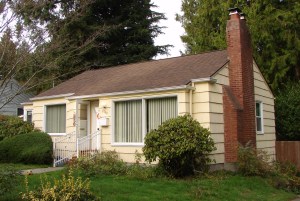
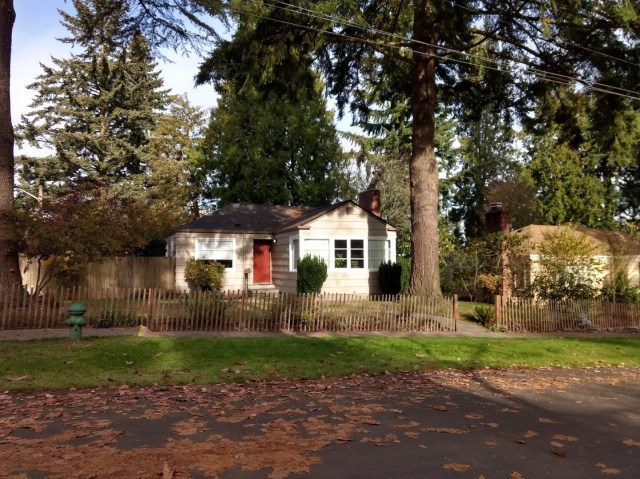
At the beginning of the 1950s Albert Balch, the builder whose original Wedgwood plat gave its name to the neighborhood, was still building some small, traditional-looking houses at accessible price points of about $10,000. At the same time, Balch was moving forward, test-marketing houses in new architectural forms which might appeal to young families who wanted something more modern. On 38th Ave NE between NE 82nd to 85th Streets we can see the two types of architectural styles, traditional and modern, which were built on the same block.
Continue reading →
 There will be book readings, documentary films, a bus tour and live performances and presentations at several locations from January 16th through February 9th, 2019.




 Wedgwood in Seattle History