Sixteen-year-old Veto Clarizo sailed from Italy to the United States in 1908, sponsored by his sister & family in Chicago. After a few more years Veto continued westward and worked at picking fruit in Wenatchee, Washington.
 The United States entered World War One in 1917 and the call went out for men to enlist as soldiers. An enticement for immigrants was the promise of help in obtaining U.S. citizenship as part of their military service.
According to the U.S. Citizenship and Immigration Service, “The U.S. entered World War One amidst a peak period of immigration…. almost one in five draftees, and more than 18 percent of the total U.S. Army, was foreign-born.”
“To help “Americanize” the men, the War Department instituted English language classes for immigrant soldiers in wartime training camps; these often included lessons on civics and citizenship. Many immigrants proudly viewed their World War One service as a transformational event in their lives and a key part of their identities as new Americans.” — quote from USCIS page, “The Immigrant Army: Immigrant Service Members in World War One.”
 To speed up soldier naturalizations, the Bureau of Naturalization dispatched examiners to military bases. Judges traveled to bases to hold large, open-air naturalization ceremonies.
Italian immigrant Veto Clarizo enlisted in the U.S. Army, serving from July 1918 to September 1919 and completed his military service with his American citizenship in hand.
A few years later the Clarizo family became residents of Morningside Heights in northeast Seattle where many immigrants and first-generation Americans achieved home ownership.
How to become an American citizen
The U.S. Congress first passed a citizenship law in 1790, soon after the American Revolution. It allowed any court, whether local, state or federal, to grant U.S. citizenship. There was no standardization of what was required and no standard paperwork such as a certificate of citizenship. (Source: National Archives, History of Naturalization.)
 In 1906 Congress passed a law to make citizenship application a federal process, founding the Naturalization Service and transforming naturalization recordkeeping.
The Basic Naturalization Act of 1906 was the first time that the administration of the certificate of citizenship/naturalization was specified and standardized by federal law. Beginning September 27, 1906, federal laws and regulations required that all naturalization courts nationwide, issue a certificate of citizenship (also called certificate of naturalization) to every naturalized person, using a standardized form.
After the new law of 1906 created a new federal agency, the Naturalization Service, a man from Washington, D.C., John Speed Smith, was sent to Seattle as district director of the bureaus in Oregon, Montana, Idaho and Washington.
John Speed Smith comes to Seattle in 1907

John Speed Smith 1861-1936
John Speed Smith was born in Kentucky in 1861 and his first job in government service was as a census-taker in 1880. In 1882 he moved to Washington, D.C. for jobs in the Bureau of Pensions and the Department of the Interior.
In Washington, D.C. Smith met and married a widow, Kate McDonnell Norwood. Kate had been born in Washington, D.C. of immigrant parents. Her father Daniel McDonnell, an Irishman, was a hack-driver (driver of a hackney carriage) which must have been an interesting job in the whirlwind of comings and goings of national leaders in the U.S. Capitol. Kate grew up during the tumultuous years of the Civil War in the 1860s when Washington, D.C. was at the nexus of crisis.
John Speed Smith’s ancestors had come to America in the early 1700s. He had an ancestor who served in the American Revolution and became a congressman. John & Kate must have talked about their heritage as proud Americans, whether of centuries of ancestors like John or as first-generation like Kate, and all that was meant by American citizenship.
Organizing the Naturalization Bureau in Seattle
John Speed Smith seemed to be an energetic person who was dedicated to creating order in the process of accepting applications for U.S. citizenship. He was very thorough in examining each applicant on their day in court. If someone had previously been convicted of a crime, for example, Mr. Speed would appeal to Judge Jeremiah Neterer to require the applicant to wait another year, to establish that the applicant had returned to good morals. Mr. Speed also objected if anyone had claimed exemption from the draft to military service (World War One) on the basis of foreign citizenship, then later applied for American citizenship.

Courtroom hearings, March 15, 1927, Seattle Daily Times, page 6.
Working together: immigration + naturalization
In the process of applying for American citizenship, applicants were to provide information on how and when they immigrated to the U.S. In this, John Speed Smith worked closely with Luther Weedin, Commissioner of Immigration.
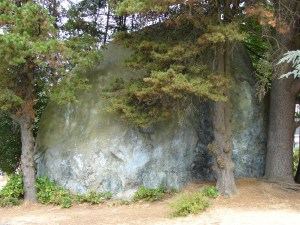
Wedgwood Rock, 7200 28th Ave NE
Luther Weedin (1872-1942) had a unique background as the son of a Civil War veteran of Missouri, William Weedin. The Weedin family moved to Washington Territory in about 1875. William Weedin filed a homestead claim for land which included Wedgwood Rock (7200 28th Ave NE) in northeast Seattle.
Luther Weedin was a young boy when the Fourth of July Picnic at the Rock was held there in 1881, and his cousins, children of Robert Weedin, were present also. William Weedin’s brother, Robert, brought his family to the picnic from their homestead claim near Green Lake, where there is still a street named Weedin Place in commemoration.

Luther Weedin in 1929. Courtesy of UW Special Collections.
The William Weedin family later moved to Whidbey Island and Luther served in several different government offices, such as treasurer of Island County.
During their terms in office in immigration & naturalization in Seattle, John Speed Smith and Luther Weedin accepted an enormous number of speaking engagements about immigration and citizenship. One of their purposes was the promotion of “Americanization schools” to help immigrants learn English and help immigrants find access to resources.
With the help of Seattle Public Schools and volunteer groups, night schools were set up for immigrants to learn the required civics info about the U.S. government system, such as the three branches of government and what they do. Weedin & Smith encouraged women’s groups to befriend immigrant families to help them with English and with basics such as registering children for school.
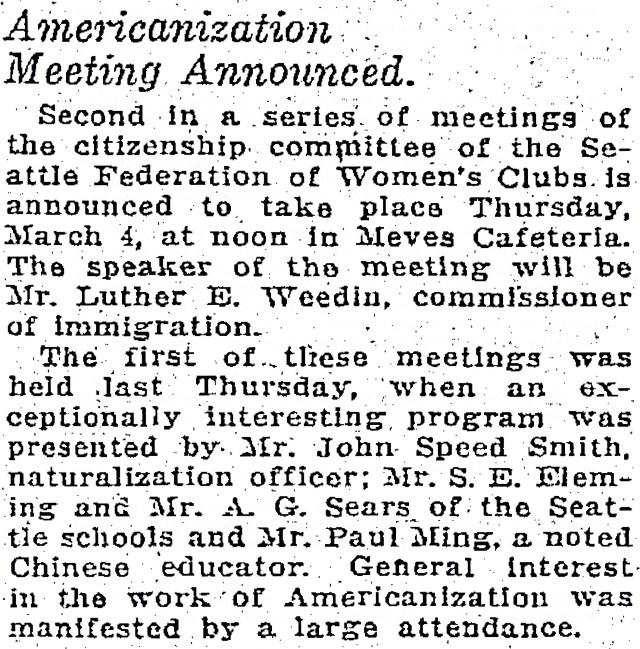
Americanization meeting described in a Seattle Daily Times article, February 7, 1926, page 69.
John & Kate Smith move to Morningside
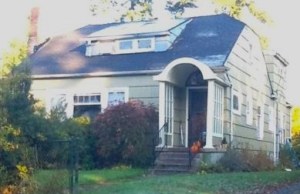
Home of John & Kate Speed Smith
John Speed Smith once said that he planned to keep working until he turned 100 years old, but the ax fell when he was 71 and lost his job, by government decree. In 1932 an order was issued for federal employees to retire at age 70.
It is possible that Mr. Smith had seen this coming, because at age 65 in 1926 he and Kate had made a major change: they built a house and moved to Morningside Heights (the future Wedgwood neighborhood). This may have been their retirement plan. In his farewell address to office employees, Mr. Smith said that from now on he would be “at home” to his friends at 3026 NE 92nd Street.
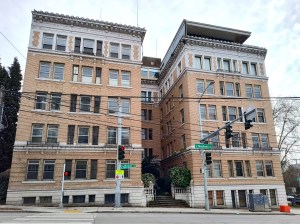
1605 Madison Street, Olympian Apartments built in 1913.
During most of their years in Seattle, the Smiths had lived in a luxury apartment building at 1605 East Madison Street, convenient to shopping and streetcar access. Moving to Morningside meant living a semi-rural life with few nearby resources except those which Morningside neighbors provided for themselves. Many people in the Morningside neighborhood had vegetable gardens and kept chickens.
Perhaps it was just as well, however, that Mr. Smith retired in 1932, as he lived only four more years, dying at age 75 in 1936. His wife Kate died in 1937, and their house was then lived in by Irving Carlisle Norwood, Kate’s son from a previous marriage.
Surrounded by immigrants in Morningside Heights
One thing the Smiths might not have anticipated in moving to Morningside, was that they would be surrounded by immigrant neighbors, some of whom Mr. Smith had interviewed for citizenship himself.
 Not on the Smith’s NE 92nd Street, but on a nearby block, lived John Terlicher, an Italian immigrant who’d been naturalized in 1917. That was just before the law giving special dispensation for those who enlisted in the military, to more quickly acquire citizenship. Terlicher had enlisted anyway, serving from 1918 to 1919, so that he had status as a veteran.
About four years after he’d appeared in the court of Judge Jeremiah Neterer to take the oath of citizenship, Terlicher was back in court to be sentenced by Judge Neterer to a jail term for “manufacturing moonshine.” If this had happened BEFORE Terlicher’s citizenship application, naturalization examiner John Speed Smith would have objected and would have asked the court to delay Terlicher’s application on moral grounds.
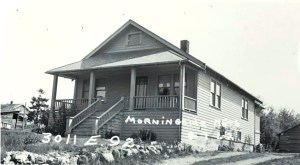
Home of Veto Clarizo in Morningside Heights
Another Italian immigrant, Veto Clarizo, achieved his American Dream in 1932 when he was able to buy a house at 3011 NE 92nd Street in Morningside Heights. Veto had received American citizenship while serving in the military in 1918-1919. He returned to Wenatchee and married, and in 1925 the couple moved to Seattle.
In Seattle Veto worked as a fruit packer in a warehouse shipping facility on Western Avenue in downtown, while the family lived in rented quarters for some years. Moving to the new house at 3011 NE 92nd Street, the Clarizo family lived directly across the street from naturalization examiner John Speed Smith & his wife Kate. But Mr. Smith did not know Veto Clarizo, though he might have commended Veto for serving in the military in World War One and having achieved citizenship through that means.
A delayed citizenship application
Harold Edson Arnberg was born in Ontario (eastern Canada) in 1888 and migrated westward to the province of British Columbia. In 1924 the Arnberg family crossed over the border to Seattle where Harold’s brother Ernest had preceded them. The Arnbergs lived on South Orcas Street in Seattle and Harold worked as a carpenter and building contractor.

Arnberg Petition for Naturalization
Harold did not submit a Declaration of Intention to become an American citizen until 1936, when he was 48 years old. The petition was granted in 1939.
There may be many reasons for a delay in applying for citizenship, after having already lived in the USA for several years. Reasons for delay might include inability to speak English (although this didn’t apply in the Arnberg’s case.) Other reasons might be, lack of interest in politics (acquiring the right to vote), thoughts of someday returning to one’s home country, or fear of offending one’s parents back in the home country by changing citizenship.
Perhaps by 1936 the Arnbergs realized that Seattle had become their home, especially as their children grew up, married, and continued to live in Seattle. News articles mentioned that the children of Harold and of his brother Ernest were attendants at one another’s weddings in Seattle, which told of the continued closeness of the two families.
A carpenter in Morningside Heights
It would not have been expected that Harold Arnberg and his wife would move to northeast Seattle in 1940, since they had lived in south Seattle for fifteen years. Perhaps Harold Arnberg heard of the growth of northeast Seattle and that there were good opportunities to build and sell houses in Morningside Heights. He brought his family to Morningside Heights where he could also work nearby, as a carpenter and building contractor.

House built by Harold Arnberg at 3051 NE 92nd Street in Morningside Heights.
In 1940 Harold Arnberg built a house at 3051 NE 92nd Street for his family to live in, on the same block where naturalization examiner John Speed Smith had lived at 3026. This was after the lifetimes of John Speed Smith and his wife Kate, though Kate Smith’s son Irving Norwood still lived in the Smith house as of 1940.
Harold Arnberg built several houses in the Morningside neighborhood. In 1950 he built a house at 3027 NE 92nd Street and moved there, and he sold the 3051 house.
From immigrants to first-generation Americans in Morningside

Peterson house at 2701 NE 91st Street
Immigration to the USA slowed in the 1920s-1930s in part because of legislation which limited the number of immigrants. In Morningside Heights (the future Wedgwood) the census of 1930 showed fewer immigrants in residence, and increasing numbers of first-generation Americans: those who had been born in the USA of immigrant parents.
The parents of Carl Peterson and his wife Adella were Scandinavian immigrants who followed the classic pattern of westward movement. Carl, born in Minnesota, and Adella, born in North Dakota, continued the migration by moving to Seattle in 1928. They bought a house at 2701 NE 91st Street and became part of neighborhood life in Morningside. The Petersons were examples of the increasing numbers of first-generation Americans in Morningside in the 1920s and 1930s.

Carl Peterson’s World War Two draft registration card (1942)
On Carl Peterson’s draft registration card of 1942, we see the name of a neighbor, Glen Pilgrim, listed as a close personal reference. Glen Pilgrim of 2535 NE 91st Street was a neighborhood activist, chairman of the Morningside chapter of the American Legion (a veterans organization.) The backgrounds of Glen Pilgrim and his wife Anna made them ideal as Morningside’s “welcome committee.” Glen & Anna could appreciate the immigrant struggle and the desire to achieve all that “Americanization” could offer.
An American story: Glen & Anna Pilgrim
Like John & Kate Smith, Glen & Anna Pilgrim represented two great streams of American heritage: one spouse who was from a family with long-time American ancestry, and the other spouse a first-generation American. Glen Pilgrim had ancestors who came before the American Revolution. Over the next two centuries’ time, the (appropriately named) Pilgrim family gradually migrated westward. Glen was born in Colorado before his father, an engineer, brought the family to Seattle in 1906.
At age 18 in 1908, Glen worked at Star Paint & Wallpaper Company in downtown Seattle. He took time out to serve in the military in 1915-1917. After marrying in 1920, Glen & Anna moved to 2535 NE 91st Street in Morningside Heights. Glen transitioned into working for himself as an independent painting contractor. This occupation likely gave him interaction with his neighbors as he could do work in Morningside houses in the early years of the growing neighborhood.

Real estate photo of 2535 NE 91st Street, house for sale in March 2025.
Glen Pilgrim’s wife Anna, born in Seattle in 1892, represented the experiences of immigrants and first-generation Americans. Anna was the daughter of Christian Hofmeister, a man who had come to Seattle immediately after Seattle’s Great Fire of June 6, 1889. He had immigrated from Germany and lived in Philadelphia until, hearing of the Great Seattle Fire, Hofmeister was inspired to establish a new business in Seattle while the city was rebuilding and growing.

Death notice of Christian Hofmeister, Seattle Post-Intelligencer, February 23, 1925, page 17.
A melting pot in Morningside

Forrest Goodwin, bus driver, with the Northeast Transportation Service bus parked at the Goodwin home, 3248 NE 89th Street circa 1933.
Records of the growth of the Morningside neighborhood in early years showed that whether foreign-born like John Terlicher and Veto Clarizo, or first-generation born like Carl & Adella Peterson, or those with long American ancestry like John Speed Smith and Glen Pilgrim, neighbors worked together for the common good.
Some of the activities of Morningside neighbors included founding a church group in 1915, Morningside Sunday School Union. A private bus service, Northeast Transportation, was organized in 1926, and a new school building, Maple Leaf School, was built at NE 100th Street.
Morningside resident Bill Lovell and his son Ellsworth were the contractors for the new school building. The Lovell family came to Morningside in 1913 and lived at 2533 NE 94th Street (not now extant). They became well-known as the builders of Lovell Homes. See below: family info in Ellsworth Lovell’s 1999 death notice.
America’s immigrant heritage
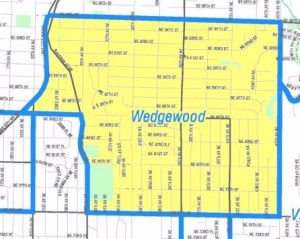
Map of the Wedgwood neighborhood: the plat of Morningside Heights is in the northwest quadrant of Wedgwood between NE 90th to 95th Streets.
Americans today can trace their roots to every corner of the planet. Economic analysis has shown that immigrants boost the American economy and create innovation because of “brain drain” from other countries –- talented people continue to migrate to the USA for freedom and opportunity.
From ancient times, admonitions recorded in the Bible instructed people to treat immigrants with justice: “The alien who resides with you shall be to you as the citizen among you; you shall love the alien as yourself, for you were aliens in the land of Egypt: I am the Lord your God.” (Leviticus 19:34)
The purpose of this blog article has been to show that in early years, the Morningside community was vigorous due to the contributions of its residents, both foreign- and native-born Americans. In the USA today there is still a need to show respect to all, no matter their country of origin, and value the contributions of immigrants.
Sources:
City directory listings; genealogical and newspaper references.
Property records: Puget Sound Regional Archives, Bellevue, WA, repository of the property records of King County. Records include property tax assessment rolls showing land ownership, and photos of houses done in a 1938 survey.
Family info from the newspaper death notice of Ellsworth Lovell in 1999:


 Wedgwood in Seattle History
Thank you! Always enjoy and appreciate your work!
Kirsten Heuring she/her
>