
On 35th Ave NE at NE 68th in Wedgwood there is the Northeast Branch Library on the northwest corner, and an apartment building on the southwest corner.
In our minds’ eye we may imagine what was there more than a hundred years ago. As of 1915 this block of NE 68th Street between 34th and 35th Avenues NE had the buildings of three charitable organizations built to serve needy people. This blog article will tell about the three institutions and their buildings: The Children’s Home, the Theodora Home and the girls school/Ruth School.
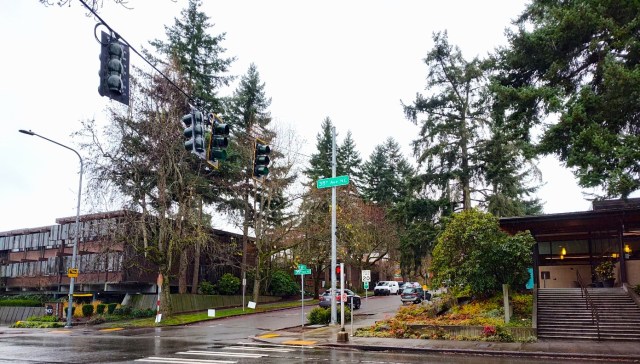
NE 68th Street corner of 35th Ave NE, with the MOD Apartments (former Theodora Home) at left and the Northeast Branch Library on the right. Photo by Valarie, January 2026.
Social concerns in the early 1900s
In the early 1900s in Washington State, legislation began to catch up with public concerns about societal ills, especially the effects of poverty on families. It was known that some families sent their children out to work at a young age. After 1901, compulsory school attendance laws began to be enforced so that “truant officers” would visit those homes whose children were not in school.
In 1904, King County School Superintendents Spencer & Hartranft hauled forty sets of parents into court because they had not responded to previous contacts as to why their children were not in school. Appearing before a judge, some twenty-seven families had sons as young as age ten who were working in the shingle mills in Ballard instead of attending school. Sometimes girls could not attend school because they were being kept at home to take care of younger children. Some parents claimed that their child was already fifteen years of age – compulsory school attendance was only through age fourteen. Spencer & Hartranft had come to court prepared with birth records to show that the families who were summoned, had children under that age.
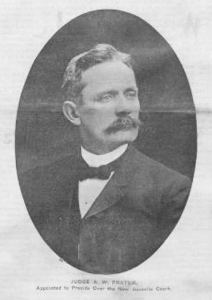
Judge A.W. Frater 1856-1925
Concerns about how children were being treated, led to setting up a legal process of removing children from homes where there was abuse or neglect. Attorneys and judges were in the forefront of the child protective movement. They advocated for a new law, because there were no Washington State laws giving judges the legal authority to take children from their homes and put them in a surrogate home. Such a law was passed in the Washington State Legislature in 1903.
Judge Archibald W. Frater was called the “father of the juvenile court system,” because he’d worked to find legal solutions to help needy children. Other judges such as Everett Smith and King Dykeman later worked in the juvenile court system as well as serving on the boards of charitable institutions for child welfare.
The Washington Children’s Home Society (WCHS)
In 1896 Rev. Harrison D. Brown and his wife Libbie came from Nebraska to Seattle, to found a branch of the National Children’s Home Society. They were able to gather supporters and board members such as W.D. Wood, former mayor of Seattle and developer of Green Lake; Everett Smith, attorney; and ministers of churches.
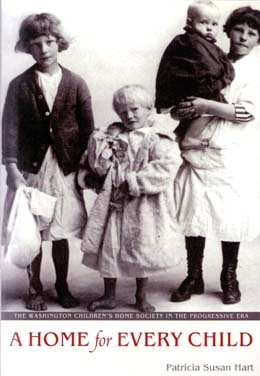 The WCHS was not intended as an orphanage; they wanted to place children for adoption but they needed a home where children could be cared for when first received. Children arrived in poor health and needed to become accustomed to regular routines of eating, sleeping, bathing, putting on clean clothes and attending school.
In the early 1900s Washington State had an “extractive” economy where men worked at extraction of natural resources such as fishing, logging, and mining, as well as doing railroad work and building construction. The possibility of death from these dangerous jobs was ever-present. In 1910 a mining disaster at Roslyn in which fifteen men were killed, resulted in seventeen children being “surrendered” to the WCHS in Seattle. Widowed women had little chance of finding jobs to support their families. Some saw no alternative but to put their children in the Children’s Home.
In 1908 the WCHS acquired benefactors, Marvin & Isabella Jones, who offered property where a large Children’s Home could be built. The property was on the north side of NE 65th Street in the 3200-3300 blocks.
The WCHS had to raise funds for the new Children’s Home. They began with building a large house on the corner of NE 65th Street & 32nd Ave NE. This house came into use while fundraising continued, and until the larger Children’s Home could be constructed at the corner of 33rd Ave NE.
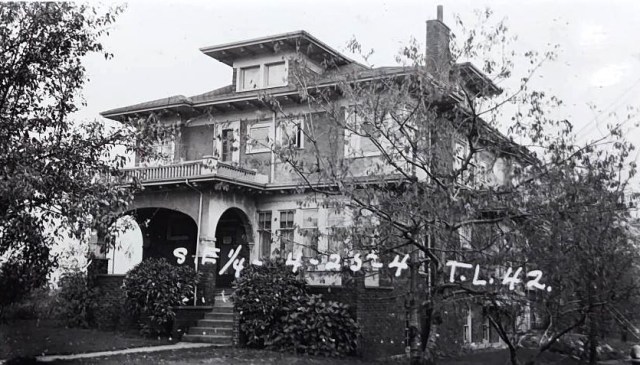
The first structure built on the Children’s Home site at about 3200 NE 65th Street was this large house. Photo courtesy of Puget Sound Regional Archives.
This very large Children’s Home was completed by or before 1914. It stood at 3300 NE 65th Street until about 1972 when it was replaced with a group of cottages with houseparents in each cluster.
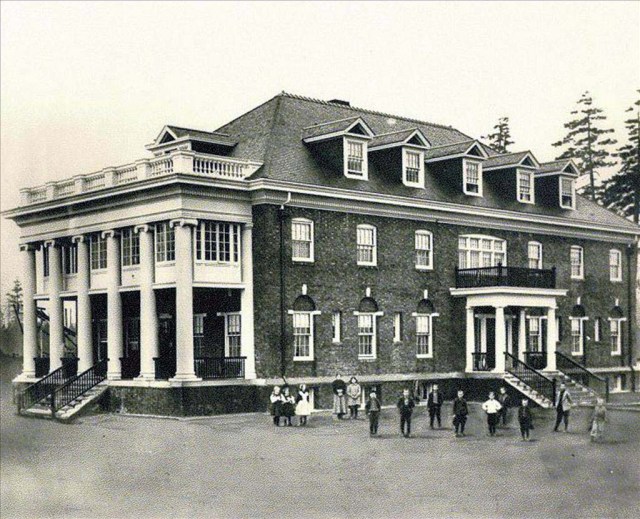
The Washington Children’s Home at 3300 NE 65th Street. Photo courtesy of UW Special Collections #13459.
The Theodora
Marvin & Isabella Jones were approached by other organizations, including the Volunteers of America who wanted to build a home for needy mothers & children, so that families could stay together even though the mother did not have enough money to support herself and her children. The Theodora Home, built by Volunteers of America, opened in 1913 on 35th Ave NE at the southwest corner of NE 68th Street.
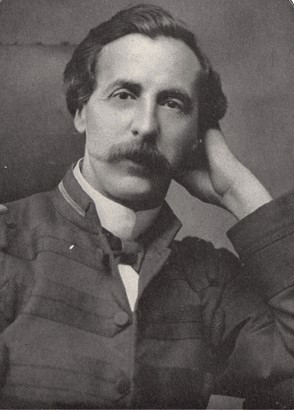
Ballington Booth 1857-1940
The Volunteers of America was founded in the 1890s in New York City by Ballington Booth and his wife Maud. Ballington was the son of William Booth, the founder of the Salvation Army in England. Ballington & Maud had been sent out to work with the poor in New York City, but they soon wanted to modify some methods, so they formed a different organization.
Ballington & Maud Booth never came to Seattle, but others from Volunteers of America came and worked among the poor here. The Theodora Home was likely named for the Booth’s daughter, Myrtle Theodora Booth.
In addition to Volunteers of America director C.W. Brooks in Seattle, the board of trustees of the Theodora Home included community leaders such as Judge Roger S. Greene, clergyman Rev. Sydney Strong, and physician Dr. Walter C. Lippincott.
A news article of 1913 told how the Theodora Home came to be located on the southwest corner of 35th Ave NE & NE 68th Street:
“Adjutant C.W. Brooks of the Volunteers of America and Mrs. Brooks came to Seattle in May 1910. After working among conditions here for nearly a year they realized that the mother and her children were often separated, in the case of the mother being left a widow or deserted…. M.F. Jones offered the acre of land on which the building stands…. The Theodora Home enables a destitute mother to keep her little flock together, to work to support them, so she does not feel she is an object of charity and to give her children and herself wholesome surroundings….“ (Seattle Post-Intelligencer newspaper, December 21, 1913, page 42.)
One of the best-known stories of the Theodora Home is that of Gordon S. Clinton who was Mayor of Seattle 1956-1964. In 1935, when Gordon was fifteen years old, his father died. His mother, Gladys, was able to get a place for her family at the Theodora. The Clinton children were able to stay in the same schools they had been attending. Mrs. Clinton wanted them all to finish through Roosevelt High School.
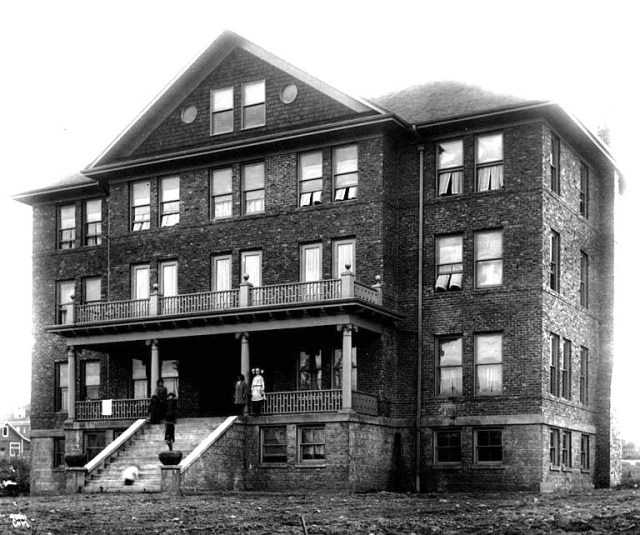
The Theodora Home at 6559 35th Ave NE, Asahel Curtis photo #834, courtesy of UW Special Collections.
The Girls Home and Training School
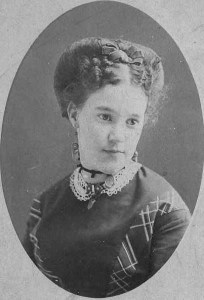
Eliza Ferry Leary 1851-1935
In the early 1900s, women whose wealthy husbands were leaders in Seattle, gave their time to charitable projects. One of these women was Eliza Ferry Leary, whose father Elisha P. Ferry had been the first governor of Washington as of statehood in 1889. Eliza’s husband John Leary was a Seattle businessman who invested in real estate. Mrs. Leary was active in the women’s group called Century Club which sponsored the girls school.
Working directly with Judge A.W. Frater, Eliza Leary and the Century Club women of Seattle worked to raise funds to establish a girls school. Girls between ages ten to seventeen were not usually eligible for adoption and they did not have good prospects if they had not been in school and had received no training which could lead to employment.
The Girls Home and Training School which opened in 1910, was in a building on land given by Marvin & Isabella Jones. The school was on NE 68th Street between NE 34th to 35th Avenues NE, including the present site of the Northeast Branch Library. The address of the Girls Home was 3404 NE 68th Street.
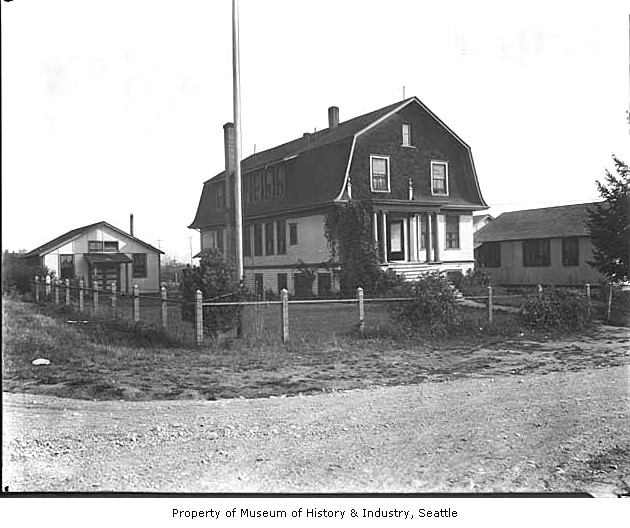
The girls school which later was used by Ruth School, 3404 NE 68th Street. Webster & Stevens photo of 1926, courtesy of MOHAI.
Throughout this period Marvin & Isabella Jones were frequently mentioned in news articles as taking a deep interest in the three institutions on the blocks between NE 65th to 68th Streets, the Children’s Home, the Theodora and the Girls School. Mr. & Mrs. Jones hosted picnics on the grounds and arranged for other special occasions such as Thanksgiving dinner served at the Girls Home.
Ruth School
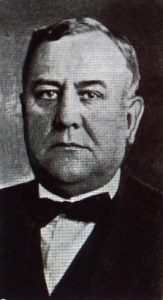
Judge King Dykeman came to Seattle as a sixteen-year-old orphan in 1890. He rose to become a judge in the new juvenile justice system.
The Girl’s School moved to another location and in 1921 the building became Ruth School, organized by another charitable group. This school was founded by the Protestant churches of Seattle, and it was named for the daughter of Judge King Dykeman. Judge Dykeman, who worked with the juvenile justice system after Judge Frater, shared Judge Frater’s concern about what to do with girls who were not criminals, who needed to be placed somewhere for their care.
The Ruth School aimed to provide a home atmosphere with courses in academic, domestic, and religious subjects. Girls of ages ten to seventeen who had been deprived of schooling, could not easily be sent to a public school; they needed individual attention to catch up to grade level, so coursework was done at the Ruth Home.
Throughout this period the organization of women’s groups who supported the school, indicated that they wanted to find a larger site for Ruth School. Finally in 1933 they were able to acquire the estate property of George W. Albee, a wealthy businessman.
The Albee estate property included a large house, gardens and fruit trees, and outbuildings such as a chicken house. Such a property was desirable for Ruth School to have more space and to help the girls learn skills such as keeping chickens and gardening. This was intended to help them become good homemakers to provide food for their families and generate extra income (such as selling eggs or produce from the garden).
In 1933 the Ruth School moved to the George Albee estate property, Holly Hedge, at 1043 SW 152nd Street at Lake Burien, south King County. The site is still owned today by the Navos Behavioral Healthcare Center.
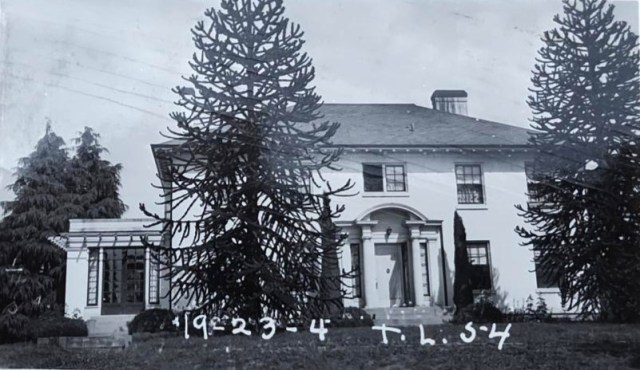
The George Albee estate house at Lake Burien as pictured in 1938 when Ruth School was using it. Photo courtesy of Puget Sound Regional Archives.
After the Ruth School moved out in 1933, the building at 3404 NE 68th Street was used as an infant foundling home. There are a few references to it in the newspapers, of physicians volunteering their time to help take care of the babies.
Institutions evolved over one hundred years
In the past one hundred years since the Children’s Home, Theodora Home and Ruth School were established, the institutions have evolved and some have merged.
In 1955 the Ruth School at Lake Burien was renamed the Ruth Dykeman Children’s Center, and it became a mental health organization. In 2010 it merged with Navos Mental Health Solutions, which still owns the Lake Burien property today.
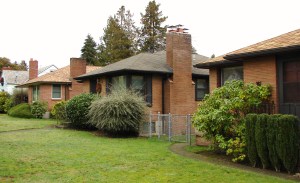
The corner of 34th Ave NE at NE 68th Street had three brick houses built in 1948, on the former site of the Ruth School.
In the 1940s the former Ruth School property at 3404 NE 68th Street was sold to a private developer, George B. Sypher, who tore down the buildings. Then he divided the site into house lots. In 1948 he built three new houses on the 34th Ave NE side of the block.
Mr. Sypher died in 1950 before doing anything with the lot on the corner of 35th Ave NE. Providentially this lot was still vacant and available when the search began for a site for the Northeast Branch Library. The Northeast Branch Library opened at 6801 35th Ave NE in 1954.
The Theodora Home was rebuilt in 1965 (this is the present building at 6559 35th Ave NE). The Theodora was known as a home for senior citizens, and then more generally as a low-income residence.
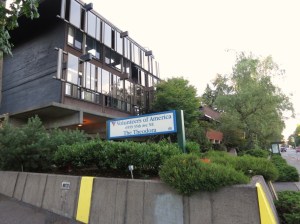
Theodora at 6559 35th Ave NE.
In the year 2015 the sponsor, Volunteers of America, sold the Theodora building, which was then remodeled into a regular apartment complex.
The Volunteers of America organization consolidated their work in Snohomish County, where they no longer own residences. The VOA works to help people who are struggling to find a place to live, by supporting them to prevent homelessness and helping with housing applications.
The Washington Children’s Home Society tore down the original building at 3300 NE 65th Street in the early 1970s and built a cluster of cottages, each with houseparents.
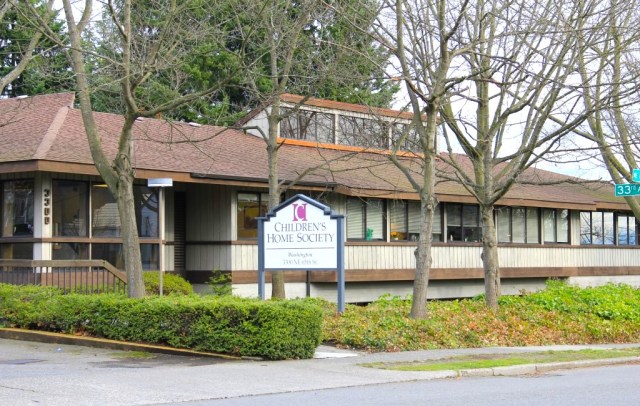
Main building of the Washington Children’s Home in the 1970s at 3300 NE 65th Street. This building has been replaced by the Bryant Heights development.
In 2013 WCHS put the property up for sale. Between 2013 to 2016, the site at 3300 NE 65th Street was redeveloped with commercial buildings facing NE 65th Street, and houses, called the Bryant Heights development, on the side streets of 32nd to 34th Avenues NE.
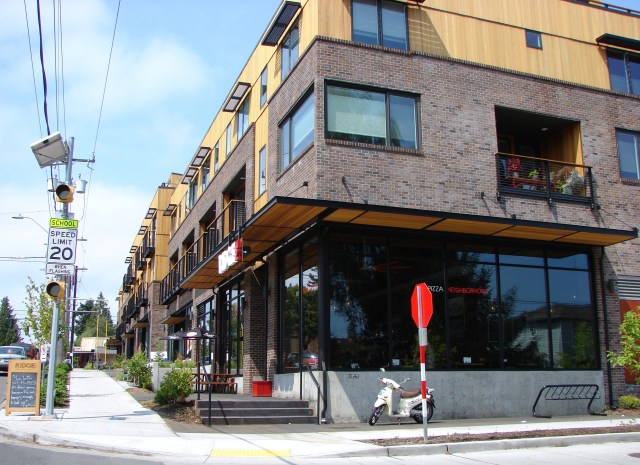
Looking westward along NE 65th Street, former site of the Washington Children’s Home. Photo by Valarie, 2024.
In 2024 the WCHS and another organization, Childhaven, merged to become Akin. Akin is now located in the former Shoreline Savings building at the southeast corner of NE 125th Street & Lake City Way NE.
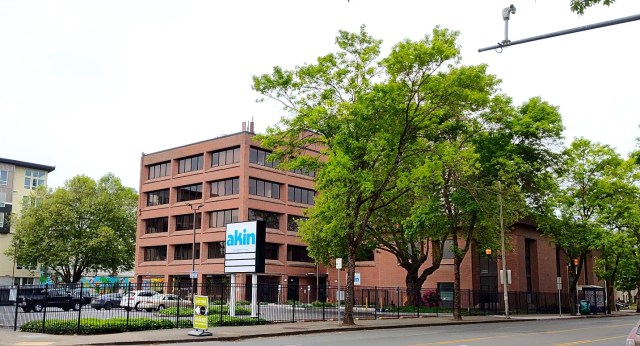
The Akin Building at the corner of NE 125th Street and Lake City Way NE. Photo by Valarie, 2025.
Another child-welfare organization comes to Wedgwood
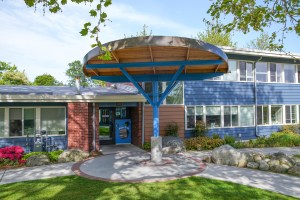
Today’s Ryther campus at 2400 NE 95th Street in the Wedgwood neighborhood of Seattle.
It is interesting to note that in 1954 another child-welfare organization, the Ryther Home, came to Wedgwood and today is still at 2400 NE 95th Street.
Mother Ryther began caring for children in the 1880s. Eventually a large Ryther Care Home was built in the 4400 block of Stone Way, in the Wallingford neighborhood of Seattle. Many of the children had a father, but no mother. The fathers paid a nominal boarding fee for their children to live at the Ryther Home. Today Ryther is a mental health and youth counseling program.
Sources:
HistoryLink Essays:
#255 “Anna Louise Strong (1885-1970),” by Mildred Andrews, 1998. Anna Louise Strong became best-known for labor issues, but she actually started out in Seattle as a child welfare advocate with the U.S. Education Office. She was elected to the Seattle School Board in 1916 on a platform that the public schools should offer social services to help underprivileged children. Anna Louise’s father was Rev. Sydney Strong of the Queen Anne Congregational Church. He was on the board of the Theodora Home at 6559 35th Ave NE.
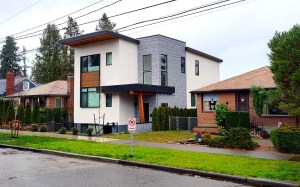
One of the three brick houses on 34th Ave NE, built by George Sypher, was replaced in the year 2025. Photo by Valarie.
#3464 “Washington Children’s Home Society opens Brown Hall in Seattle in November 1908,” by David Wilma, 2001.
#10000 “Gordon Stanley Clinton (1920-2011)” by Cassandra Tate, 2012.
#10396 “Burien – Thumbnail History,” by Dotty DeCoster, 2013. Includes info about Ruth School which had moved to the George Albee estate property on Lake Burien.
#10556 “Martha Washington School for Girls,” Seattle Public Schools history, 2024. The original girls school started at 3404 NE 68th Street in about 1910. By 1921 it had moved to 6612 57th Avenue South, on the shore of Lake Washington in the Brighton Beach neighborhood. It was renamed the Martha Washington School in 1931. The last school program there was in 1972. The site is now a public park with the address 5740 South Warsaw Street.
#10788 Book review of “A Home for Every Child,” history of the Washington Children’s Home Society. Reviewed by Paula Becker, 2014.
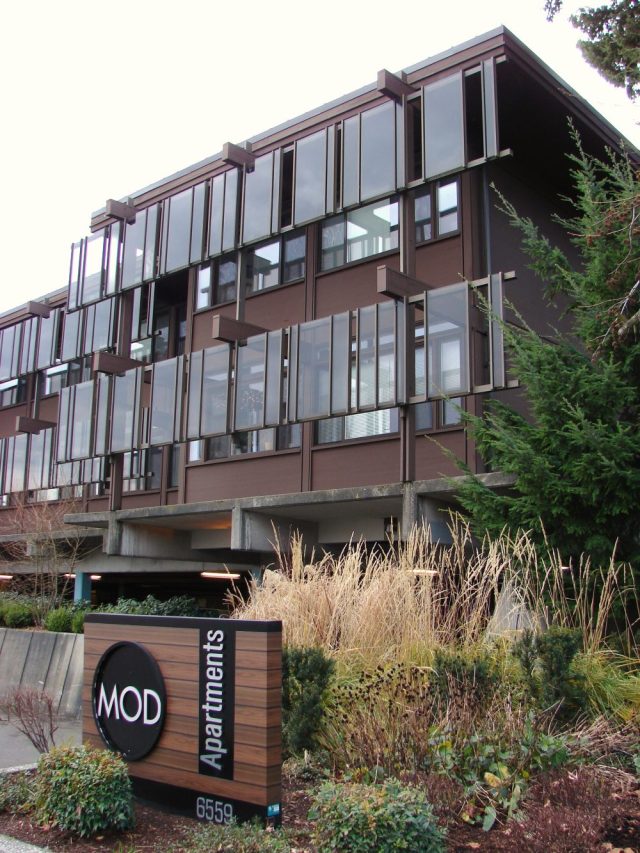
The former Theodora Home is now an apartment building called The MOD. Photo by Valarie.
Books:
A Home for Every Child: The Washington Children’s Home in the Progressive Era, by Patricia Susan Hart, 2010. Seattle Public Library 362.73409.
Woman’s Place, a Guide to Seattle and King County History, by Mildred Tanner Andrews, 1994. Seattle Public Library 979.777. pages 305-306, history of the Ruth Home; most of this material was quoted in the HistoryLink Essay #10396.
Newspaper articles:
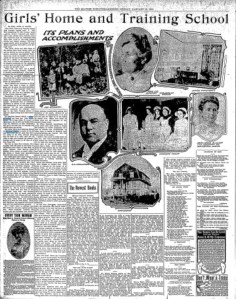
Seattle Post-Intelligencer articles, January 1911, about the Century Club Women and the plan for a girls school.
“Plan to Build at Ravenna Heights. Children’s Home Society Accepts Offer of Site from M.F. Jones,” Seattle Post-Intelligencer newspaper, August 15, 1906, page 16.
“Announces Home for Needy Women, M.F. Jones Says He Has Set Aside Tract for Purpose on Ravenna Heights,” Seattle Post-Intelligencer newspaper, January 2, 1912, page 8. Refers to the Volunteers of America home to be called Theodora.
“What Becomes of Girls Adrift? From the Juvenile Court they are sent to Haven of Safety,” Seattle Post-Intelligencer, January 28, 1912, page 22. Describes the girls school where homeless, abused, and neglected girls can live. This was the girls school at 3404 NE 68th Street, in the same building later used by Ruth School as of 1921.
“Opening of the Theodora Home,” Seattle Post-Intelligencer newspaper, December 21, 1913, page 42.
“Superintendent Frank B. Cooper Pays Visit to the Girls Home and Training School,” Seattle Times newspaper, March 27, 1914, page 16.
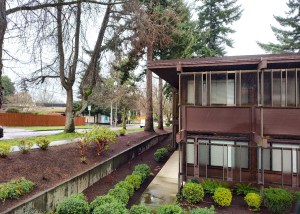
Corner of NE 68th Street and 34th Ave NE, looking eastward past the MOD apartments towards the library and 35th Ave NE. Photo by Valarie, December 2025.
“Opening Ceremony at Ruth School,” Seattle Post-Intelligencer newspaper, October 17, 1921, page 8. Speakers at the program included the pastor of the nearby Ravenna Methodist Church, and Judge King Dykeman who stated that the school was named in honor of his daughter Ruth. Explained that the girls in residence were referrals from juvenile court, but not criminal cases.
“Century Club Members Celebrate Anniversary,” Seattle Post-Intelligencer newspaper, August 9, 1931, page 65. On the occasion of the fortieth anniversary of the Women’s Century Club, this news article reviewed some of their activities. They had established a home for neglected girls in 1910, on the site at NE 68th Street which was later used by Ruth School, a different organization, after the original girls school moved out.
“Children’s Home Society land for sale: 3.7 acres on NE 65th Street,” Ravenna Blog, May 2, 2013, by Rebecca Nelson.
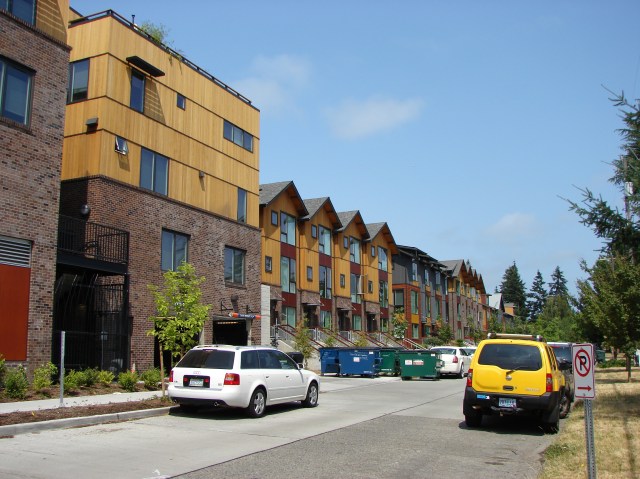
Bryant Heights houses looking northward on 34th Ave NE. This is the former site of the Washington Children’s Home. Photo by Valarie, 2024.

 Wedgwood in Seattle History