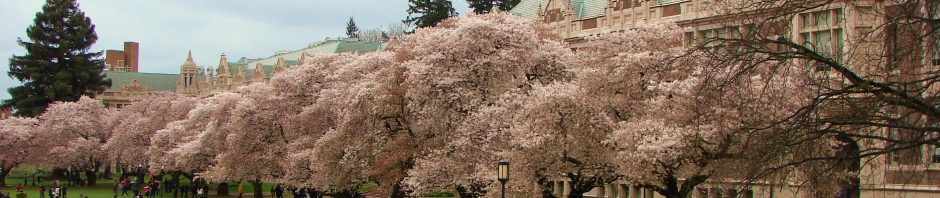

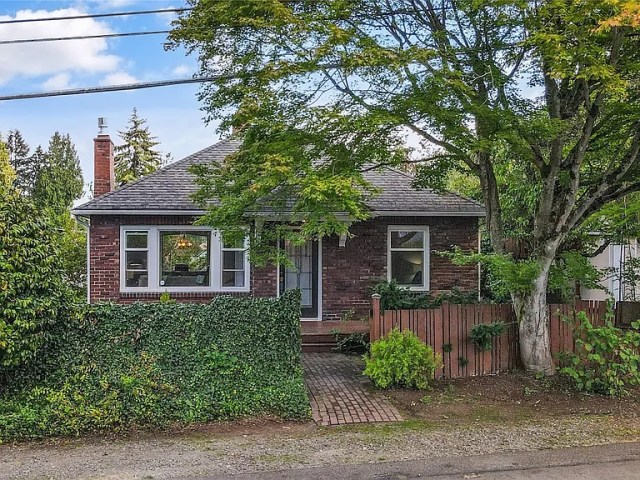
A house built in 1929 in classic style was saved from the path of freeway construction.
Throughout its history Seattle has attracted migrants from all over the USA. This blog article will trace the journeys of families who came to Seattle, and the story of a house, ending with the migration of the house itself.
In 1967 a house at 7731 4th Ave NE had to be moved to get out of the path of Interstate 5 freeway construction. The house was moved about two miles to the northeast, to 8512 30th Ave NE in the Wedgwood neighborhood of Seattle.
Seattle’s early years of struggle
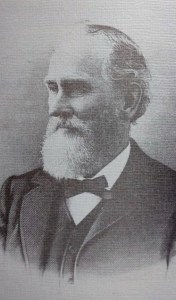
Arthur Denny 1822-1899, leader of the 1851 settlers group who came to Seattle from Illinois.
A group of white settlers called the Denny Party arrived in 1851 and gave the name “Seattle” to what they hoped would become a great city.
In its first thirty years it was hard to know if Seattle would ever amount to anything. There were major setbacks, such as being bypassed by a transcontinental railroad line, in favor of the rival city of Tacoma.
Later events caused the City of Seattle to boom with astronomical population increases due to economic opportunity.
This blog article will trace the story of families who migrated to Seattle in the early 1900s, and a house which had to be moved from its original site to another lot, due to the continual growth of the city up through the 1960s.
Seattle re-born in a fire
Suddenly in 1889 Seattle was re-born in a fire which lifted the city from a down economy to a boom in business and in population. After the Great Seattle Fire of June 6, 1889, people from all over the USA flocked to Seattle to get in on the rebuilding of the city. Just before the Fire, as of 1888 the population of Seattle had been less than 20,000 people. A year after the Fire, the census of 1890 recorded the Seattle population at about 43,000.
The next major event which boosted the population of Seattle was the Yukon Gold Rush of 1897. Publicity sent out by the Seattle Chamber of Commerce made the claim that you could only get to the Yukon from Seattle, and that all supplies for the trip could be purchased in Seattle. Enterprising businessmen came to Seattle to “mine the miners” by selling goods. By the year 1900, the population of Seattle was more than 80,000.
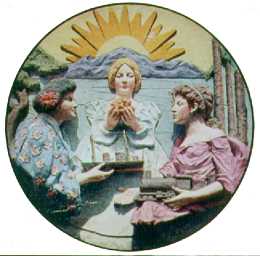
The Alaska-Yukon-Pacific Exposition was held on the campus of the University of Washington in 1909.
In 1909 Seattle held a world’s fair, the Alaska-Yukon-Pacific Exposition, which attracted nationwide attention, and which caused more people to come to Seattle in search of work.
By 1910 the population of Seattle was about 237,000, nearly three times the number of only ten years before. Many kinds of occupations were represented, including workers in carpentry and other building construction, dairy plants, fishing, lumber operations, and retail establishments.
In 1909 City Council adopted “Seattle the Peerless City” as the City Song:
“Seattle sits on seven hills, her glory is unfurled; at her feet is Puget Sound, where moves the Commerce of the world.” (Source: Seattle Facts/City Symbols)
All the events up to 1909 served to give Seattle a nationwide reputation as a land of opportunity, and people kept coming. Some of those who came to Seattle, perhaps to make a new start, were Civil War veterans from many different states of the USA.
The Hofeditz story: migration of a Civil War veteran
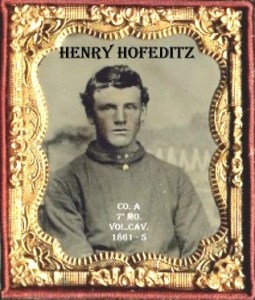 Henry Hofeditz was a teenage immigrant from Germany to the USA in 1857. By the time of the outbreak of the American Civil War in 1861, Henry was old enough to enlist in a Missouri & Illinois cavalry unit to fight for the Union.
After the end of the Civil War in 1865, Henry settled in Nauvoo, a town in Illinois on the east side of the Mississippi River. Nauvoo had a large German-speaking population, and Henry found a wife, Mary, who had been born in Illinois of German-speaking parents.
By the early 1900s Henry & Mary had five adult children and we might have expected that Henry & Mary and all the Hofeditz families would continue to live in Illinois. But unexpectedly, at age sixty, Henry made the decision to migrate Out West, to Seattle, Washington! Something about the lure of Seattle caused Henry Hofeditz to launch out on a new phase of life.
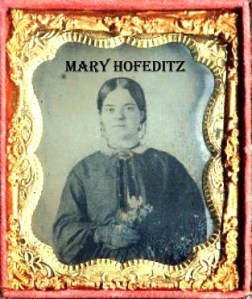 In many cases, aging Civil War veterans came to Seattle to live with adult children who had preceded them here. But in the case of Henry Hofeditz, he seemed to be the one to lead out, and his adult children followed him to Seattle in the early 1900s.
Henry & Mary’s two youngest children, John and Anna, who were young adults and not yet married, came with Henry & Mary to Seattle in about 1901. The family got two houses which Henry, a carpenter, may have helped build, at NE 60th Street & Latona Avenue, east of Green Lake.
In the Green Lake community Henry found fellowship with other Civil War veterans from all over the USA, and perhaps that is the reason why he chose to live in northeast Seattle. The veterans’ group called the Green Lake Post of the Grand Army of the Republic, met in a building on Woodlawn Avenue.
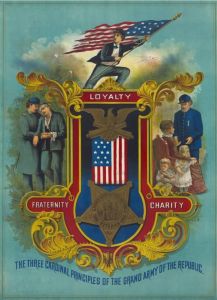
Grand Army of the Republic: Fraternity, Loyalty, Charity.
Henry & Mary’s son John married and lived in the house at 6007 Latona Avenue, next door to his parents at 6013. Mary Hofeditz died of typhoid in 1908. Youngest daughter Anna stayed with her father and kept house for him.
When Anna married in 1911, her husband Harry Butler came to live in the Hofeditz household. Harry, who was also the son of a Civil War veteran, worked for the telephone company in Seattle.
The census of 1920 showed a full house: Henry Hofeditz, Anna, Anna’s husband Harry Butler, Harry’s widowed sister and her two children.
Henry Hofeditz lived to be 82 years old, and when he died in 1923 the Green Lake Post of the GAR conducted the memorial service. Daughter Anna lived in the house at 6013 Latona Avenue for the rest of her life; she died in 1984 just three days before her 101st birthday.
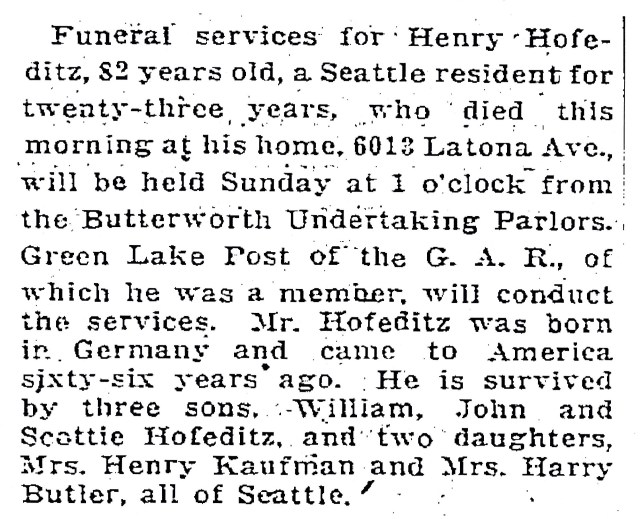
Death notice of Henry Hofeditz, Seattle Daily Times, November 9, 1923.
Hofeditz all-migration
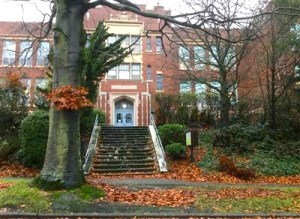
Fairview School on NE 78th Street, built 1908
Gradually between the years 1902 to 1908, Henry & Mary’s three oldest children also migrated from Illinois to Seattle. Henry & Mary’s eldest son Scott got a house at NE 79th Street on 8th Ave NE by Fairview School.
Scott’s family grew to six children with the last three born in Seattle, and all the children attended Fairview, which was a public school at that time. (The Fairview building was later sold and is now a church school.)
The Baldridge family story
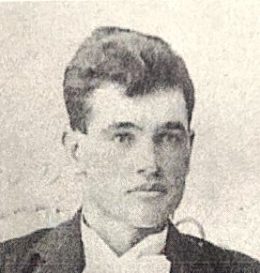
John Baldridge 1873-1957
John Baldridge’s family heritage was of a classic American story of westward migration over five generations. Members of the Baldridge family sailed from Ireland in the early 1700s and settled in Pennsylvania. Following generations lived successively in North Carolina, Tennessee, Missouri, Iowa and Kansas.
In the early 1900s John Baldridge and most of his siblings migrated to California. In 1924 John Baldridge & family settled in Seattle, where John became a building contractor. The census of 1930 in Seattle listed the Baldridges at 7735 4th Ave NE, where John had constructed a row of houses on that block.
The next generation: Ray Hofeditz
Next door at 7731 4th Ave NE, in one of the houses constructed by John Baldridge, lived Ray Hofeditz, grandson of Civil War veteran Henry Hofeditz.
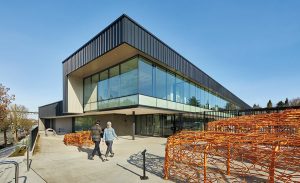
The North Transfer Station on 34th & Interlake Avenue was once the site of a dairy production facility.
Ray Hofeditz had grown up a few blocks from his grandfather’s Latona Avenue house, in a house on 8th Ave NE by Fairview Elementary School. By 1932 when Ray was married and working at a steady job, he was able to buy a Baldridge-built house on 4th Ave NE.
Ray’s life story paralleled the growth of Seattle and the changes in its industries. Ray worked in the office of Producers Dairy at 3426 Interlake Avenue, present site of the North Transfer Station in Fremont, one block east of Stone Way. In the 1940s Ray became co-owner of Apex Dairy at 3 West Cremona Street. This building is still extant and is now a part of the Seattle Pacific University Campus.
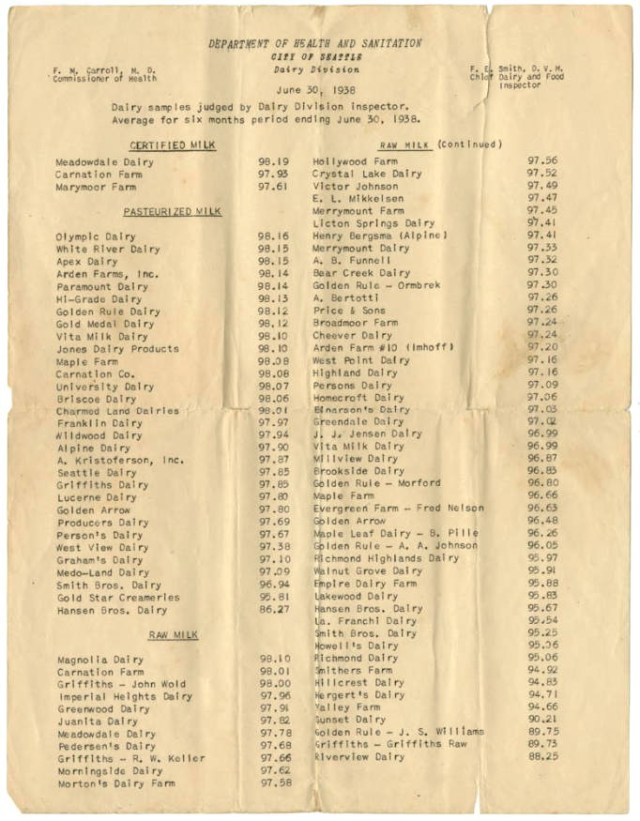
In the 1930s when Ray began working at the offices of dairy production plants, milk and other dairy products were distributed primarily via home delivery. Each dairy processing plant had a local delivery area. We can see from this list of 1938 dairy production plants in Seattle, how many there were.
Social and economic changes after the end of World War Two
At the close of World War Two in 1945 there were big changes in the American economy, business marketing, and lifestyle, such as car use.
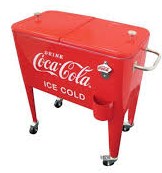
Old-time markets would have an ice chest to keep cold bottles of Coca-Cola. On the right front is a bottle opener and a pocket to catch the bottle cap.
There was the rise of supermarkets which offered many more kinds of products all in one store and packaged for the convenience of consumers. Old-time markets had depended on ice to keep some products cold, like glass bottles of Coca-Cola. New supermarkets had refrigerated cases for everything from meat to dairy.
Instead of going to a butcher and requesting meat cut to order, consumers could go to a meat counter at a supermarket and buy pre-packaged meat. Dairy products were displayed in refrigerated cases at supermarkets in take-home packaging, instead of in glass bottles which had to be returned to the dairy.
In the 1940s-1950s, instead of waiting for home delivery or walking to a corner store, consumers were buying cars, and they showed a preference for driving to supermarkets and shopping malls where many different products were available in one site. Increased car use led to increased pressure on existing roads, leading to public desire for the creation of more roads including the new Interstate 5 freeway.
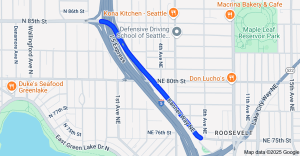
The Hofeditz house was in the 7700 block of 4th Ave NE, about where Banner Way is today.
At age 50 in 1953, Ray Hofeditz made a sudden change of occupation due to these social and economic changes which had caused the demise of small dairy plants. Ray went to work as a clerk at the King County Courthouse in downtown Seattle.
At that same time in the 1950s & 1960s, Ray’s life was about to be affected by another big change: the coming of the Interstate 5 freeway construction which sliced north-south through the middle of Seattle. The Ray Hofeditz house on 4th Ave NE had been on a quiet street, on a ridge with a view of Green Lake to the west. As freeway construction crept nearer in the 1960s, neighbors in the 7700 block of 4th Ave NE were notified that their houses would have to be removed.
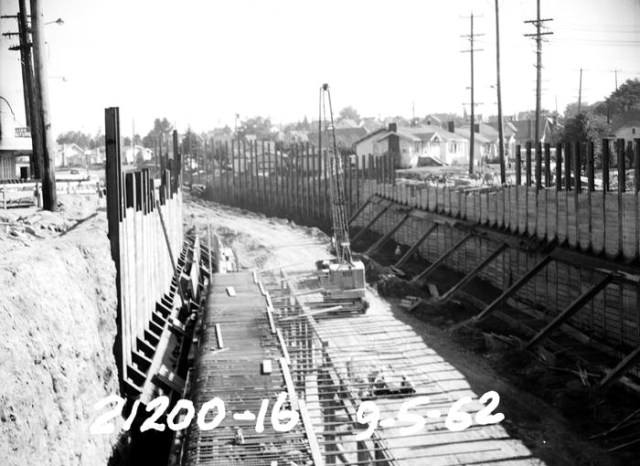
Freeway onramp construction in 1962 near the home of Ray Hofeditz. The freeway cut a huge channel through Seattle with dividing walls. Seattle Municipal Archives photo #74471.
The Hofeditz and their house part ways
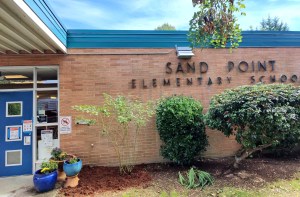 The Ray Hofeditz family had lived in their house at 7731 4th Ave NE for more than thirty years when they decided to sell it and move elsewhere. They sold their house in 1966 and moved to NE 61st Street, east of Sand Point Way, next door to Sand Point Elementary School. It amused me to see this, because Ray grew up next to Fairview School. Perhaps his new location next to another school, brought back happy memories as he could hear the voices of children and the sound of the end-of-recess bell.
The Ray Hofeditz family’s reasons for finding another place to live, may have been because they didn’t want to arrange for the moving of the 4th Avenue NE house, or because of “downsizing” due to Ray’s retirement from work. Ray lived only three more years and died of a heart attack in 1969.
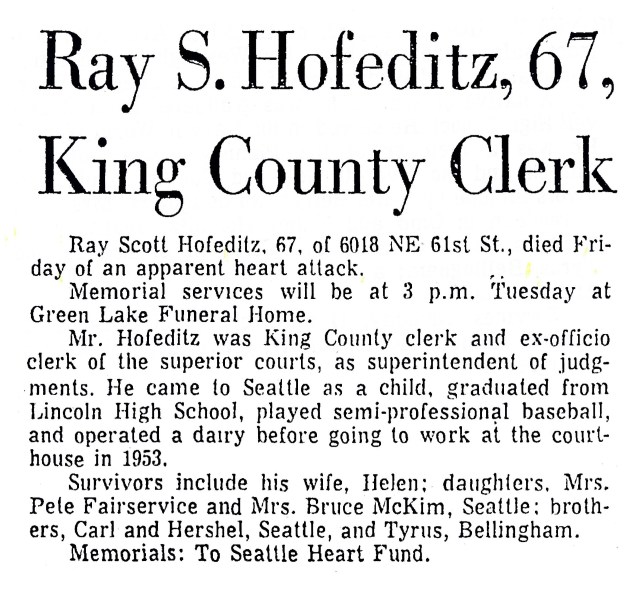
Ray Hofeditz death notice, November 3, 1969, Seattle Post-Intelligencer newspaper.
The migration of 7731 4th Ave NE
The buyer of Ray Hofeditz’s house was a single working woman, age 40. She, too, was a “migrant,” who had come Out West to Seattle for work opportunities. She had been born in Vermont, the daughter of immigrants from Finland. She paid $10,500 for the Hofeditz house in 1966. A few months later, in 1967 she had the house moved to 8512 30th Ave NE, on a lot across the street from Wedgwood Elementary School.
Today the house at 8512 30th Ave NE is distinctive, as it is built in a classic style, different from the post-World-War-Two midcentury-modern houses around it. The story of the 8512 house tells us of the growth of Seattle including the impact of the Interstate 5 freeway construction, and the western-movement stories of the Hofeditz and Baldridge families.
Sources:
Genealogical records including census listings, family histories and newspaper search. A resource called Find A Grave helps trace family connections and often has photos.
“The Great Seattle Fire, Part 1,” HistoryLink Essay #21090 by John Caldbick, 2020.

Freeway house-moving in 1959. Seattle Municipal Archives photo #61730.
House-moving: there is one other house that I know of in Wedgwood, that was moved out of the path of freeway construction: 8921 25th Place NE. Its original address was 5816 5th Ave NE.
“Interstate 5 is completed in Washington on May 14, 1969,” HistoryLink Essay #9393 by Phil Dougherty, 2010.
Museum of History & Industry (MOHAI) Dairy List of June 1938, Item #19903.
Puget Sound Regional Archives, repository of the property records of King County. The Property Record Card for the Hofeditz house shows its old and new addresses.
Seattle Department of Construction and Inspection (SDCI) Microfilm Library, original construction permit #286917 of 1929 for the house at 7731 4th Ave NE. Builder: J.H. Baldridge, 7735 4th Ave NE. I was able to obtain a copy of the construction permit because this house was located within the Seattle City Limits at that time. The permit listed the name of J.H. Baldridge (contractor) and his address, but no architect’s name was given.
Seattle Municipal Archives, Seattle Facts – history of Seattle and population statistics.
Seattle Municipal Archives, Ordinance 99080 in 1970, creation of “Banner Way.” This list of City ordinances notes the naming of this new street which was partly a northbound freeway onramp. But it doesn’t explain how the name “Banner Way” was chosen. The house at 7731 4th Ave NE was located approximately where Banner Way is today.
THANK YOU to the readers of the Facebook group page, “You Know You Are From Wedgwood IF,” who have given me so many tips and ideas. Readers remembered that the house at 8512 30th Ave NE had been moved to the site, which led me to trace the journey of the house.

Baldridge sixtieth wedding anniversary noted in the Seattle Post-Intelligencer, September 8, 1957.

 Wedgwood in Seattle History
So interesting! What a lot of detail you’ve found – wow! Linda 🙂