James Tachell (1862-1944) was born in England and came to the USA with his parents and siblings in 1866. They lived in Calumet, Houghton County, Michigan, where James met his wife Charlreane and they started their family. In the 1890s James, Charlreane and their children began a western migration which would bring them to the Seattle area in the early 1900s.
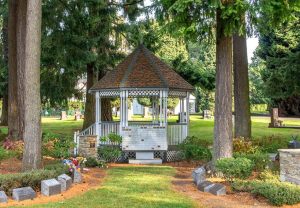
Greenwood Memorial Park & Funeral Home
The family lived for a few years in Butte-Silver Bow, Montana, where James Tachell worked as an undertaker. By 1910, the family was in Renton, Washington where James Tachell became the founder of the Greenwood Memorial Park & Funeral Home, now famous for the gravesite of musician Jimi Hendrix.
In 1910, eldest son Grover Tachell was 25 years old and living on his own in Seattle. He married later that year and had a good job at Seattle Hardware. Thus it was not surprising that Grover and his bride, Lydia, were able to establish their home in Morningside Heights, a development on land owned by Burwell & Morford, owners of Seattle Hardware.
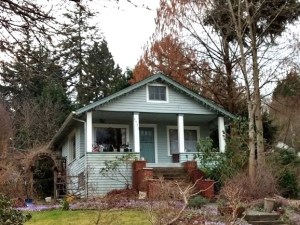
Tachell home at 2533 NE 92nd Street
Morningside Heights was the plat name for an early-1900s housing development in the northwest quadrant of today’s Wedgwood neighborhood.
Morningside Heights is between NE 90th to 95th Streets on the west side of 35th Ave NE. It is the site of some of the oldest houses in Wedgwood. Grover & Lydia Tachell and their children were among the earliest residents of Morningside Heights in the decade of 1910-1920.
Grover & Lydia Tachell completed their family of six children with the birth of twin boys, Richard & Robert, in 1921.
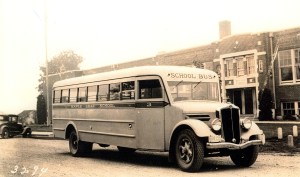
The Maple Leaf School at 3212 NE 100th Street was completed in 1926.
Richard & Robert Tachell grew up in the lively Morningside community where things were happening. By the time the Tachell boys were old enough to attend school, the boys could go to the nearby Maple Leaf Elementary, newly constructed in 1926 on the corner of NE 100th Street and 32nd Ave NE. The community had pulled together to form the Maple Leaf School District, and the contractors for the new school building were Morningside Heights residents Bill Lovell & his son Ellsworth.
In 1931 another big happening in the neighborhood was the opening of a golf course on former farm fields at NE 110th Street.
The new golf course in 1931
Northeast Seattle, including the Wedgwood, Meadowbrook and Lake City neighborhoods, did not come completely into the City Limits of Seattle until the 1950s. It was not until after the end of World War Two in 1945 that a housing boom started in northeast Seattle, transforming it into a suburban-like area.
The Tachell children grew up in a rural world in the 1920s-1930s where many of their northeast Seattle neighbors kept chickens and had large gardens. Some people kept cows, and some men worked at excavation and road-grading using horse teams and scoop shovels. Nearby was the Fischer Farm in the valley where a creek ran through the fields at NE 110th Street.
In the 1920s when farmer August Fischer was transitioning into retirement, he placed the field area for sale as house lots, but it proved to be soggy ground and sometimes flooded. Unexpectedly the field property was then purchased in its entirety to be developed as a golf course. Another article on this blog tells of the early years of the golf course with the original owners, Miller & Goodner. They were the ones who named the course Meadowbrook Golf Club.
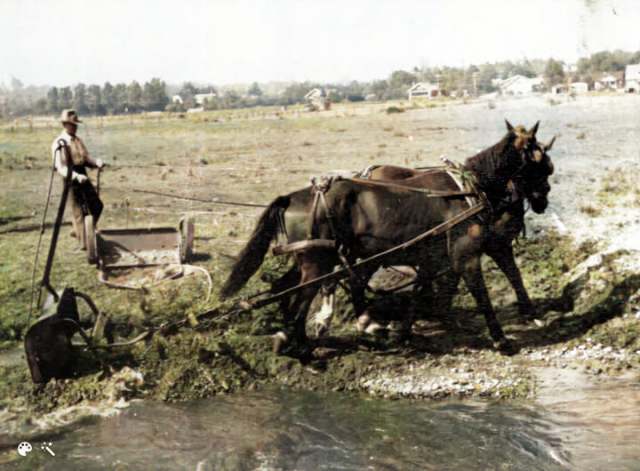
In the 1930s neighborhood resident John MacLean was hired to help create drainage on the golf course. We are standing with our backs to the hill, looking north towards NE 110th Street where Nathan Hale High School is today. Photo courtesy of the MacLean family.
The Meadowbrook Golf Course opened during the last week of July 1931. The Tachell twins were ten years old, and that summer they likely spent time hanging around to see the activities at the golf course. Bob & Dick Tachell, along with other neighborhood children, soon found that there was money to be made by searching for stray golf balls at the edge of the course and re-selling the balls to the golfers.
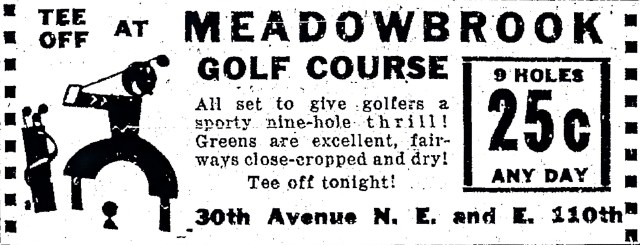
Meadowbrook Golf Course advertisement, Seattle Daily Times newspaper, April 28, 1933, page 27.

Johnny Hoetmer 1913-2001
The Meadowbrook Golf Course was successful in the 1930s, even though the course was only nine holes and had some adverse conditions such as poor drainage on the course. The golf program also had to contend with the challenges of the depressed economic conditions of the 1930s and the wartime rationing restrictions of the 1940s during World War Two.
Some of the success of the Meadowbrook Golf Course could be attributed to the presence of the golf pro, Johnny Hoetmer, and the strong community feeling around the golf course. A club formed with 150 members who helped host newcomers and engaged in exchanges with other golf courses.
Johnny Hoetmer was respected as a “local” as he’d grown up in the neighborhood and had started working at Meadowbrook Golf Course in 1931, right after he graduated from high school. In 1932 Johnny became assistant to the golf pro, Harold Niemeyer, and became Meadowbrook’s head golf pro himself in 1936. He was an excellent teacher and recognized that the golf program was a way to bring in youth who would be future golfers, including the Tachell boys.
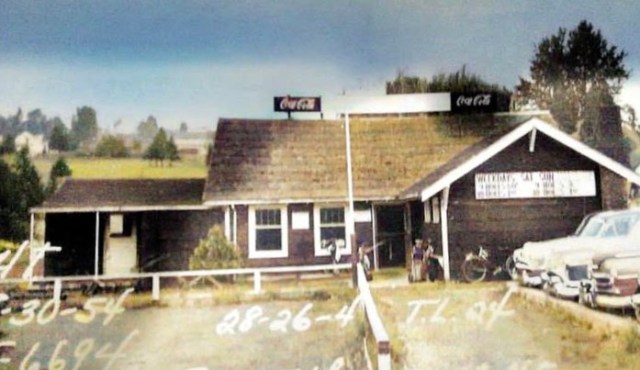
Meadowbrook Golf Clubhouse in 1954, on the corner of 30th Ave NE and NE 110th Street.
New owners of the golf course in the 1950s

Bob Tachell 1921-1989
Over its first twenty years since opening in 1931, the Meadowbrook Golf Course had a series of different owners and golf pros. Its second golf pro, Chuck Congdon, resigned in 1936 to accept a position at Tacoma Golf Club, and that is when Johnny Hoetmer advanced to become head golf pro at Meadowbrook.
In 1945, after the end of World War Two, golf pro Johnny Hoetmer left Meadowbrook Golf Course. He went back to the Sand Point Country Club & Golf Course, where he’d started his golf career as a thirteen-year-old caddy in 1927. As of 1945 Johnny Hoetmer became golf pro at Sand Point and spent the rest of his career there.
In the 1950s Bob Tachell and Frank Burns were the golf pros at Meadowbrook. In the mid-1950s, Bob Tachell, who was now 35 years old, decided to make an investment to own the golf course where he had been “at home” since childhood. With Frank Burns as co-investor, in 1957 the two men became owners of the Meadowbrook Golf Course, and they continued working there as the golf pros, as well.
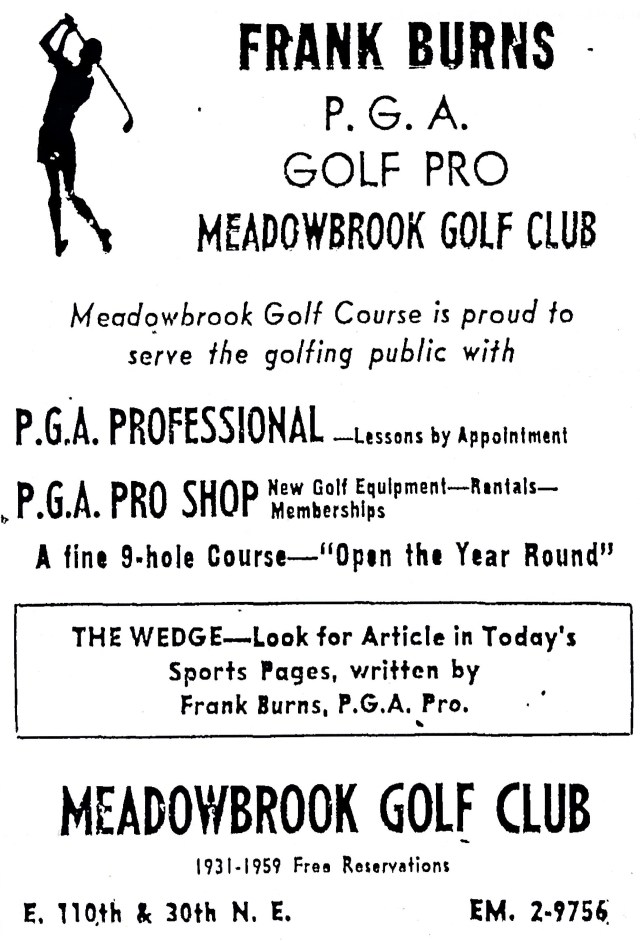
Meadowbrook Golf Club advertisement, Seattle Post-Intelligencer newspaper, July 12, 1959, page 25.
Meadowbrook Golf Course becomes a school site
The first few years of Tachell & Burns’ ownership of the golf course went well; they were enjoying their work and the course was profitable in the improved economic climate of the 1950s. But soon they were approached by Seattle Public Schools with an offer to buy the golf course property to become a school site.
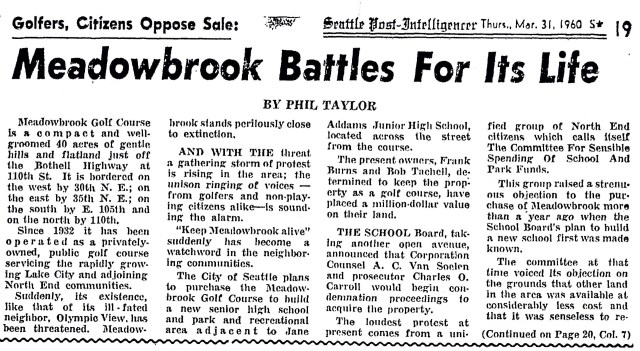
Tachell & Burns didn’t want to sell, but it turned out to be an offer they couldn’t refuse. The school system went to court and had the golf course “condemned.” On October 13, 1960, Superior Court Judge Raymond Royal gave an order of adjudication for “public use and necessity,” ruling that the community needed a new high school site more than they needed a golf course.
The Meadowbrook legacy
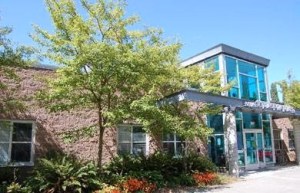
Meadowbrook Community Center
The former golf course became the site of Nathan Hale High School which opened in September 1963, the last high school built in Seattle. The southern half of the field is owned by the Seattle Parks Department.
Today, in addition to tennis courts and ball fields, there is a Parks Department swimming pool and a community center building on the eastern edge of the site, facing 35th Ave NE. It is because of the site’s long preservation as a golf course, that this later use by the school district and the Parks Department became possible.
The legacy of the golf course lives on in the name of the neighborhood: Meadowbrook. Despite the closure of the golf course in 1961 and the refusal of the school system to give the name “Meadowbrook” to the new high school, the Meadowbrook name seemed to have sticking power. Finally in 1990 under the City of Seattle’s Department of Neighborhoods, Meadowbrook became the official designation of the neighborhood.
Sources:
Genealogy resources online, including Washington Digital Archives and Find A Grave which documents families; census and City Directory listings.
Thanks to David Z for help with photos.

Al Blindheim
In loving memory of Al Blindheim (1924-2018), grandson of German immigrant farmer August Fischer, and son of Norwegian immigrant dairyman Ole Blindheim (LaVilla Dairy.) In 1993 Al started me out on writing about Meadowbrook history.
Interview with Johnny Hoetmer in 1998.
Property records for houses and land ownership, Morningside Heights & Meadowbrook, from the Puget Sound Regional Archives, repository of the property records of King County.
Newspaper articles:
 “Meadowbrook to Open on July 25,” Seattle Post-Intelligencer, July 12, 1931, page 51. Course owners were Ed Miller and George Goodner. Harold Niemeyer, former city amateur champion, was the first golf pro at Meadowbrook.
“Two Judges Open Layout,” Seatttle Daily Times, July 26, 1931, page 19. Account of opening-day activities on July 25.
“Tee Off at Meadowbrook Golf Course,” advertisement in the Seattle Daily Times, April 28, 1933, page 27.
“Frank Burns, PGA Golf Pro, Meadowbrook Golf Club,” advertisement in the Seattle Post-Intelligencer, July 12, 1959, page 25.
“Meadowbrook Battles for Its Life – Golfers, Citizens Oppose Sales,” Seattle Post-Intelligencer, March 31, 1960, page 18.
“Meadowbrook Condemnation Action to Start,” Seattle Post-Intelligencer, October 14, 1960, page 44.
Randy Raider, Nathan Hale High School in Seattle.
“Meadowbrook High Name is Backed,” Seattle Daily Times, October 26, 1961, page 26.
“School Names,” Seattle Daily Times, November 29, 1962, page 27. Announces that “Nathan Hale” will be the name of the new high school set to open in September 1963.
“Fairway Family,” Seattle Times Pacific Magazine article by Jack Broom, June 1, 1997, pages 14-22. This news article tells how Bob Tachell went on to start a golf course at Carnation, east of Seattle. The Carnation Golf Course was in Tachell family ownership 1967-2011. Frank Burns (1922-1991) did not join in with this investment, but he remained lifelong friends with the Tachell twins and often golfed with them at Carnation.

 Wedgwood in Seattle History